
Choosing a portable gas analyzer is not just a matter of comparing specifications. In the field, operators need clear readings, manageable setup, and dependable results when conditions change. The IRS 2700 Series Portable Fourier Transform Infrared Gas Analyzer is designed for on-site gas measurement using infrared analysis. Its suitability depends on the target gases, required detection limits, sampling conditions, and maintenance needs. Those details deserve careful review.
A useful evaluation starts with the sampling system. Check how the instrument handles moisture, dust, and changing gas concentrations. Review its stated measurement ranges and response time against your application, rather than relying on a broad product label. Ask about calibration procedures, data export, battery endurance, and service support. Small practical details matter. A short setup guide or a well-designed carrying case can save time beside a process line. No portable analyzer is perfect, and published specifications alone cannot predict every field condition.
For an authoritative expert perspective, a source-verified quotation should be added before publication: “[Insert a confirmed statement about portable FTIR gas analysis],” said [verified industry expert’s full name and credentials]. Without a reliable source, assigning a quotation to a named specialist would be misleading. This guide therefore focuses on the questions buyers can verify: what the analyzer measures, how it performs in their sampling environment, and what support is available after purchase. Those checks make a comparison more useful—and more honest.
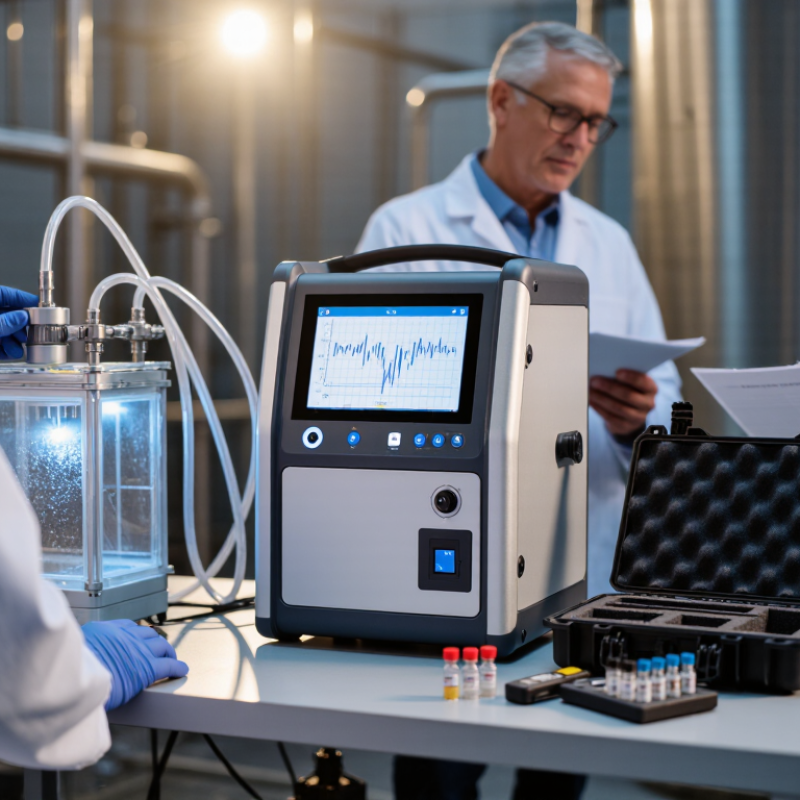
A 2700 Series portable FTIR gas analyzer brings infrared measurement closer to the sampling point. FTIR means Fourier transform infrared spectroscopy. The instrument records how a gas sample absorbs infrared energy, then uses its spectral pattern to estimate selected gas concentrations. This can support emissions checks, process troubleshooting, and investigations where conditions vary between locations. A portable format may reduce delays caused by sending every sample to a distant laboratory. Useful, but not magic.
A field team might connect a sampling line, check zero and reference settings, then review readings beside a process outlet. Results depend on calibration, sample conditioning, the selected method, and which gases are present together. Water vapor, temperature changes, or unexpected compounds can complicate interpretation. That detail is easy to underestimate. Operators should confirm the configured gas list and measurement range before relying on a result. A portable analyzer offers timely evidence, not automatic certainty. Unusual readings deserve repeat checks and, where appropriate, comparison with a validated method. Its purpose is to support informed decisions at the point of need, alongside clear records of measurement conditions and limitations.

A portable FTIR gas analyzer identifies gases by measuring how they absorb infrared light. A source sends broad-spectrum light through a gas cell, and a detector records the light that remains. Each gas leaves a characteristic pattern across the measured spectrum. Software compares that pattern with reference spectra and estimates concentrations, often for several compounds in one sample.
The U.S. Environmental Protection Agency’s Method 320 specifies FTIR measurements across 400–4,000 cm⁻¹ and uses reference spectra and calibration to quantify target gases. That wide window helps reveal overlapping molecular features, but it does not remove interference. Moisture, changing sample temperature, or a poorly matched reference can shift results. In field use, operators check zero and calibration gases, inspect sample lines, and record conditions alongside readings. Small details matter.
Fast readings are useful. Still, a portable instrument is not magic. Results depend on sampling, spectral quality, and the compounds selected for analysis. The NIST Chemistry WebBook offers evaluated molecular spectral data that can support reference checks; the EPA method remains a practical benchmark for measurement procedures. A damp hose or an overlooked background gas can complicate an otherwise clean spectrum. That part deserves honest attention.
A portable FTIR gas analyzer brings the main parts of a laboratory instrument into a field-ready case. Its infrared source sends light through a gas sample, while an interferometer encodes the signal for spectral analysis. A heated sample cell can reduce condensation when warm, humid gas enters the system. A pump, tubing, and filters help move the sample and limit dust. Small details matter.
The detector records absorption patterns, and software compares them with reference spectra to identify gases and estimate concentrations. Depending on configuration and calibration, the instrument can measure several components in one sample, such as carbon dioxide, carbon monoxide, methane, or nitrogen oxides. It may also track water vapor, which can affect readings or overlap with other spectral features. Results depend on the cell path length, sample flow, temperature, and the quality of the calibration. In practice, a damp line or a loose fitting can distort data. That is easy to overlook. Battery life, warm-up time, and routine reference checks also shape how useful measurements are during a long site visit. A broad gas library is helpful, but it does not remove the need to review spectra and confirm unexpected readings.
Typical FTIR analyzer components and selected mid-infrared absorption bands used to identify gases. Band positions are approximate; actual measurement ranges and performance depend on the instrument configuration, calibration, and sampling conditions.
FTIR can analyze multiple infrared-active gases from their characteristic spectral features. Reliable concentrations require suitable reference spectra, calibration, and control of spectral interferences.
Set the portable FTIR gas analyzer on a stable surface, away from direct sunlight, vibration, and dusty airflow. Allow it to warm up as specified in its operating manual. Check the battery, sample-cell connections, and tubing before introducing a sample. Keep the inlet line short where practical. Long lines can delay readings and allow compounds to stick to the tubing. Small details matter.
Run the recommended background or zero check, then confirm that the instrument responds to a suitable reference check. Inspect fittings for leaks, and use clean, compatible tubing. Draw a steady sample at the instrument’s specified flow rate. Avoid kinks and sudden changes in flow. If moisture or particles are expected, use only a sampling conditioner suited to the target gases; filters can also remove compounds of interest. Record the location, time, temperature, humidity, flow, and any unusual field conditions. Review spectra for unexpected peaks, not just the displayed concentration. A drifting baseline deserves attention. Repeat the measurement after checking the inlet and cell. Field setups are rarely perfect, and a rushed connection can quietly spoil good data. Compare results with the method’s acceptance criteria before reporting them.
Portable FTIR gas analyzers can support leak investigations, process checks, and emissions surveys where several gases may be present. At a plant, an operator might move between a warm pipe rack and a cooler control room during one shift. The selected instrument should suit the target gases, expected concentration range, and required measurement interval. Field conditions matter. Humidity, dust, vibration, and changing temperatures can affect sampling and measurement quality. Check whether the sampling line is compatible with the gas, and whether its length could delay readings. A useful instrument is not automatically a useful setup.
Equipment selection should also consider detection limits, response time, spectral resolution, data storage, and battery life. Compare stated performance with the concentrations expected in actual work, not only ideal laboratory conditions. Ask how calibration is performed and how often reference checks are recommended. If results will guide process changes, confirm that the measurement method fits the decision being made. Portability has trade-offs: a smaller unit may be easier to carry but offer fewer controls or shorter operating time. That detail is easy to overlook. Review maintenance needs, consumables, and operating instructions with the people who will use the analyzer. A short field trial can reveal awkward fittings, slow warm-up, or readings that need closer interpretation.
| Application | Typical Measurement Targets | Sampling and Field Considerations | Equipment Selection Checks | Practical Limitation |
|---|---|---|---|---|
| Combustion and flue-gas checks | Common targets include carbon monoxide (CO), carbon dioxide (CO₂), nitric oxide (NO), nitrogen dioxide (NO₂), sulfur dioxide (SO₂), and water vapor (H₂O), subject to the analyzer configuration. | Check sample temperature, dust loading, moisture, and whether the gas must be measured wet or after conditioning. Heated sampling can help limit condensation. | Confirm the required gas list, operating concentration range, measurement time, and compatibility of the probe, filter, tubing, and cell with the sample. | Water vapor and overlapping absorption features can affect some measurements; validate performance for the actual gas mixture. |
| Industrial process monitoring | Depending on the process and calibration, targets may include ammonia (NH₃), hydrogen chloride (HCl), hydrogen fluoride (HF), CO, CO₂, and SO₂. | Identify reactive, corrosive, or condensable components before choosing wetted materials and sample conditioning. Keep sample lines short where practical. | Check material compatibility, pressure and flow requirements, calibration coverage, and whether the instrument supports the required measurement locations. | Reactive gases may be lost on unsuitable surfaces or in condensate, producing results that do not represent the original sample. |
| Environmental and source investigations | Potential targets include CO, CO₂, CH₄, NH₃, and selected volatile organic compounds (VOCs), when supported by the method and spectral reference data. | Consider background changes, wind and plume variability, sampling location, and whether direct sampling or a suitable sampling enclosure is needed. | Review detection limits for the expected concentrations, the target-compound library, response time, data logging, and field calibration procedures. | A portable analyzer is not automatically a regulatory reference method; confirm applicable method requirements before compliance use. |
| Workplace and indoor-air screening | Depending on configuration, measurements may include CO₂, CO, NH₃, and selected solvent or process vapors. | Plan representative sampling points and account for ventilation, occupancy, temperature, humidity, and the time needed to reach each location. | Check portability, battery endurance, warm-up and measurement time, alarms or data export, and suitability for the expected concentration range. | Screening results should be interpreted using the applicable occupational or indoor-air assessment procedure. |
| Leak checks and troubleshooting | Target gases can include CO₂, CH₄, NH₃, or other infrared-active gases supported by the selected configuration. | Use a sampling approach suitable for the leak location and gas concentration. Check response time and sample-line transport delay when locating intermittent releases. | Confirm the target gas is detectable by the configured infrared method and that the expected concentration is within the working range. | FTIR is not equally suitable for every gas; homonuclear diatomic gases such as N₂ and O₂ do not have ordinary infrared absorption spectra. |
| Gas list and spectral capability | Confirm each target species, relevant interferents, expected concentration range, and whether simultaneous measurement is required. | Provide representative gas-mixture information, including humidity and likely co-existing compounds, when evaluating the intended application. | Request documented calibration ranges, detection limits under stated conditions, spectral-library coverage, and mixture-validation results for the intended method. | Gas identification and quantification depend on spectral coverage, calibration, concentration, and interference from other absorbers. |
| Sample handling and field readiness | Relevant sample properties include humidity, temperature, pressure, particulates, corrosivity, and the presence of condensable compounds. | Specify probe and line materials, filtration needs, heated-line requirements, safe access, and the expected duration of field operation. | Evaluate total system weight, power supply, enclosure protection, calibration accessories, maintenance needs, and data handling. | Conditioning can change the sample; document whether results represent the original wet gas or a treated sample. |
Note: FTIR capabilities, measurement ranges, and performance depend on the specific instrument configuration, calibration, sampling system, and test conditions. Verify application-specific specifications and method requirements before purchase or compliance use.
2025 Bio-Botanica, a division of Bio Answer Holdings Inc. All Rights Reserved.