
The global market for disodium salt products is evolving rapidly. In recent years, these products have gained significant attention across various industries. Disodium salt is known for its versatility and benefits, making it a popular choice in food, pharmaceuticals, and cosmetics.
As demand increases, understanding the factors driving this growth is essential. Companies are looking for ways to enhance product quality and improve formulations. disodium salt plays a crucial role in optimizing flavor and preserving freshness. Its applications extend beyond basic use, influencing trends in health and wellness.
However, challenges exist in this growing market. Regulatory standards may change, impacting production and availability. Companies must stay informed to navigate these complexities. It's important to reflect on how these factors influence the future of disodium salt usage. Understanding these dynamics will help stakeholders make informed decisions.
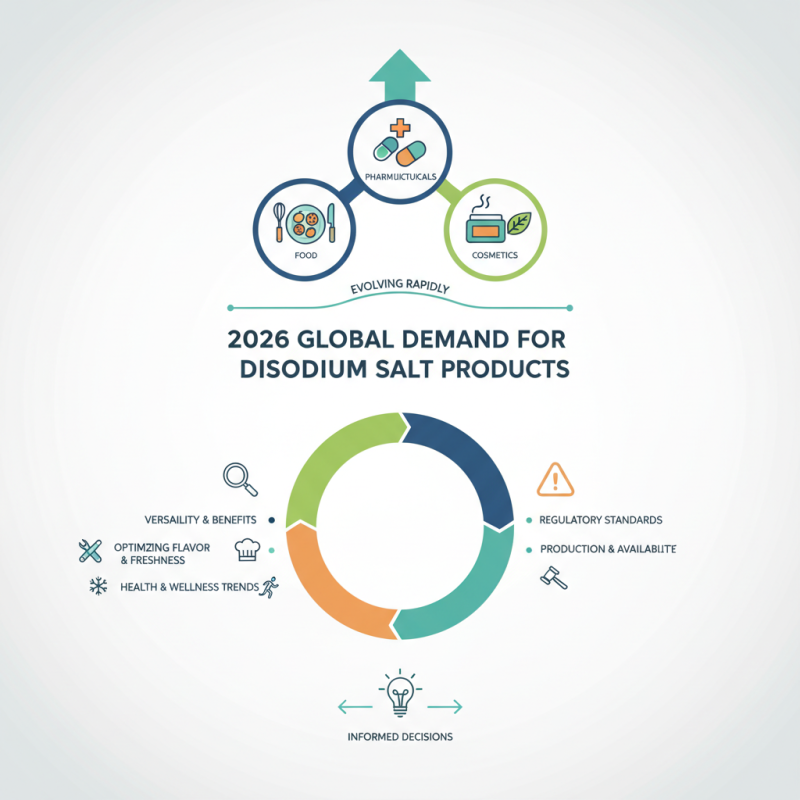
Disodium salt products, such as disodium phosphate and disodium EDTA, are vital in various industries. These compounds serve as emulsifiers, stabilizers, and flavor enhancers. Their applications span food, pharmaceuticals, and personal care. According to a recent report by MarketsandMarkets, the global demand for disodium salt products is projected to reach $2.5 billion by 2026.
In the food industry, disodium salts are often used as additives. They improve the texture and shelf life of processed foods. For instance, disodium phosphate maintains moisture in meat products. It also prevents the crystallization of sugar in confections. However, excessive use of these additives raises concerns over health impacts. Regulatory bodies are currently evaluating safe levels of disodium salt usage.
Pharmaceuticals also rely on disodium salts. These compounds can enhance drug delivery and stability. Disodium EDTA, for example, is frequently used in chelation therapy. Yet, studies on long-term exposure are limited. Experts stress the need for ongoing research to understand potential side effects. The balance of benefits and risks in disodium salt applications remains a topic for further exploration.
| Region | Projected Demand (Metric Tons) | Growth Rate (%) | Key Application Areas |
|---|---|---|---|
| North America | 150,000 | 4.5 | Food industry, Pharmaceuticals |
| Europe | 120,000 | 3.8 | Food preservatives, Cosmetic formulations |
| Asia-Pacific | 200,000 | 6.0 | Nutritional supplements, Flavor enhancers |
| Latin America | 80,000 | 5.2 | Food & Beverage industry |
| Middle East & Africa | 60,000 | 4.0 | Pharmaceuticals, Agriculture |

The global demand for disodium salt products is on the rise. Recent reports show that the market is projected to grow by 4.5% annually through 2026. This increase is driven by a surge in food processing and manufacturing sectors. Disodium salts are crucial for enhancing flavor and preserving food, making them vital for these industries.
In addition, the health and wellness trend is influencing consumer choices. Lower sodium contents in products are becoming a selling point. According to a 2022 food industry survey, over 40% of consumers actively seek reduced sodium options. This shift is pushing manufacturers to innovate with disodium salts. However, there are challenges. Not all disodium salts possess the same flavor-enhancing properties, and consumers are becoming more discerning.
Furthermore, regulations around food additives are tightening globally. Companies must stay ahead of these changes. A report by the World Health Organization highlighted that 70% of countries are adopting stricter guidelines on food additives. This environment creates uncertainty. Industries must adapt quickly or risk falling behind. The future of disodium salt products will depend on balancing consumer health and regulatory compliance.
The demand for disodium salt products is projected to grow significantly by 2026. Key markets such as food and beverage, pharmaceuticals, and agriculture are driving this demand. Disodium salts are commonly used as preservatives and flavor enhancers in various food products. With increasing consumer awareness about food quality, companies are focusing on enhancing flavors naturally.
In the pharmaceutical sector, disodium salts play a crucial role in drug formulation. They act as stabilizers and enhance solubility, making medications more effective. As healthcare needs grow, so will the demand for these products. Additionally, the agricultural industry utilizes disodium salts as fertilizers to improve soil health and crop yield.
Tip: Consider the environmental impact of disodium salts. The production process can generate waste. It’s important to adopt sustainable practices.
Meanwhile, not all regions are adapting at the same pace. Some markets may experience challenges, including regulatory hurdles or production costs. These factors could limit access to disodium salts.
Tip: Research local regulations before entering a new market. Understanding compliance will save time and resources.
Lastly, the trend towards healthier eating also influences disodium salt consumption. Consumers are seeking lower sodium options, pushing manufacturers to innovate.
The disodium salt market is facing significant shifts due to regulatory policies. Recent studies suggest that these regulations will shape the market dynamics through safety standards and environmental considerations. A report by Global Market Insights indicates that the disodium salt industry, predicted to grow at a CAGR of 4.2% by 2026, must adapt to these evolving guidelines.
Regulatory frameworks, such as those implemented by the FDA and EFSA, are adjusting the approval processes for disodium salts. This impacts production costs and supply chains. Manufacturers may need to invest in compliance, potentially increasing the final product price. According to a market analysis from Mordor Intelligence, around 30% of companies expect to face delays due to stricter regulations, complicating market entry for new players.
Furthermore, environmental policies are also influencing consumer preferences. The shift towards sustainable ingredients is evident in consumer trends. A survey by ResearchAndMarkets showed that 65% of consumers consider the environmental impact of their purchases. Companies pursuing eco-friendly practices might find a competitive edge, but they need to ensure compliance with all regulatory standards. Balancing innovation with regulation presents a challenge that requires strategic foresight in the disodium salt market.
The disodium salt products market in 2026 presents both opportunities and challenges. Demand is expected to rise due to growing applications across various industries. Food additives, pharmaceuticals, and personal care products will drive this growth. As consumers become more health-conscious, the demand for safe and effective disodium salt products increases. However, this progress is not uniform; market fluctuations and regulations can affect availability.
Projections indicate that the market will face hurdles. Supply chain disruptions are a concern, especially for small manufacturers. Additionally, environmental regulations may impose restrictions on certain production methods. Companies must adapt to these changes to remain competitive. There is also the challenge of innovation. Formulating new products that meet consumer needs is crucial. Yet, many companies struggle to balance cost with quality.
Awareness of potential issues in sourcing ingredients is necessary. Sustainability practices need to be prioritized, but not all companies are on board. Investing in research and development is essential, yet can strain budgets. Collaboration within the industry may provide solutions, but it requires trust and communication. The journey ahead for disodium salt products is complex, with both promise and obstacles to navigate.
2025 Bio-Botanica, a division of Bio Answer Holdings Inc. All Rights Reserved.