
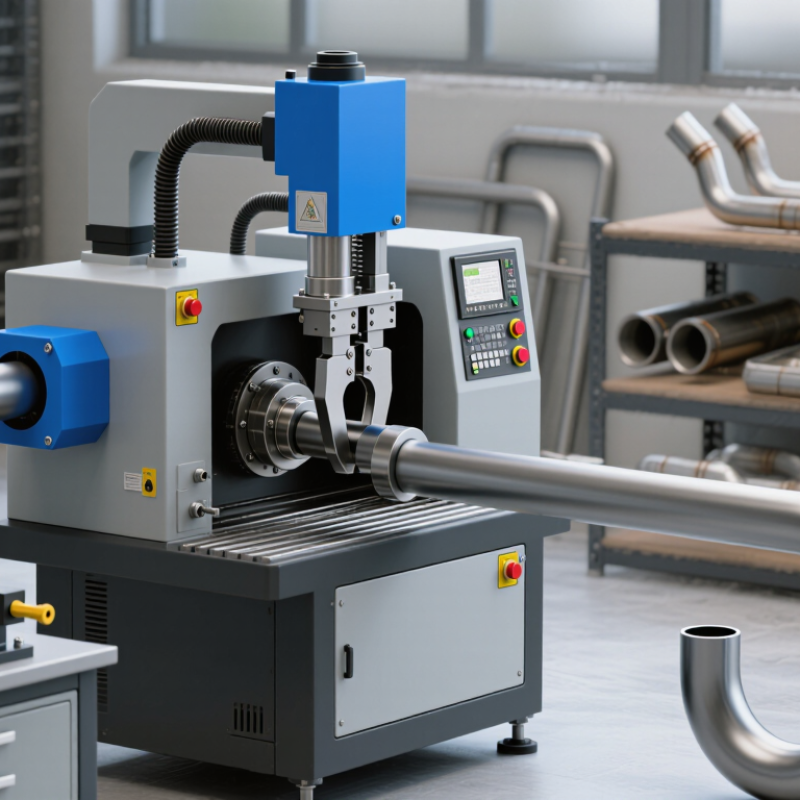
A 3D CNC automatic tube bending machine feeds, rotates, and bends metal tubing along programmed paths. It is used for automotive exhaust and chassis parts, HVAC lines, furniture frames, and fluid-carrying assemblies. The machine can create several bends in one setup, reducing manual repositioning. One bend, then another. That sounds simple, but springback and tube flattening can spoil a part if tooling or settings are wrong.
Demand varies by sector. OICA reported 93.5 million motor vehicles produced worldwide in 2023, showing the scale of automotive manufacturing. The IEA’s Global EV Outlook 2024 reported nearly 14 million electric car sales in 2023. These figures do not measure tube-bending demand directly, but they help explain why manufacturers assess repeatability and capacity for vehicle components and thermal-management lines.
Selection should begin with the actual part: material, outside diameter, wall thickness, bend radius, and tolerance. Check the machine’s bending direction, axis configuration, tooling range, feed length, and changeover time against that geometry. Ask for a trial using your own tube, not only a sample part. Measure ovality and springback after bending. A fast cycle is not useful if operators spend hours correcting parts. I’d also compare support, programming needs, and floor space; these are easy to overlook in a catalog.