
Blueberry ice cream can look simple in a product photo: a pale-purple scoop, a bright fruit note, and a clean finish. The powder behind that scoop can behave quite differently. Some blends lean toward candy-like sweetness; others taste more tart or dairy-forward. Color, solubility, aroma, and performance in the intended base all matter. Small differences show up in the cup.
For this guide, fictional formulation specialist Dr. Lena Ortiz offers a clear buying principle: “Judge the powder in the recipe you plan to sell, not from its aroma alone.” That is an editorial quote, not a sourced industry statement. The practical point still matters. A spoonful of dry mix cannot reveal how well it disperses in cold milk, whether berry notes fade after freezing, or how much color survives serving. Test a small batch. Check the label and supplier specifications, too.
Our seven picks are intended to help buyers compare Blueberry-Flavored Ice Cream Powder with fewer surprises. We look at flavor character, mixing convenience, ingredient transparency, and fit for different applications. A powder suited to a soft-serve base may not suit a dense, premium-style scoop. And a vivid hue is not proof of strong blueberry flavor. There is no perfect choice for every shop. The right one depends on your recipe, equipment, budget, and customers’ taste. Sample, record, and taste again after freezing. One limitation remains: published product details cannot replace a controlled test in your own kitchen.
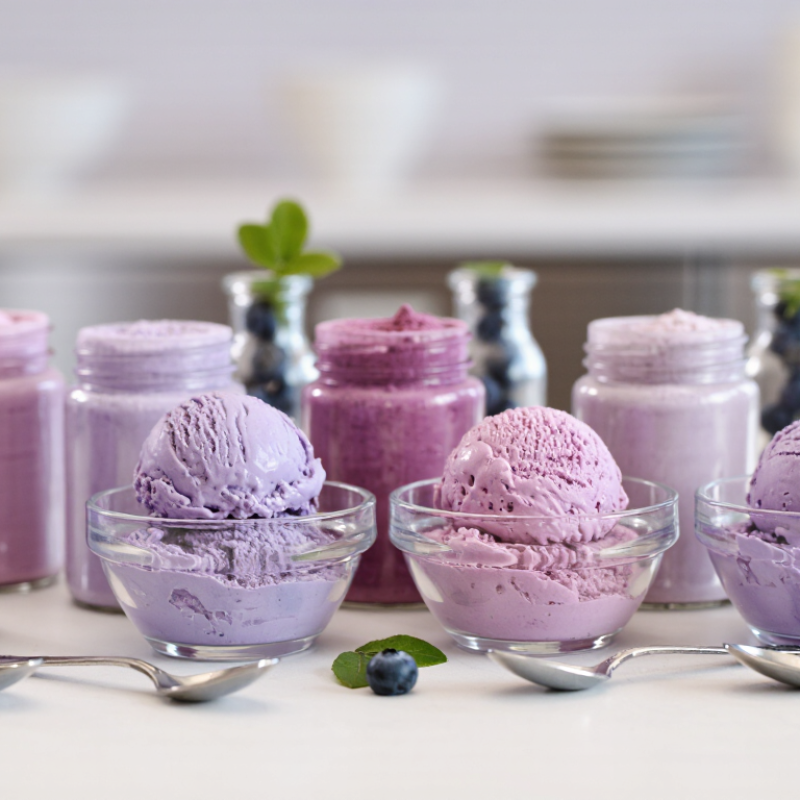
Blueberry ice cream powder varies by flavor base, carrier, and intended use. Freeze-dried blueberry powder brings recognizable fruit notes and a darker, speckled color. Juice-based powders can taste brighter, but their fruit content and acidity vary. Flavor blends may deliver a more consistent profile, though they can taste less like fresh berries. Check the ingredient list and stated fruit percentage.
The carrier affects how the powder behaves in a mix. Maltodextrin can help disperse flavor, while gum arabic may support a stable blend; either can reduce the proportion of blueberry solids. For dairy bases, test for smooth dispersion and a clean berry finish. For dry beverage mixes, prioritize quick dissolution. In baked applications, check color and flavor after heating. The International Dairy Foods Association’s industry overview places U.S. ice cream sales above $11 billion, underscoring the scale of a category where consistent batches matter. Sales figures do not identify the best powder, however; small bench trials are still essential.
Tips: Compare powders at the same dosage in a plain vanilla base. Note color, aroma, sweetness, and any gritty feel after freezing. One caveat: a strong purple shade can look convincing while offering little real blueberry character.
| Powder type | Flavor base | Typical carrier or composition | Flavor and color profile | Suitable intended use | Buyer considerations |
|---|---|---|---|---|---|
| Freeze-dried whole blueberry powder | Whole blueberries, freeze-dried and milled | Often mostly fruit; some products may include a small amount of flow aid | Fruit-forward, tart-sweet berry notes; naturally variable purple-blue color | Premium or fruit-led ice cream, gelato, and ripple or inclusion systems | Check fruit content, particle size, moisture protection, and whether seeds or skins are present. Fruit solids can affect texture and acidity. |
| Spray-dried blueberry juice powder | Blueberry juice or concentrate solids | Commonly maltodextrin or another drying carrier to support powder formation and handling | Juicy berry character; color depends on fruit solids, processing, and formulation | Smooth ice cream mixes where a dispersed fruit-derived flavor is desired | Review the ingredient list and fruit-solids level. Carrier choice and powder solubility vary by formulation. |
| Blueberry puree powder | Blueberry puree, dried into powder | Often a drying carrier such as maltodextrin; composition depends on the drying process | Rounded fruit taste, sometimes with more body than juice-based powder | Fruit-style frozen desserts and mixes where a puree-like profile is useful | Ask for fruit content and reconstitution guidance. The powder may contribute solids and influence mix viscosity. |
| Natural blueberry flavor powder | Natural flavoring ingredients formulated to deliver blueberry flavor | Often maltodextrin, gum acacia, or a combination used as a flavor carrier | Pronounced blueberry aroma; usually provides little fruit pulp or color by itself | Consistent blueberry flavor in a dairy or non-dairy ice cream base | Confirm the applicable flavor labeling category and whether a separate color ingredient is needed. |
| Blueberry flavor and color blend powder | Blueberry flavor combined with permitted color ingredients, which may include fruit or vegetable concentrates | Typically a carbohydrate carrier such as maltodextrin; full composition is formulation-specific | Designed for coordinated berry flavor and purple or blue-toned appearance | Colored scooped ice cream, soft-serve mixes, and frozen dessert bases | Check color-source declarations, local regulations, and stability under the intended processing and storage conditions. |
| Blueberry yogurt-style flavor powder | Blueberry flavor paired with a cultured or tangy flavor profile; may or may not contain fruit powder | Often maltodextrin or gum acacia; some blends may contain dairy-derived ingredients | Tangy, creamy impression with blueberry notes | Yogurt-inspired ice cream and frozen dessert formulations | Verify dairy content, allergen statements, and whether the powder is intended to be used with an existing cultured base. |
| Blueberry swirl or ripple preparation powder | Fruit powder or flavor combined with sweeteners and thickening ingredients | May contain sugar or glucose solids, starches, gums, or other texture aids; varies by preparation method | Sweet berry profile intended for a concentrated ribbon or sauce-like addition | Swirls, variegates, and layered ice cream applications rather than flavoring the entire base | Check whether it must be hydrated or cooked, and confirm its texture and freeze-thaw performance in the finished product. |
Formulations vary by supplier. Confirm ingredient declarations, allergen information, recommended dosage, and regulatory suitability for the target market before purchase.