
Choosing the best Chicken House Cage from China is not a matter of comparing prices alone. A suitable system should match the farm’s flock size, building layout, climate, and daily management capacity. Look closely at wire finish, frame strength, feeder access, drinker placement, manure removal, and how easily workers can inspect the birds. Small details matter: a poorly aligned drinker can leave wet patches beneath the cage, while narrow service aisles can slow routine checks.
Animal-welfare scientist Dr. David M. Broom defined welfare as “the welfare of an individual is its state as regards its attempts to cope with its environment.” That principle offers a useful lens for evaluating poultry housing: equipment should support birds’ health and comfort, not just maximize capacity. Ask suppliers for clear drawings, material specifications, installation guidance, and references from farms using comparable systems. Confirm that the design suits applicable local requirements, since standards and operating conditions vary.
A polished catalog is not proof of a durable cage. It is not enough. Request close-up photos of welds and coatings, and clarify warranty coverage, spare-part availability, and delivery terms. If possible, inspect a working installation before ordering. One awkward truth: even a well-built Chicken House Cage can disappoint when ventilation, stocking plans, or maintenance are poorly managed. Compare the whole system, not just the quoted unit price. The best choice is the one your team can operate, clean, and maintain consistently.
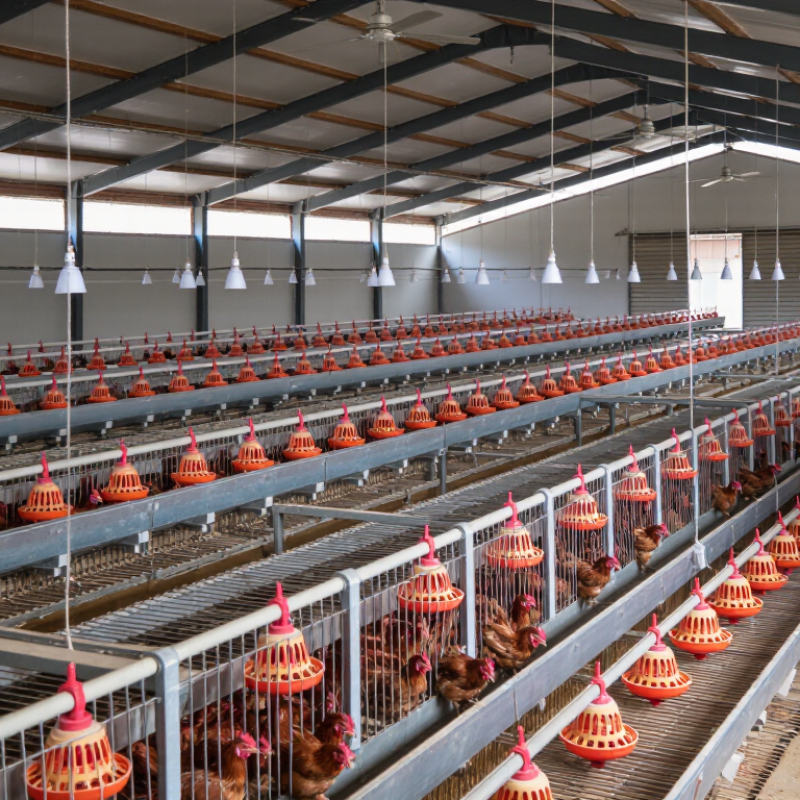
The best Chinese chicken house cage depends on flock size, bird type, and the work your team can reliably maintain. FAOSTAT’s 2023 Statistical Yearbook puts global poultry-meat production above 140 million tonnes in 2022, reflecting a highly varied industry—not one ideal housing layout. For a small farm, simple, accessible equipment may be easier to clean and repair. Larger operations may benefit from automated feeding, watering, and manure removal, provided local technicians can service the system. A breakdown during a hot afternoon is not a minor detail.
Bird type changes the decision. Layer cages need dependable nest-free egg collection, even feed access, and enough room for birds to move without crowding. For context, EU Directive 1999/74/EC specifies at least 750 square centimetres of total cage area per hen in enriched systems, including 600 square centimetres of usable area. This is a regional benchmark, not a universal design rule; check the requirements that apply to your farm. Broilers and pullets have different needs, so a layer cage should not be treated as a universal solution.
Before comparing suppliers, ask for a layout showing bird capacity, aisle width, drinker placement, and cleaning access. Match stated capacity to the birds’ age and target weight, not just the number of cage spaces. Hy-Line’s commercial layer management guides also stress that ventilation, water, and management affect flock performance alongside housing design. I would still inspect a working installation. Catalog figures rarely show the awkward corners.

The best configuration depends on the flock, house dimensions, and daily work routine. Layer systems commonly use tiered cages with feed troughs, nipple lines, manure belts, and egg collection belts. These features can reduce hand-carrying, but belt alignment and cleaning access need careful checking. Fit matters.
Broiler cage layouts generally prioritize usable floor area, bird access to feed and water, and straightforward manure removal. Compared with layer systems, egg belts are not the focus; compartment width, height, and ease of inspection matter more. Ask for the usable area per compartment, not just the outside dimensions. Watch how doors open. A narrow service aisle can make routine checks awkward.
Breeder configurations need to accommodate mating groups and reliable egg collection, so layout details differ by flock plan. Check how the design handles male birds, nest or egg collection points, and access for monitoring. Specifications should match the intended bird type and house ventilation plan. A clean drawing can still miss a practical problem: workers need room to inspect birds and repair drinker lines. Measure twice, then verify key dimensions against the actual house before comparing quotes.
When comparing chicken house cages from China, begin with usable measurements, not catalogue photos. A commonly cited EU enriched-cage benchmark provides at least 750 cm² of total cage area per hen, including at least 600 cm² of usable area. It also sets 12 cm of feeder space per hen for a trough-style feeder. These figures offer a practical comparison point, but they do not certify a cage or replace checks against local rules.
Ask for dimensioned drawings showing the internal floor area and feeder length. For example, a row housing 100 hens needs 12 metres of accessible trough space under this benchmark. Check that feed is reachable along the full length, without blocked sections or awkward corners. Small details matter. Measure the usable area after accounting for fittings, and confirm how the supplier defines it. A neat drawing can still hide a cramped layout.
Cage selection should also consider bird access, cleaning, ventilation, and routine inspection. Request material specifications and clear assembly instructions, then compare the delivered equipment with the approved drawings. The numbers are useful, but they tell only part of the story. I would not treat a listing that merely says “EU standard” as proof; that wording deserves a closer look.
A useful EU-oriented design check is 45 cm of clear height across at least 65% of the cage area. Confirm how the applicable standard defines both height and area before comparing suppliers; measurement details matter. Measure vertically from the cage floor to the lowest obstruction, such as a beam or feeder. Do not rely on the overall cage height or a catalog drawing alone. Ask for dimensioned plans, then verify key points on the assembled unit.
Tips: Measure more than once. Check corners and areas beneath fittings. Keep a simple diagram showing which sections meet the 45 cm benchmark, and how much of the floor area they cover.
Height is only one part of a practical assessment. Look at access for inspection, cleaning, and routine bird care, as well as sturdy joints and smooth edges. A spacious-looking drawing can hide low sections once equipment is installed. I would not treat a single measurement as proof of good design; it is a checkpoint, not the whole decision. If figures are unclear, request the measurement method in writing and compare it with current local requirements before ordering.
A reliable cage starts with materials that suit the house’s humidity and cleaning routine. Galvanized steel can resist corrosion, but coating quality varies. Check welds, cut edges, and corners where water may collect. Ask for coating specifications and sample parts, not just polished catalogue photos.
A small flaw can spread.
Ventilation needs to work across the whole row, not only near the fans. Look for clear airflow plans and test readings from several cage levels. In a warm house, still air around birds can become a practical problem.
Manure belts should move evenly, with accessible rollers and simple tension adjustment. Ask how often belts need inspection and whether manure dries before removal.
It sounds minor. It is not.
Supplier support matters after installation. Request layout drawings, operating instructions, spare-part lists, and a clear process for technical questions. Ask how replacement motors or belt parts are identified.
A quick reply is useful; a useful reply includes dimensions and troubleshooting steps. Check references from farms using a similar house design. No supplier can promise every component will run perfectly, and I would be cautious of one that does.
Small details matter.
2025 Bio-Botanica, a division of Bio Answer Holdings Inc. All Rights Reserved.