What Are Ceramic Cartridges and How Do They Work?
Ceramic Cartridges are compact flow-control components found in many modern faucets. Inside, two carefully finished ceramic discs sit close together. Turning the handle shifts the openings: aligned ports allow water through, while closed ports stop it. The motion feels small, but the contact surfaces must remain smooth and accurately seated.
The U.S. Environmental Protection Agency’s WaterSense program reports that household leaks can waste nearly 10,000 gallons of water each year. That figure covers many leak sources, not ceramic cartridges alone. Still, it shows why a persistent drip deserves attention. Plumbing educator Richard Trethewey, known for his work on This Old House, explains the cartridge’s practical role as controlling a faucet’s flow and temperature. This is a paraphrase, not a verbatim quotation. A cartridge can be durable, but it is not immune to wear.
Mineral deposits, grit, worn seals, or incorrect installation may interfere with smooth operation. A stiff handle or steady drip can offer clues, though neither proves the cartridge is faulty. Check the faucet maker’s instructions before choosing a replacement; cartridges that look alike may differ in dimensions or port layout. Standards such as ASME A112.18.1/CSA B125.1 set requirements for plumbing supply fittings, but consumers should also consult product specifications. Small part. Big effect. Understanding how ceramic discs move—and where the surrounding seals fit—makes troubleshooting more precise and helps prevent guesswork.
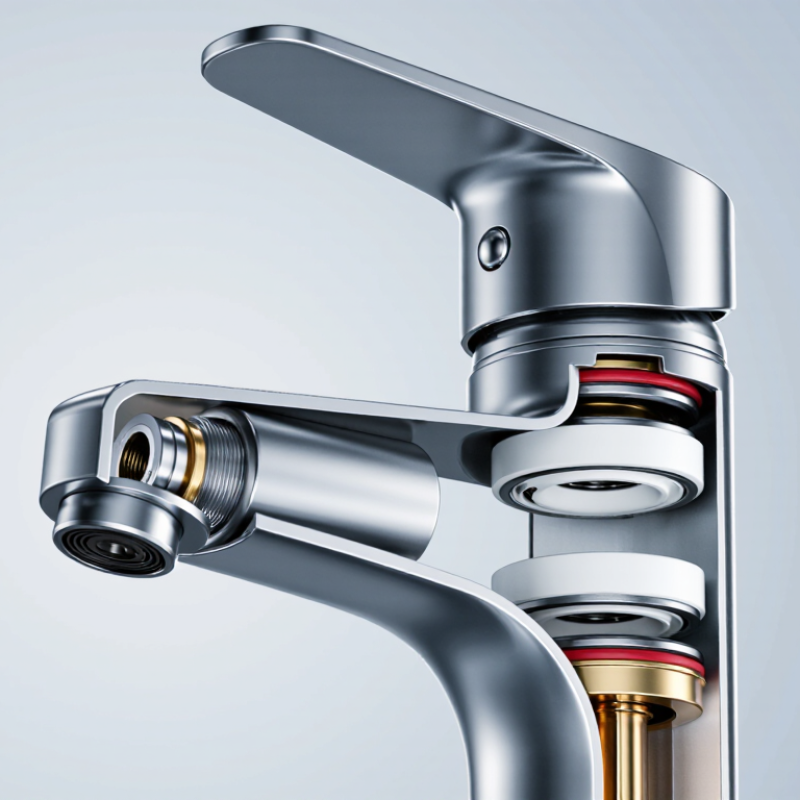
Definition and Main Components of a Ceramic Cartridge
A ceramic cartridge is the valve assembly inside many faucets. It controls water flow and, in single-handle designs, helps regulate temperature. The term “ceramic” refers mainly to the hard sealing surfaces within the cartridge, not necessarily its entire body.
At its center are two closely fitted ceramic discs. One stays fixed; the other moves when the handle turns or lifts. Their openings line up to let water pass, or shift out of alignment to restrict it. Smooth, polished surfaces form a tight seal. The movement can feel almost frictionless. It is precise, but not indestructible.
The discs sit in a cartridge housing, often made from plastic or metal. A stem connects the handle to the moving disc, while rubber seals or O-rings help prevent leaks around the housing. Inlets and outlets guide hot and cold water through the assembly. When the handle changes position, the openings alter the flow and mix of water. Mineral buildup or worn seals can still cause stiffness or dripping, so a faulty faucet does not always mean the ceramic discs have failed. Cartridge shapes and dimensions vary, making careful identification important before replacement.
Materials and Structure of the Ceramic Discs
Ceramic cartridges use two hard discs, usually made from high-purity alumina. One disc stays fixed; the other rotates with the handle. Their flat faces meet inside the cartridge, where tiny ports guide hot and cold water. The discs are lapped until their surfaces are exceptionally smooth. Small imperfections matter: a grain of debris can scratch a face and cause a slow drip.
Material data helps explain this design. The ASM Handbook’s technical-ceramics property tables place dense alumina near 3.9 g/cm³, with hardness commonly around 1,500–1,800 HV; exact values vary with composition and processing. Alumina resists wear and does not rust in water, making it suitable for repeated sliding contact. Hardness alone is not enough. Flatness, finish, and the fit between discs also affect sealing.
Inside the cartridge, rotating one disc shifts its openings against the other disc’s ports. That changes the passage for water and adjusts flow and temperature. The USGS Mineral Commodity Summaries 2024 reports global alumina production at about 140 million metric tons in 2023. This figure describes the broad industrial supply, not the small, carefully finished ceramic parts used in valves.
A useful detail to remember: “ceramic” does not mean indestructible. Sediment and poor alignment can still damage the mating faces. These parts look simple. They are not.
How Disc Movement Controls Water Flow
Inside many faucets, a ceramic cartridge contains two closely fitted discs with smooth, flat surfaces. One disc stays in place while the other moves with the handle. Small openings in the discs line up with the hot-water inlet, cold-water inlet, and outlet. When the handle is off, the openings do not connect. That is the key.
Moving the handle shifts or turns the movable disc. As the openings overlap, water can pass through; greater overlap usually allows more flow. In a single-handle faucet, one direction often changes the hot-and-cold mix, while another changes volume. The exact movement depends on the cartridge design. Not magic. Just precise alignment.
The polished faces press together closely, helping limit leaks without a rubber washer doing all the sealing. In practice, grit or mineral deposits can interfere with that fit. A faucet may drip, feel stiff, or change temperature unevenly. Those signs do not prove the cartridge is faulty, though; water pressure and other parts can also matter. If the handle feels smooth but flow remains weak, the cause may lie elsewhere. A small caveat worth remembering.
What Are Ceramic Cartridges and How Do They Work? - How Disc Movement Controls Water Flow
| Part or action | What it does | Effect on water flow |
| Ceramic discs | Typically, a cartridge contains two hard, flat ceramic discs with carefully formed openings. One disc remains fixed while the other moves with the handle. | The position of the openings relative to one another determines how much water can pass through. |
| Handle movement | Moving the handle turns or shifts the movable disc inside the cartridge. The exact movement depends on the faucet design. | As the openings overlap more or less, the flow passage becomes larger or smaller. |
| Faucet open | The disc openings are aligned enough to create a passage from the water inlet toward the faucet outlet. | Greater opening alignment generally allows more water to flow. |
| Faucet closed | The movable disc shifts so its solid surface covers the openings in the fixed disc. | The passage is blocked, stopping the flow through the cartridge. |
| Flow adjustment | Small handle movements change the amount of overlap between the disc openings. | Partial alignment provides a controlled range between low flow and higher flow. |
| Temperature adjustment | In many single-handle mixing faucets, handle movement also changes the relative amounts of hot and cold water admitted to the outlet. | The combined flow temperature changes as the hot-to-cold balance changes; cartridge arrangements vary by faucet design. |
| Sealing surfaces | The closely fitted disc faces help limit water passing between the surfaces when the cartridge is closed. | Wear, debris, or damage can interfere with the seal and may contribute to dripping or difficult operation. |
How Ceramic Cartridges Mix Hot and Cold Water
A ceramic cartridge controls how much hot and cold water reaches the faucet outlet. Inside, two finely finished ceramic discs sit closely together. One disc moves with the handle; the other remains fixed. Their openings line up in different ways as you lift or turn the handle.
When the openings overlap, water can pass through. Moving the handle changes the overlap, adjusting flow and temperature. Hot and cold water enter through separate inlets, then meet in the cartridge or faucet body before leaving the spout. A small handle movement can shift the balance noticeably. That is why a tap may feel touchy at first. Not magic—just precise openings.
The cartridge does not actively heat or cool water. It regulates the incoming supply, so the result depends partly on household pressure and water temperature. If one supply is weaker, the handle’s usual position may no longer give the same blend. A steady stream can help you judge changes, but it is not a perfect test. Ceramic surfaces resist wear, yet grit or scale can still affect movement or sealing. If the handle becomes stiff or the faucet drips, the cartridge may need inspection; the cause is not always the cartridge itself. A worn seal or debris can be involved. That detail is easy to overlook.
Performance, Wear, and Basic Maintenance
Ceramic cartridges regulate water flow with two closely fitted ceramic discs. Small openings align as the handle moves, allowing water through or reducing the flow. The hard surfaces resist wear and usually provide steady control. They are not filters, though. Sand or mineral particles can still affect how smoothly the discs move.
Performance depends on more than the ceramic faces. A handle that turns smoothly and stops dripping often signals normal operation. Stiff movement, uneven temperature control, or a persistent leak may point to debris, worn seals, or a damaged cartridge. Symptoms can overlap. A slow drip does not always mean the ceramic discs have failed.
Basic care helps. Turn off the water supply before opening a fixture, then follow its service instructions. Rinse removable parts with clean water and wipe away deposits using a soft cloth. Avoid abrasive pads and harsh chemicals; they can damage nearby seals or finishes. Reassemble carefully, since forcing a misaligned part may create a new leak. Hard-water buildup may return, and cleaning will not repair cracked ceramic. I sometimes expect one rinse to solve everything. It may not. If the cartridge remains stiff or leaks after careful cleaning, replacement or professional inspection may be the sensible next step.