Before buying Alibarbar Strawberry Ice, treat compliance as something to verify, not a claim on the package. Rules vary by country and can cover product authorization, age limits, ingredient disclosures, nicotine labeling, and packaging. The World Health Organization’s 2024 Global Report on Trends in Prevalence of Tobacco Use estimated 1.25 billion tobacco users worldwide in 2022. That figure does not establish whether any specific product is approved; it shows why clear, reliable oversight matters. Check your local regulator’s current guidance.
Look closely at the box. Is the manufacturer named? Is there a batch or lot number, a readable ingredients list, and a clearly stated nicotine level, if applicable? Compare those details with the seller’s listing and the regulator’s product records. In the United States, FDA’s searchable tobacco-products database can help identify products with marketing authorization; authorization is not a general safety guarantee. In the European Union, check applicable national requirements and official safety notices. A tidy label can still be misleading. That is easy to overlook.
Avoid listings with missing manufacturer details, inconsistent packaging, or unsupported claims such as “risk-free.” Keep a photo of the label and receipt, and contact the manufacturer or local authority if key details do not match. If the product’s legal status remains unclear, do not buy it. A little doubt is useful here. This check is practical, not perfect.
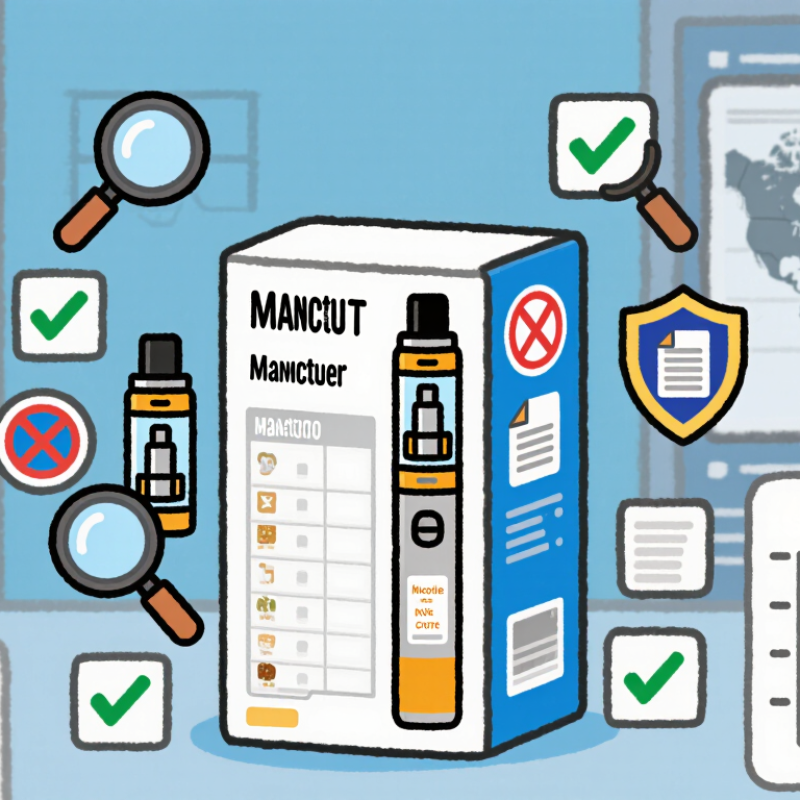
Before judging compliance, confirm what the strawberry-ice product actually is. The flavor name alone does not identify its category, ingredients, or intended use. Read the front and back panels, then compare the product description with the package. Check the product type, net contents, ingredient list, manufacturer details, batch code, and any required warnings. Small print matters. A product photo online may show an older package, so request a current image when details are unclear. I would not treat a matching flavor name as proof that two items are identical.
Next, identify the market for which the specific package was prepared. Look for a named country or region, local-language instructions, and market-specific warnings. A label designed for one place may not establish compliance elsewhere. Check the relevant official regulator’s public guidance, or ask a qualified local compliance professional when the rules are unclear. Keep the listing and package photos; they can help resolve discrepancies. Be cautious if the seller cannot confirm the product category, intended market, or batch information. That gives me pause. Even a neat label can leave questions unanswered, and I have learned not to fill gaps with guesses.
| Check | What to verify on the product or packaging | Why it matters | Practical decision |
|---|---|---|---|
| Product category | Confirm whether it is an electronic cigarette, a nicotine-containing product, a nicotine-free product, or another product type. Check the device description and ingredient or liquid information. | Different product categories can be subject to different rules. A flavour name alone does not establish the product’s contents or legal category. | Do not rely on appearance or flavour wording; look for clear product-type and contents information. |
| Intended country or market | Look for a clearly stated country or region of sale, local-language information where required, and packaging that matches the rules of that market. | Requirements vary by jurisdiction. Packaging intended for one market does not automatically show that the product complies in another. | If the intended market is unclear, ask the seller for the specific destination market and supporting compliance information before buying. |
| Nicotine declaration | Check whether nicotine is present and, if so, whether the concentration and total liquid volume are stated in the units required locally. | Some markets set limits on nicotine concentration or container capacity. For example, EU rules for nicotine-containing e-cigarette liquids set a maximum concentration of 20 mg/ml and a maximum refill-container capacity of 10 ml; tanks and cartridges are subject to a 2 ml limit. | Compare the declared figures with the current rules for the intended market; do not infer nicotine strength from a product name. |
| Required warnings and instructions | Check for the health warnings, safe-use information, ingredients, and other label details required where the product will be sold. | For example, EU rules require specific health warnings and product information for covered e-cigarette products. Exact language and placement should be checked against current local requirements. | Treat missing, illegible, or apparently mismatched warnings as a reason to pause and verify with the relevant regulator or seller. |
| Market authorization or notification | Ask whether the exact product type and formulation have the notification, listing, or authorization required in the intended market. Check an official regulator database where one is available. | Rules differ considerably. In the United States, for example, a covered tobacco product generally must have an FDA marketing order to be legally marketed, unless an applicable exception applies. | Do not treat a seller’s claim, a foreign certificate, or a generic registration document as proof of local market authorization. |
| Age and sales restrictions | Check the legal minimum-age rules, sale restrictions, and any local limits on flavours or product types. | Age limits and flavour rules vary by country and, in some places, by state, province, or municipality. A flavour description does not establish that a sale is permitted. | Confirm current rules for the buyer’s location and purchase only from a seller following applicable age-verification requirements. |
| Traceability and product details | Look for a batch or lot identifier, product quantity, manufacturer or responsible-party details where required, and usable contact information. | Traceability details help distinguish products and support safety inquiries or recalls. Their specific format and required fields depend on local law. | Be cautious if essential identifiers are absent, obscured, inconsistent, or impossible to verify. |
| Final pre-purchase check | Match the product category, nicotine details, warnings, and any required authorization to the destination market using current official guidance. | Compliance can change, and a label or online listing may not be enough to prove that a specific product is lawful for sale. | If key information is missing or conflicting, do not assume compliance; verify with the relevant national or local regulator before purchasing. |
Regulatory examples are jurisdiction-specific. Check current official rules for the exact product category and intended market before purchase.
Before buying a strawberry-ice device, inspect the box under good light. The warning should be clear, permanent, and printed in the language required where you live. Tiny or blurred text is a red flag. Check for the manufacturer or importer’s contact details, ingredient list, nicotine strength, liquid volume, batch number, and any expiry or production date. Details should match across the box and device. WHO’s 2023 global review reported that 74 countries had no specific e-cigarette regulations, while 34 prohibited sales. Rules vary widely, so compare the package with your local health authority’s current guidance.
Read every warning, not just the front panel. In the United States, FDA guidance requires covered products containing nicotine to carry a specific addiction warning; other markets may require different wording, symbols, or child-resistant packaging. Check that seals are intact and that any QR code leads to a verifiable manufacturer or regulator page, not an unrelated shop. Don’t rely on flavor names as proof of ingredients. If the nicotine strength, batch code, or warnings are missing or inconsistent, pause and ask the seller for documentation. Packaging can look polished and still leave questions.
Before buying a strawberry-ice product, identify its exact category and destination market. A flavor name proves nothing. Ask for the certificate number, issuing body, covered model or batch, test date, and expiry date. Verify each record through the issuer’s database or the relevant regulator’s public register. Check that the certificate covers the product, not only the factory’s quality system. ISO 9001 concerns management systems; it does not prove that a specific item passed safety testing. Check the source.
Look for reports from a laboratory accredited to ISO/IEC 17025, and confirm its accreditation covers the tests listed. Match product identifiers, materials, lot codes, and report dates against the package and invoice. Search official recall databases for the relevant product category. The European Commission reported 3,412 dangerous-product alerts in Safety Gate during 2023. That figure is not a risk estimate for this product, but it underlines the value of checking official records. A missing document does not prove a defect; request a written explanation before purchasing. Paperwork can be imperfect, so verify its issuer and scope rather than relying on a stamp.
Before purchasing a strawberry-ice inhalable product, check the legal minimum age where you live and where it will be delivered. Use a valid government ID; a checkout tick box is not meaningful age verification. The WHO’s 2023 Global Tobacco Epidemic report counted 121 countries with at least one e-cigarette policy measure, while rules differed widely. That variation matters. Confirm whether local rules restrict sales, flavors, delivery, or use in shared spaces. If requirements are unclear, ask a local regulator or qualified pharmacist before buying.
Read the full ingredient panel, not just the flavor name. Look for nicotine content, carrier liquids, flavoring substances, batch details, and a manufacturer contact. A strawberry-ice label alone tells you little about the exact formulation or exposure. WHO notes that e-cigarette emissions can contain nicotine and other potentially harmful substances; an ingredient list does not prove a product is safe. Check stated usage limits, warnings, and storage directions. Do not buy if packaging is incomplete or instructions conflict. I would pause over vague labels, even when the packaging looks polished. A careful check cannot remove every uncertainty.
How to read this chart: Minimum legal purchase ages are 21 in the United States and 18 in the United Kingdom and France for relevant nicotine or vaping products. Rules can vary by product type and location, so check current local requirements. Before buying, confirm the product’s ingredient and nicotine information is clearly labeled, and follow its warnings and usage instructions. Do not use a product if its contents or restrictions are unclear.
Reference points: U.S. FDA tobacco sales age requirements; UK government rules on selling nicotine inhaling products to people under 18; French Public Health Code restrictions on sales of vaping products to minors.
Before buying a strawberry-flavored product, check who is selling it and whether the seller can be independently verified. Look for a physical business address, working customer-service contact, and clear return terms. Ask for the product’s batch or lot number, then confirm that it appears on the invoice and any compliance or test documents. A certificate with no matching batch number tells you little. Check the document issuer, issue date, and testing scope; a polished QR code alone is not proof. It is easy to overvalue neat packaging.
The IBM Institute for Business Value and the National Retail Federation reported in their 2020 consumer study that 71% of surveyed consumers would pay a premium for brands offering full transparency and traceability. That survey reflects consumer preferences, not product safety or compliance. Still, it shows why traceability matters to buyers. Ask the seller how a specific batch can be followed back through its supply chain, and whether recalled or expired stock is clearly identified. If answers are vague, inconsistent, or copied across listings, pause. I would not treat a low price as evidence of a problem, but I would treat missing records as a reason to wait.
Tips: Save the listing, receipt, batch number, and seller replies. Compare the batch details across documents. If they do not match, do not rely on verbal reassurance; seek clarification from the seller or a qualified testing body.
2025 Bio-Botanica, a division of Bio Answer Holdings Inc. All Rights Reserved.