China’s Maitake Extract industry has become an important sourcing option for supplement brands, functional food companies, and ingredient distributors worldwide. This guide introduces ten manufacturers that serve international buyers and examines their production capabilities, quality systems, and export experience. Each company is considered through practical purchasing factors, including raw material traceability, extraction methods, standardization, testing documentation, packaging, and communication.
Quality begins with the mushroom itself. Buyers should ask whether manufacturers use cultivated Grifola frondosa, which extraction solvent is applied, and how beta-glucan content is measured. A clear certificate of analysis should show identity, microbiological results, heavy metal limits, and batch information. Factory audits, third-party testing, and stable lot records can reveal more than polished product brochures. Small details matter.
The term “top” is not absolute. A large supplier may offer competitive pricing, while a smaller factory may provide more flexible formulations or lower minimum order quantities. This list therefore offers a practical comparison, not a permanent ranking. Product quality can vary between batches, and published specifications may require independent verification. Buyers should request samples, inspect documentation, and confirm regulatory suitability in the destination market before signing a contract. That step is easy to overlook.
The selected manufacturers are discussed from a global buyer’s perspective, with attention to production scale, customization, delivery reliability, and professional support. Their strengths are not identical. Some may excel in bulk powder production, while others focus on branded extracts or private-label services. By comparing these differences carefully, purchasing teams can identify a suitable Maitake Extract partner and build a more transparent, dependable supply chain.

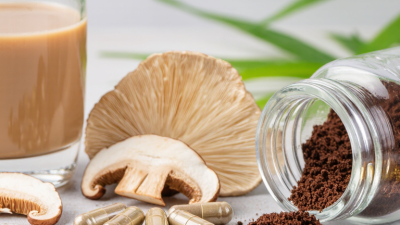
Maitake extract comes from Grifola frondosa, a shelf mushroom with layered, feather-like caps. FAOSTAT’s 2022 dataset reports global mushroom and truffle production above 12 million tonnes, showing the scale of modern mushroom supply. However, maitake remains a smaller specialty category. Its value depends on extraction quality, not raw volume. D-Fraction is a named fraction rich in protein-bound polysaccharides, but the term lacks one universal industry specification. β-Glucans are the wider chemical group. Their structure, branching, and assay method affect the reported result.
Professional buyers should request the Latin species name, extraction solvent, carrier ingredients, and β-glucan test method. AOAC-aligned methods can improve comparison, but “polysaccharides” should not replace a specific β-glucan result. A 2023 review in Foods noted major variation among medicinal mushroom products, including species authentication and marker selection. That finding deserves attention. I have seen attractive certificates hide unclear test boundaries.
Tips: Compare β-glucan content on a dry basis. Ask whether starch, dextrins, or other carriers were removed before testing. Check D-Fraction documentation carefully; a label alone proves little. Independent testing for heavy metals, microbes, and pesticides supports reliable purchasing. Be cautious with dramatic immune-support claims. Human evidence remains uneven, and extract quality can change the interpretation.
An anonymized technical comparison table for evaluating maitake extract suppliers without displaying company or brand names.
| No. | Manufacturer Profile | Raw Material | Typical Extract Format | Key Active Marker | Recommended Buyer Verification | Common Global-Buyer Application |
|---|---|---|---|---|---|---|
| 1 | Profile 01 Standardized fruiting-body producer |
Grifola frondosa fruiting bodies cultivated on a controlled substrate | Hot-water extract powder; spray-dried or vacuum-dried | Total β-glucans, with the result reported by a validated assay method | Botanical identity, growing substrate, moisture, microbial limits, heavy metals, and batch-specific certificate of analysis | Capsules, tablets, sachets, and powdered dietary supplements |
| 2 | Profile 02 High-solubility extract producer |
Fruiting bodies processed to improve dispersibility | Water extract with carrier-free or low-carrier powder options | β-glucan content plus solubility and particle-size specifications | Dispersibility test, insoluble residue, bulk density, water activity, and allergen statement | Instant beverage powders and functional food premixes |
| 3 | Profile 03 D-Fraction-focused producer |
Grifola frondosa biomass selected for proteoglucan research | Water-soluble fraction or proteoglucan-enriched extract | D-Fraction or related proteoglucan fraction, defined by the supplier’s validated analytical method | Full method description, reference standard, chromatographic or spectroscopic evidence, and lot-to-lot consistency | Research ingredients and specialized supplement formulations |
| 4 | Profile 04 Organic-compliance capable producer |
Certified-organic or conventionally cultivated fruiting bodies | Organic-compliant water extract powder where certification scope permits | Total β-glucans and confirmed species identity | Valid organic certificate, certificate scope, farming records, pesticide residues, and chain-of-custody documentation | Organic supplements and clean-label wellness products |
| 5 | Profile 05 Low-temperature processing producer |
Fruiting bodies handled with controlled drying and extraction temperatures | Gently processed aqueous extract powder | β-glucans, moisture, and color or odor consistency | Documented temperature profile, drying method, residual solvent statement, and stability data | Premium powders and formulas emphasizing mild processing |
| 6 | Profile 06 Blended mushroom-extract producer |
Maitake combined with other mushroom materials or supplied as a single-ingredient option | Single extract or multi-mushroom blend powder | β-glucans by ingredient or blend, with exact formulation percentages | Ingredient-level identity testing, blend ratio, absence of undeclared species, and separate batch traceability | Multi-mushroom capsules, drink mixes, and functional-food blends |
| 7 | Profile 07 Mycelium-capable producer |
Grifola frondosa mycelium, with substrate declaration required | Mycelial biomass powder or mycelium extract | β-glucans with clear disclosure of mycelium-to-substrate ratio | Microscopic or molecular identity, substrate composition, starch or grain content, and species authentication | Research products and formulations that specifically permit mycelial material |
| 8 | Profile 08 GMP-oriented bulk producer |
Traceable cultivated fruiting bodies or qualified mushroom biomass | Bulk extract powder in food-grade or supplement-grade packaging | β-glucans, microbial specifications, and batch uniformity | GMP certificate, HACCP plan, sanitation records, change-control procedure, and product recall process | Private-label supplements and contract manufacturing supply chains |
| 9 | Profile 09 Customized-specification producer |
Fruiting bodies selected according to buyer requirements | Customized extract ratio, mesh size, carrier system, or granulation | Buyer-defined β-glucan specification and agreed identity parameters | Pre-production sample approval, technical specification, packaging validation, and retained-sample policy | Custom capsules, tablets, beverage powders, and sachets |
| 10 | Profile 10 Export-documentation capable producer |
Traceable Grifola frondosa material suitable for international shipment | Export-packed extract powder with lot coding | β-glucans, species identity, moisture, and contaminant compliance | Commercial invoice, packing list, certificate of analysis, certificate of origin, country-specific compliance documents, and shelf-life statement | International distribution, import registration, and global supplement procurement |
Technical note: Maitake is the common name for Grifola frondosa. β-Glucans are polysaccharides naturally present in fungal cell walls, while “D-Fraction” generally refers to a maitake-associated proteoglucan fraction rather than a universal single-compound specification. Assay results are not directly comparable unless the laboratory method, reference standard, sample basis, and reporting units are the same. Buyers should request current batch-specific documentation before purchase.