
Interest in the P Tau 217 Assay is growing as researchers and laboratories seek clearer ways to assess Alzheimer’s-related biology. The assay measures phosphorylated tau 217, a blood biomarker associated with amyloid and tau changes in the brain. It may help distinguish samples that warrant further assessment. It is not a standalone diagnosis.
Dr. Nicholas J. Ashton is a leading researcher in blood-based Alzheimer’s biomarkers. A fair paraphrase of his published research is that plasma p-tau217 can support detection of Alzheimer’s-related pathology, while results still need clinical context. That distinction matters. A number on a report cannot explain every patient’s symptoms.
For buyers comparing China-based manufacturers and suppliers, practical details deserve close attention. Ask for analytical validation data, sample-volume requirements, detection limits, and evidence of lot-to-lot consistency. Check whether the assay has been evaluated with the intended sample type, such as plasma or serum. Also review storage conditions, shipping temperatures, technical support, and documentation. These details affect daily laboratory work, from receiving a chilled shipment to loading samples into an analyzer.
Look beyond the brochure. Request transparent performance data and clear instructions for use. Confirm what equipment and reagents are included, and ask how updates or product changes are communicated. A supplier’s response to technical questions can reveal as much as its product sheet. Still, no kit is perfect. Independent verification takes time, and published performance may not match every laboratory’s workflow. This guide introduces manufacturers and suppliers through that practical lens, helping readers compare claims without treating marketing language as proof.
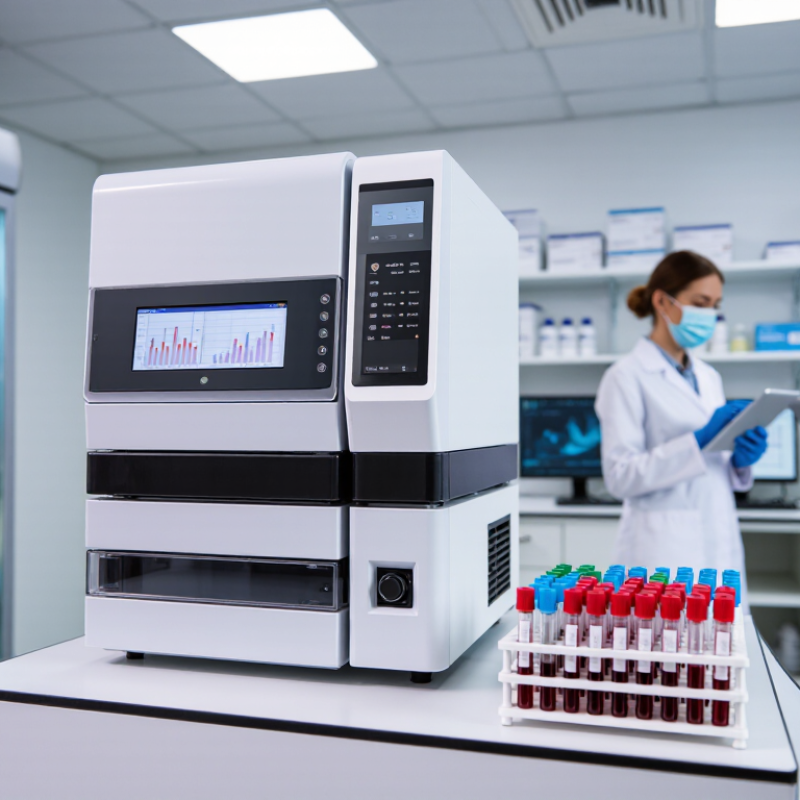
Plasma p-tau217 measures a phosphorylated form of tau associated with Alzheimer’s-related brain changes. A blood draw is less invasive than cerebrospinal-fluid collection. Results can vary with assay design, sample handling, and the cutoff used. Small details matter.
Platforms include immunoassays and mass spectrometry, which differ in sensitivity, workflow, and calibration. In a 2024 JAMA study of 1,213 participants, blood biomarker approaches achieved 88%–92% diagnostic accuracy for Alzheimer’s pathology. The study supports clinical promise, not universal performance: its results may not transfer directly between laboratories or patient groups.
Intended use matters. A p-tau217 result can help clinicians assess whether further evaluation, such as imaging or cerebrospinal-fluid testing, is appropriate. It should be interpreted alongside symptoms and clinical history, not as a standalone diagnosis. The 2025 Alzheimer’s Association guideline sets performance thresholds for blood tests used in specialist care, rather than treating every assay as equivalent. For manufacturers and suppliers, evidence on analytical precision, sample stability, and independent clinical validation deserves close review. Cutoffs are not interchangeable. That limitation is easy to underestimate.
| Comparison Dimension | Assay or Biomarker Overview | Typical Specimen or Platform | Intended Use and Considerations |
|---|---|---|---|
| Biomarker identity | Phosphorylated tau at threonine 217 (p-tau217) is a tau protein form measured in blood or other biological specimens. | Usually measured in plasma in blood-biomarker studies and clinical evaluations. | It is a biomarker measurement, not a direct image or standalone confirmation of a specific brain pathology. |
| Biological relevance | Blood p-tau217 levels are associated with Alzheimer’s disease-related amyloid and tau pathology. Levels tend to be higher in many people with Alzheimer’s pathology, but results vary among individuals. | Interpretation depends on the assay, the clinical context, and the population being assessed. | A result should be interpreted alongside symptoms, medical history, and other relevant assessments. |
| Immunoassay platforms | Antibody-based methods detect p-tau217 using assay-specific antibodies, reagents, calibrators, and signal-detection systems. | May use automated chemiluminescent or other immunoassay systems, or high-sensitivity digital immunoassay formats. | Results and performance characteristics are assay-specific; values from different methods should not be assumed to be interchangeable. |
| Mass spectrometry | Targeted mass-spectrometry methods can identify and quantify phosphorylated and non-phosphorylated tau peptides. | Typically uses prepared plasma samples and a validated liquid chromatography–tandem mass spectrometry workflow. | Sample preparation, instrument methods, calibration, and laboratory validation affect the reported result. |
| Specimen handling | Plasma is commonly studied, but specimen type and collection requirements depend on the specific assay. | Anticoagulant, processing time, storage temperature, freeze-thaw history, and transport conditions should follow the assay’s instructions. | Different specimen types or handling procedures should not be substituted unless they have been validated for that method. |
| Result reporting | Reports may provide a p-tau217 concentration or, for some methods, a measure that includes a ratio to another tau form. | Units, calibration, report format, and interpretation thresholds vary by assay and laboratory. | There is no single universal cutoff that can be applied reliably across all p-tau217 assays. |
| Potential clinical role | Depending on the assay’s validation and applicable authorization, a blood p-tau217 test may support assessment of Alzheimer’s disease-related pathology. | Use should follow the test’s intended-use statement and local clinical guidance. | It is not a substitute for a complete clinical evaluation. A clinician may consider additional testing when results are uncertain or do not fit the clinical picture. |
| Research applications | Used in studies of Alzheimer’s disease biology, cohort characterization, and evaluation of biomarkers or interventions. | Research protocols may specify collection, processing, and analysis procedures that differ from clinical workflows. | Research-use results should not automatically be treated as clinical test results. |
| Selection criteria | Relevant considerations include analytical validation, specimen requirements, reportable range, precision, and evidence for the intended population. | Review the assay documentation and laboratory procedures for the exact method being considered. | Compare methods using their own validation and intended-use information rather than assuming that platform type alone establishes clinical suitability. |
General information: Assay characteristics and intended use differ by method and jurisdiction. Consult the applicable assay instructions and qualified healthcare professionals for interpretation.