
Blog

Why Choose a Laser Cutting Machine for Your Business Needs?

In today’s competitive market, businesses seek advanced technologies to enhance their operations. One powerful tool making waves is the laser cutting machine. Industry expert, Dr. Emily Carter, states, "Laser cutting machines revolutionize precision manufacturing." This technology offers unmatched accuracy and speed for various materials, from metals to plastics.

laser cutting machines provide flexibility that traditional methods struggle to match. For instance, businesses can execute intricate designs with minimal waste. The energy efficiency of these machines also contributes to lower operational costs. However, businesses must reflect on their needs. A high initial investment may not align with all companies’ budgets.

Additionally, learning to operate these machines can be a hurdle. Training staff to handle advanced technology requires time and resources. Despite these challenges, the advantages of a laser cutting machine often outweigh the drawbacks. Companies that adapt to this technological shift can unlock new opportunities for growth and creativity.
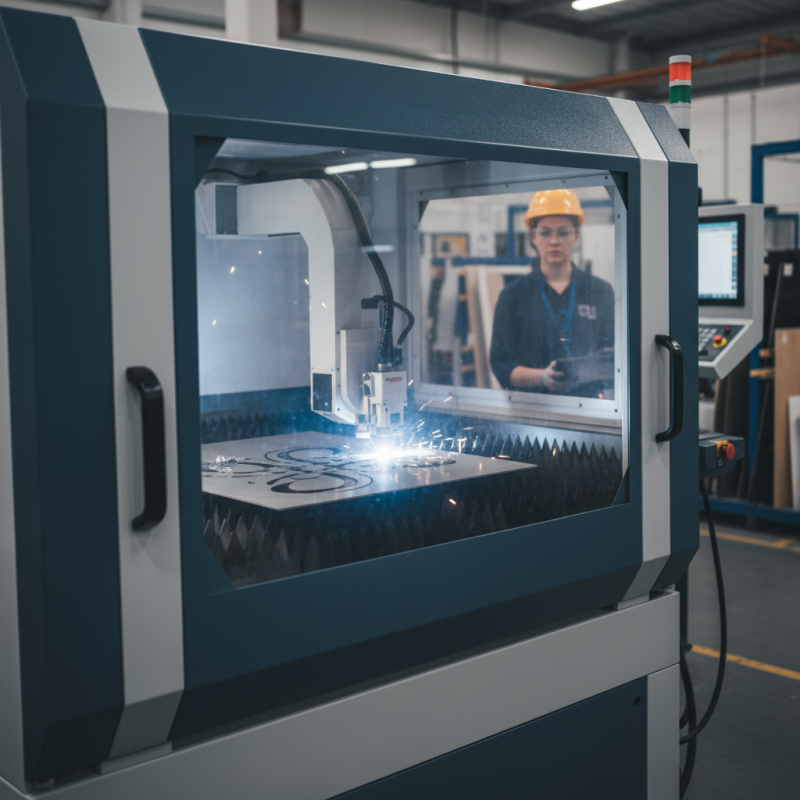
Why Choose a Laser Cutting Machine for Your Business Needs?

Understanding Laser Cutting Technology and Its Benefits

Laser cutting technology has revolutionized various industries, offering precise and efficient solutions for businesses. It utilizes a focused beam of light to cut through materials, achieving intricate designs and high-quality finishes. This technique is especially beneficial for cutting metals, wood, plastics, and fabrics.

One key advantage of laser cutting is its accuracy. The machine can create complex shapes with minimal waste. This can enhance production speed and reduce material costs. However, it requires skilled operators to ensure optimal use. Proper training is essential to maximize efficiency and safety.

Tips: Regular maintenance of the laser cutting machine is crucial. It helps to prevent unexpected breakdowns and extend its lifespan. Also, consider experimenting with different materials to discover unique applications. Learning from mistakes can lead to breakthroughs. Embrace the challenges that come with integrating new technology for better outcomes in your business.

Key Advantages of Using Laser Cutting Machines in Manufacturing

Laser cutting machines have become essential in modern manufacturing. They offer precision and versatility that traditional methods often cannot match. A report from IBISWorld indicates that the laser cutting industry has grown steadily, with a projected revenue increase of 4.5% annually. This growth reflects the increasing demand for high-quality manufacturing processes.


One key advantage of laser cutting is its ability to produce intricate designs with minimal material waste. According to a study by Deloitte, companies using laser technology reduced material costs by up to 15%. The high accuracy of laser cutting results in cleaner edges and finer details, which can enhance the aesthetic quality of finished products. However, not all businesses may initially grasp the full potential of this technology. Some may find the upfront investment daunting, especially in smaller operations.


Additionally, laser cutting machines can handle various materials, from metals to plastics. This versatility is especially beneficial in industries like automotive and aerospace. But operators must be trained to maximize efficiency. A survey by the Laser Institute of America revealed that 30% of manufacturers reported skill gaps in their workforce. These gaps can hinder the effective use of advanced technologies, which may lead to frustration in the workplace. Adapting to new technology requires ongoing training and adjustment, presenting both challenges and opportunities for businesses.

Comparing Laser Cutting with Traditional Cutting Methods

Laser cutting technology is gaining popularity in various industries. Compared to traditional cutting methods, like sawing or chiseling, laser cutting offers remarkable precision. It can cut intricate designs that would be impossible with conventional tools. A laser can slice through materials such as metals, plastics, and wood effortlessly. This flexibility is a great advantage for businesses looking to create custom products.

However, traditional cutting methods have their own merits. They often require less initial investment, making them accessible for small businesses. Moreover, some users find the tactile feedback of manual tools satisfying. Traditional methods can also be more forgiving in terms of material choice. A small miscalculation with a saw can be easily adjusted. In contrast, laser cutting demands precision and careful planning. A wrong setting can lead to wasted materials and time.

Balancing both cutting approaches is essential. Relying solely on laser machines can lead to unforeseen complications. It’s crucial to evaluate your business needs carefully. Understanding both methods allows for better decision-making. Sometimes, a hybrid approach can yield the best results.

Factors to Consider When Choosing a Laser Cutting Machine

Choosing a laser cutting machine can be a game changer for businesses. There are several important factors to consider. The first is material compatibility. Different machines handle various materials differently. Whether you work with metal, wood, or acrylic, ensure the machine is suited for your primary materials. Think about the machine’s speed as well. Faster cuts can boost productivity, but may compromise detail.

Cost is another critical factor. Higher price doesn’t always mean better quality. It can be tempting to go for the cheapest option, but lower-cost machines might lead to issues. Repair costs can add up. Warranty and support are essential too. A robust support system can save you time and money down the line. Reflect on the features you truly need. Some machines offer advanced options that you might never use. Focus on what aligns with your business goals.

Lastly, think about the machine's footprint in your workspace. Some laser cutting machines are bulky. If space is limited, size matters. You may also need to consider proper ventilation and cooling systems depending on the model. Investing time in research will pay off, but remember, no machine is perfect. Each choice has trade-offs. Balancing features, cost, and space is key.

Applications of Laser Cutting in Various Industries

Laser cutting technology offers diverse applications across numerous industries. In manufacturing, it allows for high precision when cutting metals and plastics. Companies can create intricate designs that were impossible with traditional cutting methods. For instance, the automotive sector uses laser cutting for lightweight components, improving fuel efficiency.

In the fashion industry, laser cutting revolutionizes fabric design. It enables quick production of detailed patterns, enhancing creativity. Designers appreciate the ability to experiment with complex shapes. However, this process requires a keen eye for detail to avoid waste. Miscalculations can lead to overlooked flaws in designs, needing revisions.

Additionally, the signage industry benefits greatly from laser cutting. Custom signs can be produced efficiently, with clean edges. Local businesses use it for unique storefront displays. Despite its advantages, companies must continually assess their techniques. Innovations can sometimes introduce new errors. Reflecting on outcomes is crucial for improvement.

Applications of Laser Cutting in Various Industries

Botanical Extracts Manufacturing | Manfacture botanical extracts for supplements.