
Choosing a Frosted Glass Front Door in 2026 requires more than matching a frame to your exterior paint. It involves privacy, daylight, energy performance, security, maintenance, and local weather. Architect Sarah Susanka describes the entrance clearly: “The front door is the handshake of the house.” That handshake should feel welcoming, but it must also withstand rain, wind, fingerprints, and daily family traffic.
Begin by studying the glass itself. Acid-etched glass creates a soft, permanent appearance, while laminated privacy glass can improve safety and reduce sound. Some patterns blur faces but still reveal movement at night. That detail matters beside a porch light. Test samples during daylight and after sunset. Your preferred finish may look different than expected. Think carefully.
A reliable door should include a thermally broken frame, weather-resistant seals, and properly rated hardware. In colder regions, low-emissivity glazing may help limit heat loss. In warmer climates, solar-control glass can reduce uncomfortable afternoon heat. Ask for documented U-factor, solar heat gain, and impact ratings. Do not rely on attractive showroom language alone.
Security deserves practical attention. Choose strong hinges, a quality multi-point lock, and lighting that removes dark corners. Frosted glass offers privacy, not complete protection. A determined viewer may still identify silhouettes. Consider the sightline from the street. Also check cleaning access, condensation risks, and replacement costs before ordering.
There is no perfect door. The right decision balances beauty with evidence. In 2026, compare tested performance, honest installation advice, and the lived conditions around your entrance. That is where confidence begins.
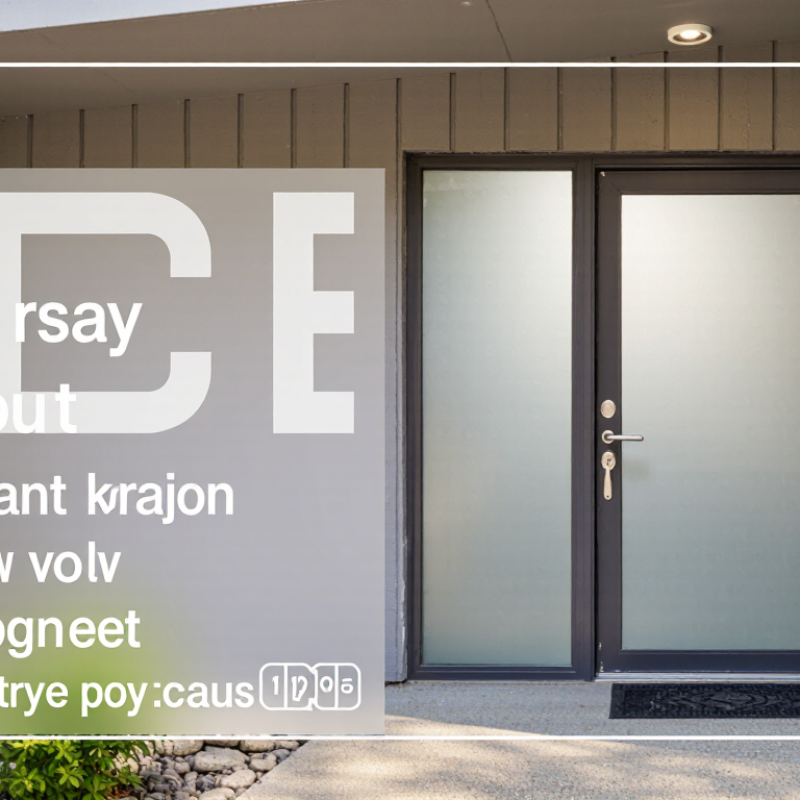
Start with visible transmittance, or VLT. NFRC usually labels it VT, meaning the percentage of visible light passing through glass. NFRC 202 provides the measurement procedure. A door with 40% VT may brighten a hallway while softening facial details. At 20% VT, the entry feels dimmer and more private. Actual results vary with glass thickness, coating, and indoor lighting.
Opacity describes what the eye can distinguish, not only the light level. Clear outlines suggest low opacity. White shapes suggest medium opacity. Light becomes visible, but details disappear, at higher opacity. The Lawrence Berkeley National Laboratory International Glazing Database shows that glazing products can have very different optical values, even when their appearance seems similar. Request the tested VT value, not a showroom photograph.
Privacy is layered. Sightline matters. A door facing a sidewalk needs more obscuring glass than one facing a fenced garden. NFRC ratings do not create a universal privacy grade, so ask for a sample at eye height. Stand one meter away, then view it at night with interior lights switched on. A practical mistake is judging privacy only in daylight. I have found that strong indoor lighting can reveal movement through glass that looked fully opaque outdoors. Measure twice. Choose the texture, VT, and frame layout together.

How to Choose a Frosted Glass Front Door in 2026?
Set an energy target before comparing frosted glass patterns. The NFRC label provides reliable performance data for the complete door assembly. Check the U-factor first. Lower values usually mean less heat transfer through the door. A cold-climate entry may need a particularly low U-factor. Your local energy requirements still matter.
SHGC shows how much solar heat enters through the glass. A higher SHGC can help warm sunny rooms during winter. It may increase summer cooling demand, however. Match this rating to your climate and doorway direction. South-facing glass needs closer evaluation than a shaded entrance. Ask for the label.
Low-E IGU ratings deserve equal attention. A low-emissivity coating and insulated glass unit can reduce radiant heat loss. Frosted glass may improve privacy, but it does not automatically improve insulation. Look for the IGU’s cavity, spacer, and coating details. Warm-edge spacers can reduce heat loss around the glass perimeter. The frame also affects comfort.
One practical mistake is judging only the center glass. The threshold, frame, seal, and installation can weaken excellent ratings. Request whole-door NFRC data when available. Confirm whether the quoted U-factor includes the frame. In real homes, a small air leak can feel worse than a modest glass difference. I would also question unclear claims. “Energy efficient” sounds useful, but it is not a measurable target. Avaliable ratings are better.
Set energy targets with NFRC U-Factor, SHGC, and a Low-E insulating glass unit (IGU).
Planning benchmarks shown: commonly used U.S. residential fenestration climate-zone criteria. Confirm the final front-door assembly and NFRC label because frame, spacer, glass area, and installation affect whole-unit performance.
Frosted glass can soften daylight, but privacy should never replace impact safety. For a front door, ask whether the glass is safety glazing, not ordinary decorative glass. Look for documentation showing compliance with ANSI Z97.1 and CPSC 16 CFR 1201. These standards use impact testing to evaluate glass performance in hazardous locations, including doors and nearby panels.
Check the permanent marking, certificate, or test report before ordering. The document should identify the glass type, thickness, tested configuration, and applicable safety standard. Tempered glass breaks into small pieces, while laminated glass usually stays attached to its inner layer after cracking. Both can be suitable, but the frame and installation method also matter. A compliant sheet can still become unsafe if it is poorly supported.
Do not rely only on a salesperson’s phrase, “It is tempered.” Ask for the exact compliance evidence. Frosted films may hide chips around the edges, and that detail is easy to miss. I would inspect the lower corners, door hardware area, and adjacent sidelights in bright light. My first choice might change after seeing the test paperwork. Local building requirements can also add conditions, so confirm them with a qualified installer or building official before fabrication.
A frosted glass front door should fit your entryway before it fits your style. Measure the rough opening, the frame, and the finished floor separately. A 36-inch door leaf often provides about 32 inches of clear width when opened fully. Hinges, weather seals, and thick hardware can reduce that space. Measure twice.
Door swing matters as much as door size. An inward swing may improve exterior clearance, but furniture can block the pull side. An outward swing can protect interior space, yet it needs a clear landing outside. Mark the swing arc with painter’s tape. Walk through it while carrying a box. This simple test reveals problems that a floor plan can miss.
The 2010 ADA Standards generally call for a 32-inch minimum clear opening on accessible routes. This measurement applies with the door open 90 degrees, not from frame edge to frame edge. Public and commercial projects may need additional maneuvering clearance, threshold limits, and hardware requirements. Private homes can follow different rules, depending on local codes and project goals. Ask a qualified building professional to confirm the current requirements in your area. Frosted glass also changes visibility near the threshold. Choose a pattern that admits daylight without hiding steps, visitors, or obstacles. A fully opaque panel may feel private, but it can make approach conditions harder to read. My least favorite mistake is choosing appearance first, then discovering the opening is too narrow.
A frosted glass front door should balance privacy, security, and daily comfort. Choose corrosion-resistant hardware with a solid latch, adjustable hinges, and a lever that feels firm. Test the lock while standing outside. Small movement matters. Laminated or tempered frosted glass can improve safety, but confirm the door’s performance rating before purchasing. A beautiful handle cannot correct a weak frame.
Installation affects air leakage more than many buyers expect. A professional installer should check the opening, sill, shims, weatherstripping, and threshold alignment. Insulating around the frame helps, but excessive foam can distort it. I once assumed a tight-looking door was efficient. That assumption was wrong. A smoke pencil or infrared inspection can reveal drafts around corners and the lock side.
Tips: Request an itemized installation scope. Ask how the sill will drain after heavy rain. Compare the door’s tested air-leakage rating, not just its appearance. For 2026 warranties, read coverage for glass seal failure, hardware, finish, frame movement, and labor. Some warranties exclude incorrect installation, coastal exposure, or unauthorized repairs. Keep photographs, invoices, and adjustment records. A long warranty is not automatically better. Check who handles service, how claims are submitted, and whether coverage changes after ownership transfers. Wording can be surprisingly narrow.
2025 Bio-Botanica, a division of Bio Answer Holdings Inc. All Rights Reserved.