
Blog

How to Choose the Best Metal Detector for Biscuits?

Choosing the right Metal Detector for Biscuits requires more than comparing prices, detection ranges, or attractive equipment photos. Biscuit production creates practical challenges. Products may be dry, warm, salty, or coated with chocolate. Each condition can influence signal stability and inspection accuracy.

Dr. Martin Keller, a food-inspection engineer with experience in baked-goods production, explains: “The best detector is not the most sensitive on paper; it is the one that performs reliably during real production.” This principle deserves attention. A machine that performs perfectly during a showroom demonstration may struggle beside a hot oven or vibrating conveyor.

Look closely at the product’s size, packaging, moisture level, and production speed. Test the detector using certified ferrous, non-ferrous, and stainless-steel test pieces. These checks should happen at the actual line speed. They should also reflect the largest biscuit format and the most challenging packaging.

Consider aperture size carefully. A smaller opening can improve performance, but it may restrict future production changes. Reject systems also matter. A clean, controlled air blast can remove a contaminated product without disturbing nearby biscuits. Poorly adjusted rejection can create waste, confusion, and uncomfortable questions during audits.

HACCP records, automatic test routines, stainless-steel construction, and easy belt cleaning support dependable operation. Yet no machine removes every production risk. I have seen specifications look impressive while maintenance access was inconvenient. That detail is easy to miss.

The best Metal Detector for Biscuits fits the product, line, cleaning routine, and quality culture. Choose based on verified trials, not promises alone. Production reality is often less tidy.
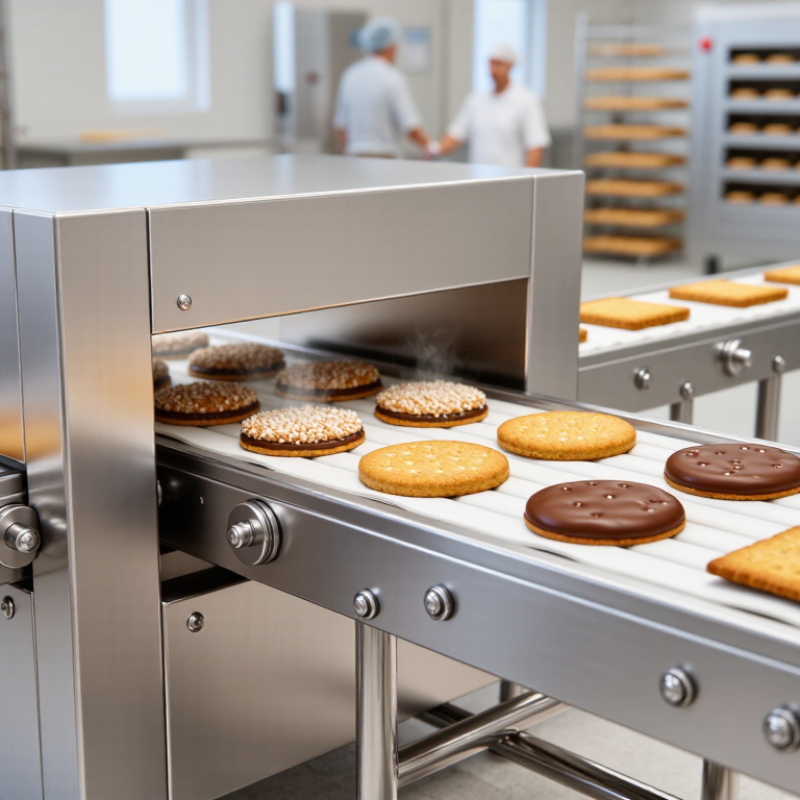
How to Choose the Best Metal Detector for Biscuits?

Understanding Metal Detection Needs in Biscuit Production

How to Choose the Best Metal Detector for Biscuits?

Understanding metal detection needs in biscuit production begins with the product itself.

Biscuits may contain flour dust, sugar, chocolate, fillings, or moisture. These ingredients can create a strong product effect and reduce detection stability.

The World Health Organization estimates that contaminated food causes 600 million illnesses and 420,000 deaths annually.

Metal detection is not the whole safety system, but it supports practical foreign-material control.

A suitable detector should identify ferrous, non-ferrous, and stainless-steel particles under real production conditions.

Test samples should match the line’s speed, biscuit size, packaging, and temperature.

Codex CXC 1-1969 recommends validated hazard controls, documented checks, and corrective actions.

Operators should test the system at scheduled intervals, including startup and product changeovers.

A detector alarm means little if rejected biscuits can return unnoticed.

Choose the aperture carefully.

A large opening may reduce sensitivity. A narrow opening may restrict future production.

The reject device also needs attention, especially when biscuits are fragile or stacked closely.

BRCGS Food Safety Issue 9 expects controlled inspection equipment and clear records.

That sounds simple, yet records are often incomplete during busy shifts.

This is where a careful review matters.

A detector selected only from a brochure may perform poorly beside a warm oven, vibrating conveyor, or uneven biscuit flow.

Identifying Key Detector Features for Biscuit Lines

How to Choose the Best Metal Detector for Biscuits?

Identifying Key Detector Features for Biscuit Lines

A biscuit detector must match the product, belt speed, and packaging material. Crumbs, chocolate, salt, and moisture can create product-effect signals. This is where practical trials matter. Test the actual biscuit recipe, not a laboratory substitute. A larger aperture is not automatically better. It can reduce detection sensitivity.

Choose equipment with adjustable frequencies, automatic product compensation, and documented test-piece sensitivity. The detection zone should cover the full product stream without excessive empty space. Reject confirmation is equally important. A validated air blast or belt stop should remove contaminated biscuits reliably. Door sensors, reject-bin locks, and automatic fault alarms reduce operator dependence.

Small details matter.

The European Commission’s RASFF Annual Report 2023 recorded more than 4,600 food-safety notifications across Europe. Not all involved metal, but the figure shows why traceable controls matter. A detector should record test results, faults, product changes, and rejected batches. Codex General Principles of Food Hygiene, CXC 1-1969, supports hazard-based controls and verification. These principles fit biscuit production well.

Sanitation also deserves attention. Select an open-frame conveyor, smooth welds, and accessible contact surfaces. Water resistance must match the cleaning method. I would question any sensitivity claim without a line trial. Temperature, vibration, and biscuit orientation can change results.

Perfect performance is unlikely. Consistent verification is the realistic goal.

Comparing Detection Technologies and Sensitivity Levels

How to Choose the Best Metal Detector for Biscuits?

Choosing the best metal detector for biscuits starts with understanding its detection technology. Most production systems use electromagnetic induction. A transmitter creates a field, while the receiver detects disturbances caused by metal. Ferrous particles are usually easier to detect than non-ferrous metals or stainless steel. That difference matters when biscuits contain salty ingredients, foil packaging, or chocolate chips.

Do not judge performance by sensitivity alone.

Sensitivity Testing and Product Effect

Sensitivity levels should be tested with certified metal test pieces. Test ferrous, non-ferrous, and stainless-steel samples separately. Run each piece through the product center and both conveyor edges. The edges can behave differently.

Ferrous
Non-ferrous
Stainless-steel

Product effect also changes results. Warm biscuits, moisture, salt, and thick packaging may create electronic signals. A detector with automatic product compensation can reduce these false rejects, but it still needs careful setup.

Choosing the Right Inspection Method

Electromagnetic detection suits many biscuit lines because it works quickly during continuous production. X-ray inspection can identify some dense non-metal contaminants, but it usually requires different equipment, training, and maintenance.

In practical line testing, a slightly lower sensitivity may provide better reliability when biscuits create strong product signals. A setting that is too aggressive can stop a clean line repeatedly. That is expensive and frustrating.

Record test results by product type, temperature, speed, and package format. Review them when the recipe changes.

Evaluating Hygiene, Integration, and Maintenance Requirements

How to Choose the Best Metal Detector for Biscuits?

Evaluating Hygiene, Integration, and Maintenance Requirements

A biscuit metal detector should fit the hygiene routine, not disrupt it. In production areas, inspect the detector’s frame, belt, guards, and product contact zones. Smooth stainless-steel surfaces reduce flour build-up and simplify daily cleaning. Avoid hidden gaps where crumbs and moisture can collect. A poorly sealed conveyor may pass inspection yet create cleaning problems later. I have seen small design details become major maintenance issues.

Integration also affects food safety and production control. The detector should connect reliably with the conveyor, reject device, line controls, and alarm system. Test product spacing, belt speed, and reject timing with real biscuit sizes. A system that works during an empty test may behave differently with warm, crowded products. Record test results and define clear responses for rejected biscuits. Operators need practical instructions, not complicated manuals.

Tips: Ask for a documented hygiene assessment and maintenance schedule. Check whether tools are needed for belt removal. Confirm that inspection parts remain accessible after installation. Clean flour before it becomes damp and sticky. Keep spare wear parts available. Review sensitivity settings after recipe or packaging changes. Do not assume the original setup remains perfect; production conditions change. A short weekly inspection can reveal loose fittings, damaged seals, or unstable signals before they affect output.

Selecting the Best Detector for Your Production Environment

How to Choose the Best Metal Detector for Biscuits?

Selecting the Best Detector for Your Production Environment

Choosing a metal detector for biscuits starts with the production environment, not the catalogue. Observe the line during normal operation. Check belt speed, product temperature, moisture, and packaging material. These details affect detection stability.

A detector should match the biscuit size and the opening height. Smaller apertures usually improve sensitivity. However, a narrow opening may restrict future product changes. Consider ferrous, non-ferrous, and stainless-steel test pieces during validation. Test them at the product’s most difficult position, often near the centre or edge. Record results under clean and dirty conditions.

Hygiene is equally important. Select smooth surfaces, protected cables, and an enclosure suited to washdown routines. The reject system must remove contaminated biscuits without damaging nearby products. It should also stop the line or trigger an alert when air pressure fails. Operators need clear access to test controls and records. Simple procedures are more likely to be followed correctly.

Do not judge performance from one successful test. Production vibration, temperature changes, and biscuit crumbs can create unexpected problems. In one line review, the chosen setting worked well in the morning but became unstable after extended cleaning. That finding changed the maintenance schedule. It also showed a weakness in our original assumptions. Reliable selection comes from repeated trials, documented limits, and honest review with quality and production teams.

Botanical Extracts Manufacturing | Manfacture botanical extracts for supplements.