
A cooling tower is an essential component in many industrial and commercial facilities. It helps regulate temperature by removing excess heat from processes. In simple terms, cooling towers facilitate heat exchange between water and air. This process plays a crucial role in maintaining the efficiency of HVAC systems.
Understanding how a cooling tower works can be complex. Many people envision large structures with flowing water and fans. However, the mechanics involve scientific principles, including evaporation and heat transfer. The water circulates through the system, absorbing heat before entering the cooling tower. This is where things can become technical.
There can be some confusion regarding the types of cooling towers. Each type serves a distinct purpose. However, not all cooling towers are efficient or well-maintained. Regular upkeep is necessary to ensure they function optimally. Reflecting on their importance encourages a deeper appreciation for these structures.
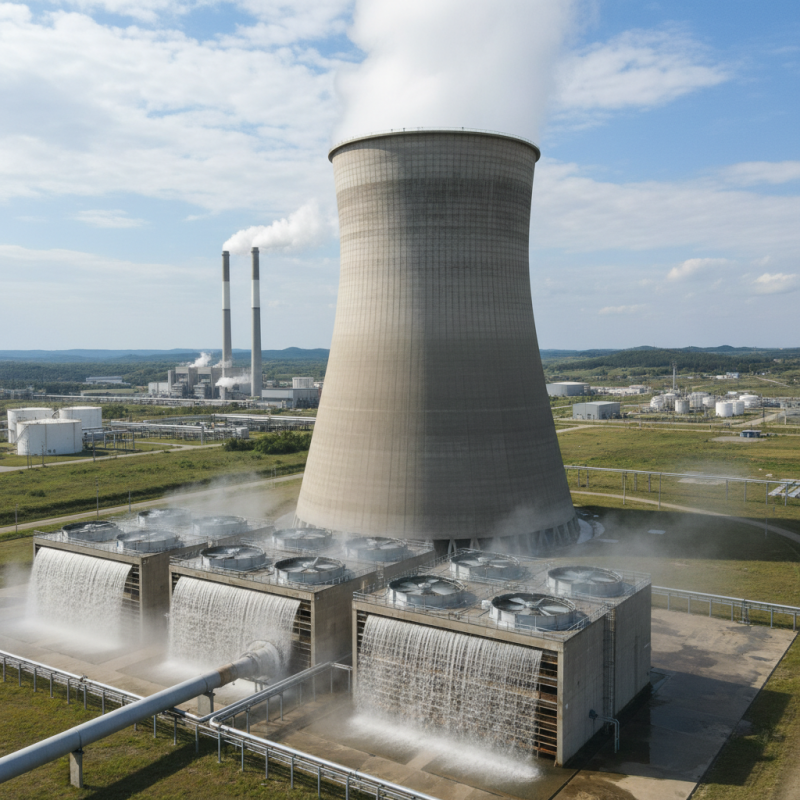
A cooling tower is a heat removal device. It uses water and air to cool fluids. This process is crucial in industrial settings. Factories and power plants commonly use cooling towers. They help maintain efficient operations.
Inside a cooling tower, warm water circulates through fill media. This media increases surface area, allowing better air contact. Air moves upward while water trickles downwards. Evaporation happens when warm water meets cool air. This process reduces water temperature effectively.
Cooling towers can sometimes face challenges. For example, if the water quality is poor, it can affect performance. Regular maintenance is essential to prevent issues like scaling and corrosion. Observing these factors can lead to better efficiency.

Cooling towers are vital in various industries. They help remove excess heat from industrial processes. Understanding their key components is essential for effective operation.
The main component is the fill material. This increases the contact area between water and air. As water flows through the fill, it evaporates, cooling down. National statistics indicate that efficient fills can enhance cooling effectiveness by up to 30%. Another crucial component is the fan, which circulates air. Fans help maintain optimal airflow, ensuring the cooling process remains efficient.
Water distribution systems also play a significant role. They ensure even water distribution across the fill. Uneven distribution can lead to hot spots. Such inefficiencies may decrease the cooling performance. Regular inspections of these systems are necessary for optimal operation. Industry reports suggest that poorly maintained water distribution can reduce cooling efficiency by 20% over time.
Cooling towers are essential components in many industrial processes. They help to manage excess heat generated during operations. These structures use water to absorb heat and release it into the atmosphere. The process is surprisingly efficient and relies on basic principles of physics.
When warm water from a system enters the cooling tower, gravity pulls it down a series of fill media. This increases the contact area for heat exchange. As the water flows down, air is simultaneously drawn up through the tower. The interaction between water and air cools the warm water as some evaporates. The cooled water then collects in a basin at the bottom, ready to be recirculated.
It’s interesting, though, that not all cooling towers operate smoothly all the time. Factors like environmental conditions or maintenance issues can impact their efficiency. Sometimes, they struggle during extreme weather. Water quality also matters. Contaminants can clog systems, leading to inadequate cooling. Regular checks and consumer awareness can improve performance.
Cooling towers are essential components in many industrial and commercial systems. They come in various types, each suited for specific applications. Two common types are open-circuit cooling towers and closed-circuit cooling towers.
Open-circuit towers use the natural evaporative process to cool water. Hot water from the system flows into a basin where it meets cooler air. This method is efficient but can lead to water loss through evaporation. Maintaining water quality can also be challenging due to debris and biological growth.
Closed-circuit towers, on the other hand, circulate water through a coil. The air cools the water inside the coil, which remains protected from debris. This design minimizes evaporation loss, making it suitable for areas with strict water regulations. However, they can be more complex and expensive to maintain.
Both types serve critical roles in industries like power generation and HVAC systems. Their efficiency can significantly affect overall energy usage. Evaluating their specific applications can lead to better choices for cooling needs.
Cooling towers are crucial in various industrial settings. They help in dissipating excess heat from processes. By using ambient air, they convert water into steam, cooling it efficiently. This process aids in maintaining optimal temperatures for machinery and equipment.
Benefits of cooling towers include improved efficiency. They lower energy costs by recycling water. Also, they reduce the overall environmental impact by minimizing thermal pollution in nearby water bodies. However, there are significant environmental considerations. Water consumption can be high. This may affect local water supplies. Proper management is essential to mitigate these concerns.
Tip: Regular maintenance is vital for cooling towers. This ensures they operate efficiently and minimizes the risk of leaks. Monitor water quality regularly to prevent scaling and corrosion, which could harm the environment. Keep an eye on local regulations too; they might change. Understanding these aspects is key for sustainable operations.
2025 Bio-Botanica, a division of Bio Answer Holdings Inc. All Rights Reserved.