
Acrylic Impact Modifiers (AIM) play a crucial role in enhancing the performance of polymers. These additives are essential in various applications, including automotive, packaging, and construction. The global acrylic impact modifier market was valued at over $1 billion in 2022, reflecting significant growth driven by demand for high-performance materials.
Acrylic Impact Modifiers provide flexibility and toughness, greatly improving material durability. They enable manufacturers to create products that withstand impact and stress. According to a recent industry report, products modified with acrylic have shown up to 30% increase in impact resistance. This enhancement is vital in competitive industries where quality and longevity are paramount.
However, not all modifiers are equal. Selecting the right Acrylic Impact Modifier requires understanding specific needs and performance criteria. As the market evolves, some additives may not deliver expected results. This highlights the need for careful evaluation and testing. Understanding the nuances can lead to better product outcomes and reduce material waste. The journey toward optimal performance in polymer applications begins with informed choices in acrylic modifiers.
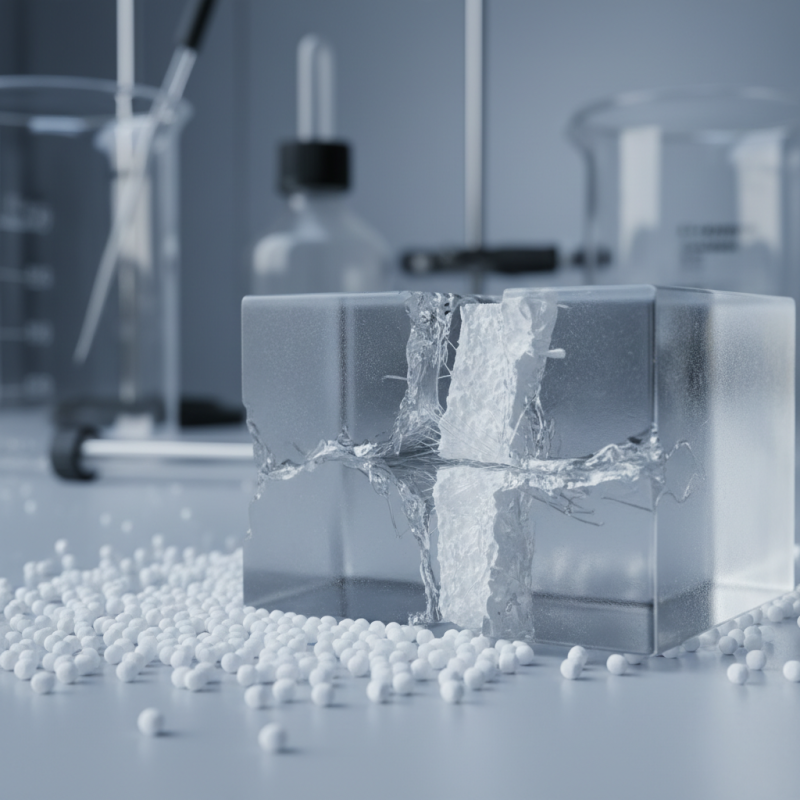
Acrylic impact modifiers are essential materials in the production of various polymers. They enhance the toughness and durability of plastic products. Industry reports indicate that adding only 5% acrylic impact modifier can significantly boost the impact resistance of polyvinyl chloride (PVC) by up to 150%. This improvement is crucial for applications demanding high resilience and longevity.
Key properties of acrylic impact modifiers include their clarity, compatibility, and efficiency. Clarity is vital for applications in transparent products. Compatibility with various resins ensures seamless integration during the manufacturing process. A report from the Plastics Industry Association highlighted how acrylic modifiers can improve processing efficiency by reducing melt viscosity. This characteristic allows for faster production cycles and cost savings.

Acrylic impact modifiers play a crucial role in enhancing the properties of polymer blends. They improve toughness and durability, which are essential for various applications. Adding these modifiers not only enhances impact resistance but also helps in achieving better temperature stability. These tools allow manufacturers to tailor materials to specific needs.
In processing, acrylic modifiers can improve the dispersibility of different components. A well-dispersed blend results in more uniform properties; this can significantly affect the final product's performance. However, achieving optimal dispersion can be challenging. If the blending process is not carefully controlled, it may lead to inconsistencies in material properties. Observations have shown that not all applications benefit equally from these modifiers.
Using acrylic impact modifiers also introduces some complexities. While they can enhance strength, they may alter the transparency of the polymer, which could be a drawback for certain applications. The balance between aesthetic properties and mechanical performance is a constant struggle in material science. In some cases, extensive testing is needed to ensure that all aspects meet the desired standards.
Acrylic impact modifiers play a crucial role in enhancing the mechanical properties of polymers. Their effectiveness often hinges on industry standards, which benchmark performance across various applications. Recent reports suggest that acrylic modifiers can improve impact resistance by up to 200%, making them essential in industries like automotive and construction.
Evaluating the efficiency of these modifiers involves assessing their compatibility with different resins. Compatibility affects not only the processability but also the final product's durability. Studies indicate that properly chosen modifiers can maintain clarity and gloss, achieving aesthetic outcomes without compromising mechanical strength. Discrepancies in performance are not uncommon, and it’s vital for manufacturers to conduct thorough evaluations.
Despite the impressive benefits, challenges remain. Variability in raw materials can lead to inconsistent performance. Regular testing and adherence to industry standards can mitigate these risks. Engineers must remain vigilant, always exploring new formulations that could enhance compatibility and efficiency, ensuring that they meet evolving market demands.
Recent innovations in acrylic impact modifier technologies have led to significant enhancements in material performance. These modifiers improve toughness and flexibility in plastics, making them more durable for various applications. The trend towards environmentally friendly materials is also reshaping the industry. Many manufacturers are exploring bio-based acrylic modifiers to reduce their carbon footprint. This shift shows a growing commitment to sustainability.
New formulations are being developed to boost impact resistance. For instance, combining acrylic modifiers with other polymers can create hybrids that perform exceptionally under stress. This innovation allows for a wider range of applications in construction and automotive sectors. However, there are challenges with consistency in quality and performance across different conditions. Industry experts caution that not all new formulations meet the rigorous standards required for high-performance applications.
Technological advancements also include improvements in processing techniques. These techniques enhance the compatibility of acrylic modifiers with various base materials. As a result, customers benefit from improved efficiency in production. Yet, the quest for the perfect balance between flexibility and strength remains ongoing. Innovators must continue to refine their approaches, ensuring that new technologies meet both safety and sustainability requirements.
| Feature | Description | Recent Trends | Innovation |
|---|---|---|---|
| Impact Strength | Enhances the toughness of acrylic materials significantly. | Developing high-performance modifiers suitable for low temperatures. | Incorporation of nanotechnology for improved molecular structure. |
| UV Resistance | Provides protection against UV degradation. | Emergence of self-healing materials that extend lifespan. | Utilization of photo-stable additives to enhance durability. |
| Processing Ease | Facilitates ease of processing during manufacturing. | Advancements in melt processing technology. | Introduction of easily dispersible materials for smoother blends. |
| Thermal Stability | Maintains performance under high-temperature conditions. | Shift towards heat-resistant formulations for extreme environments. | Enhanced cross-linking density in polymer structures for better stability. |
| Cost-effectiveness | Offers a balance between performance and manufacturing costs. | Optimizing formulations for reduced material usage without compromising quality. | Integration of recycled materials to lower overall costs. |
The impact modifier market has observed significant growth, driven by increasing demand across various sectors. According to a recent market report, the global impact modifier market is projected to reach $3.2 billion by 2025, growing at a CAGR of 5.6%. This uptick is primarily fueled by the construction and automotive industries, where high-performance materials are crucial. Acrylic impact modifiers enhance the toughness and durability of plastics, making them essential in these applications.
In the construction sector, acrylic impact modifiers improve the resilience of materials used in harsh environments. They play a pivotal role in achieving better weather resistance and mechanical integrity. As sustainability becomes more crucial, industries are emphasizing recyclable and eco-friendly modifiers. This shift is evident as manufacturers seek to align with environmental regulations. However, challenges remain, such as the need for cost-effective solutions while maintaining performance. Market players must navigate these complexities.
Moreover, the growth in consumer electronics underscores the need for advanced materials. Devices demand lightweight yet robust solutions that acrylic impact modifiers can provide. Yet, there is a constant push for innovation. The industry must focus on developing new formulations that cater to evolving needs. This balance between performance and cost presents an ongoing challenge for manufacturers.
2025 Bio-Botanica, a division of Bio Answer Holdings Inc. All Rights Reserved.