
Blog

What Is a Medical Oxygen Mask and How Does It Work?

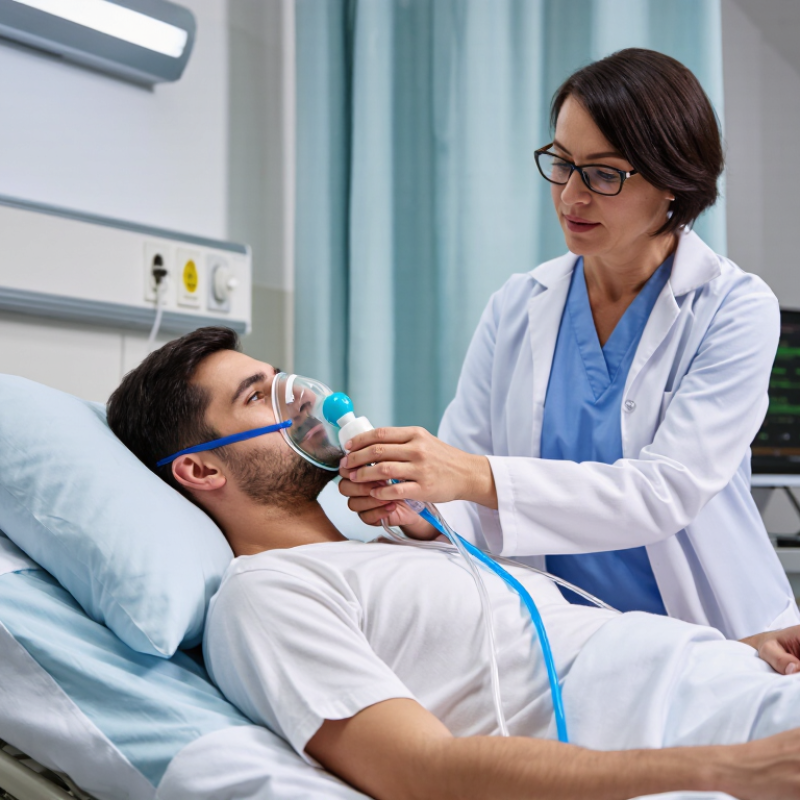
A Medical Oxygen Mask is a clinical device that delivers extra oxygen through the nose and mouth. It is commonly used in hospitals, ambulances, clinics, and supervised home care. When breathing alone cannot maintain a safe oxygen level, the mask helps supply oxygen from a cylinder or central medical system.

The design looks simple. It is not.

Oxygen travels through tubing into the mask. The patient then inhales the enriched air through small openings. A soft cushion helps the mask rest around the face, while an adjustable strap keeps it in position. Different masks provide different oxygen concentrations and flow rates. Healthcare professionals choose them according to the patient’s oxygen saturation, breathing pattern, age, and medical condition.

A loose mask may waste oxygen. A tight one may cause discomfort or skin pressure. This matters in real care.

Clinicians usually check the mask, tubing, flow setting, and the patient’s response. They may use a pulse oximeter, but that number is not the whole story. Comfort, alertness, breathing effort, and skin color also provide important clues. Evidence-based practice requires regular reassessment, not blind reliance on equipment.

Oxygen is helpful, yet it is not automatically harmless. Excessive oxygen can create risks for certain patients, especially those with chronic respiratory conditions. The mask also does not treat the underlying illness. It supports breathing while professionals investigate the cause.

Understanding how a Medical Oxygen Mask works can reduce fear and prevent misuse. Still, real situations are rarely perfect. Fit, movement, anxiety, and changing oxygen needs can complicate treatment. Professional guidance remains essential whenever oxygen therapy is considered.
What Is a Medical Oxygen Mask and How Does It Work?

Medical Oxygen Masks: Purpose, Types, and Clinical Applications

What Is a Medical Oxygen Mask and How Does It Work?

Medical oxygen masks deliver supplemental oxygen through the nose and mouth. They connect to an oxygen source through flexible tubing. The mask creates a pathway for oxygen to enter the airway during breathing.

Their purpose is to correct or prevent low blood oxygen levels. Clinicians may use them during pneumonia, asthma attacks, surgery recovery, or sudden breathing difficulty. A pulse oximeter helps assess oxygen saturation, but readings require clinical judgment. Skin temperature, movement, and poor circulation can affect accuracy.

Several types serve different needs. A simple face mask usually provides moderate oxygen flow for short-term support. A Venturi mask delivers a more controlled oxygen concentration, which can help some patients with chronic respiratory disease. A non-rebreather mask supplies high oxygen levels during severe distress, but it requires adequate flow and careful monitoring. Pediatric masks need an appropriate size and gentle fitting.

Fit matters. Gaps can reduce delivery and irritate the skin. Healthcare professionals also check breathing rate, alertness, comfort, and carbon dioxide risk.

More oxygen is not always safer. That point is easy to miss.

In some conditions, excessive oxygen can worsen gas retention or cause harm. Oxygen masks support treatment, but they do not replace airway management or treatment of the underlying illness. A mask may look simple, yet selecting the right type demands experience, assessment, and ongoing adjustment.

How Oxygen Flow Becomes FiO₂: Delivery Rates, Fit, and Breathing Patterns

A medical oxygen mask delivers oxygen from a supply source through tubing into the patient’s breathing space. FiO₂ means the fraction of inhaled oxygen. It is not simply the flowmeter number. A simple mask commonly runs at 5–10 liters per minute and may provide about 35–60% FiO₂. Actual delivery changes with mask fit, room air mixing, and the patient’s breathing pattern.

A loose mask allows oxygen to escape around the cheeks. Room air enters too. During rapid, deep breathing, the patient may inhale more gas than the mask can supply, lowering the effective FiO₂. A non-rebreather mask uses a reservoir bag and one-way valves. At appropriate flow, it can provide much higher oxygen levels, often around 60–90%, but only when the bag remains partly inflated and the seal works well.

Small details matter. Watch the reservoir bag.

Clinicians adjust flow while checking oxygen saturation, respiratory effort, skin color, and mental status. In some patients, especially those vulnerable to carbon dioxide retention, excessive oxygen may be harmful. The displayed flow rate is only an estimate of delivered oxygen. This is where practice becomes less tidy than textbook charts. A mask that looks correctly positioned may still leak during speech, coughing, or movement. Proper assessment and prescribed oxygen targets remain essential.

Simple Masks and Nasal Cannulas: 24–60% FiO₂ at 1–15 L/min

A medical oxygen mask delivers oxygen-rich gas through the nose and mouth. It supports breathing when room air cannot provide enough oxygen. Nasal cannulas are often used for mild support. At 1–6 L/min, they commonly provide about 24–44% FiO₂. FiO₂ means the fraction of oxygen a person inhales. The number is not exact. A simple face mask usually needs at least 5 L/min to reduce carbon dioxide rebreathing. At 5–10 L/min, it may provide roughly 40–60% FiO₂. The mask must fit comfortably, without pressing painfully against the skin.

Flow rate and FiO₂ are not the same measurement. Breathing speed, mouth opening, mask leaks, and lung condition can change the delivered concentration. Small leaks matter. A patient breathing rapidly may receive less oxygen than the displayed flow suggests. In clinical practice, staff check oxygen saturation, breathing effort, skin color, and mental alertness. A pulse oximeter offers useful information, but it is not perfect. Poor circulation can distort its reading. Flows near 10–15 L/min usually involve reservoir-style masks rather than simple masks. Calling every oxygen mask a “high-flow” device creates confusion. Oxygen should be adjusted by trained professionals, because too little or too much may be harmful in certain conditions.

What Is a Medical Oxygen Mask and How Does It Work?

Typical oxygen flow and estimated delivered FiO₂ for simple masks and nasal cannulas

A nasal cannula commonly delivers approximately 1–6 L/min and an estimated FiO₂ of 24–44%. A simple oxygen mask generally requires at least 5 L/min to reduce carbon dioxide rebreathing and may provide approximately 40–60% FiO₂ at around 5–10 L/min. Actual FiO₂ varies with breathing pattern, mask fit, and minute ventilation.

Non-Rebreather Masks: Reservoir-Bag Design and Up to 90% FiO₂

What Is a Medical Oxygen Mask and How Does It Work?

A medical oxygen mask delivers concentrated oxygen through a patient’s nose and mouth. A non-rebreather mask uses a soft face seal, one-way valves, and a reservoir bag. The bag stores oxygen between breaths. When oxygen flows continuously, it should remain partly inflated. This design can provide up to 90% FiO₂ under suitable clinical conditions. However, that figure is not guaranteed. Fit, breathing pattern, oxygen flow, and mask leakage all affect the delivered concentration.

During inhalation, the patient draws oxygen from the reservoir first. One-way valves limit the return of exhaled air into the bag. Other valves help prevent room air from entering during normal use. This reduces rebreathing of carbon dioxide. In clinical practice, a trained professional checks the seal, respiratory effort, oxygen saturation, and bag movement. A loose mask can lower FiO₂ quickly. A collapsed bag may signal inadequate flow or poor setup. The number sounds precise, but real breathing is uneven.

Tips: Keep the reservoir bag partially inflated, not flat. Use the prescribed flow rate. Never cover the mask openings. Check for leaks around the cheeks and nose. Reassess the patient frequently, especially if breathing becomes faster, weaker, or more distressed. A non-rebreather mask is a temporary support tool, not a complete treatment plan. Its use should follow professional assessment and local clinical protocols.

Safety and Monitoring: SpO₂ Targets, CO₂ Rebreathing, and ISO 80601-2-12

What Is a Medical Oxygen Mask and How Does It Work?

A medical oxygen mask delivers oxygen through the nose and mouth. It may be a simple face mask or a reservoir mask. Oxygen flow must match the mask design. A simple mask commonly requires at least 5 L/min to reduce carbon dioxide rebreathing. Low flow can make exhaled gas collect inside the mask. The patient may then rebreathe stale air.

Safety depends on a measured SpO₂ target, not the highest possible reading. The British Thoracic Society Guideline for oxygen use recommends 94–98% for most acutely ill adults. It recommends 88–92% for patients at risk of hypercapnic respiratory failure. These targets require clinical judgment. A pulse oximeter can appear stable while ventilation worsens. Cold fingers, movement, nail coverings, and poor circulation can also distort readings. The number is useful, but never perfect.

Tips: Check the mask seal, tubing, oxygen flow, and skin pressure regularly. Watch breathing effort, alertness, respiratory rate, and rising drowsiness. Escalate concerns promptly. ISO 80601-2-12:2020 addresses critical care ventilators and their safety requirements. It does not independently certify every oxygen mask. Therefore, staff should assess the complete oxygen-delivery system, including the interface, flow source, alarms, and monitoring plan. A small but important gap remains: SpO₂ shows oxygenation, not carbon dioxide clearance. For selected patients, blood-gas testing may be necessary.

What Is a Medical Oxygen Mask and How Does It Work? – Safety and Monitoring: SpO₂ Targets, CO₂ Rebreathing, and ISO 80601-2-12

Topic Device or Parameter Typical Data or Operating Principle Safety and Monitoring Considerations
Basic function Medical oxygen mask A patient interface that delivers oxygen-enriched gas through a mask, usually supplied from a wall outlet, cylinder, or oxygen concentrator. The mask delivers gas; it does not by itself measure oxygen saturation, carbon dioxide, or ventilation adequacy. Clinical monitoring remains necessary.
Gas exchange Oxygen enrichment Increasing inspired oxygen can raise alveolar and arterial oxygen levels when hypoxemia is caused by inadequate oxygen availability or ventilation–perfusion imbalance. Oxygen treats hypoxemia, not the underlying cause. Excess oxygen may be harmful in some conditions, including oxygen-sensitive hypercapnic respiratory failure.
Common interface Standard simple face mask Usually operated at approximately 5–10 L/min. Delivered oxygen concentration varies with the patient’s breathing pattern, mask fit, and minute ventilation. Do not normally use below 5 L/min because exhaled carbon dioxide may accumulate inside the mask. Check comfort, seal, skin pressure, and respiratory status.
Low-flow interface Nasal cannula Commonly used at approximately 1–6 L/min. The actual inspired oxygen concentration is variable and depends on breathing pattern and mouth or nose breathing. Inspect the nares and ears for irritation. Persistent hypoxemia, marked work of breathing, or altered mental status requires prompt clinical reassessment.
Reservoir interface Non-rebreather mask Often operated at approximately 10–15 L/min with a reservoir bag. One-way valves are intended to limit room-air entrainment and rebreathing of exhaled gas. The reservoir bag should remain partially inflated during inspiration. A poor seal, missing valve, or inadequate flow can reduce oxygen delivery and increase rebreathing risk.
Fixed-performance interface Venturi mask Uses calibrated entrainment ports to provide a more predictable oxygen concentration, commonly about 24%, 28%, 31%, 35%, 40%, or 60%, depending on the adapter. Use the flow rate specified for the selected adapter. Do not cover the entrainment ports, because this can alter the intended oxygen concentration.
Oxygen target Most acutely ill adults A commonly used target range is SpO₂ 94–98%, unless a different target is prescribed for the individual patient. Titrate oxygen to the prescribed target rather than automatically using the highest possible oxygen concentration. Reassess after changes in flow or interface.
Oxygen target Patients at risk of hypercapnic respiratory failure A commonly used target range is SpO₂ 88–92% pending blood-gas assessment and individualized medical direction. This may apply to selected patients with chronic obstructive pulmonary disease or other risk factors. Oxygen saturation alone cannot detect carbon dioxide retention.
Pulse oximetry SpO₂ monitoring Provides a noninvasive estimate of arterial oxygen saturation and a pulse rate. Readings can be affected by motion, poor perfusion, nail products, skin temperature, and sensor positioning. Interpret the number with the clinical picture. Verify unexpected readings, check the waveform or signal quality, and use an arterial or venous blood gas when clinically indicated.
Ventilation monitoring Respiratory rate, work of breathing, and mental status These observations help identify fatigue, hypoventilation, worsening respiratory distress, or reduced consciousness. A normal or improved SpO₂ does not prove adequate ventilation. Look for rising respiratory effort, drowsiness, confusion, shallow breathing, or deteriorating gas exchange.
CO₂ rebreathing Simple mask risk If fresh-gas flow is too low, exhaled gas may remain in the mask and be inhaled again. A minimum flow of about 5 L/min is commonly specified for a standard simple mask. Watch for headache, drowsiness, confusion, worsening respiratory effort, or unexpected clinical deterioration. Suspected carbon dioxide retention needs urgent clinical assessment and appropriate blood-gas testing.
Mask fit Seal, position, and comfort A correctly positioned mask should cover the nose and mouth as intended without excessive leakage or compression. Check for leaks, pressure injury, claustrophobia, vomiting risk, and the patient’s ability to remove the mask if necessary. Never obstruct exhalation ports.
Fire safety Oxygen-enriched environment Oxygen itself is not flammable, but it strongly supports combustion and can make fires start more easily and burn more intensely. Keep oxygen away from smoking, flames, sparks, petroleum-based products, and heat sources. Follow the applicable healthcare facility oxygen-safety procedures.
Escalation indicators Failure of oxygen therapy Persistent low SpO₂, increasing oxygen requirement, severe work of breathing, cyanosis, exhaustion, or altered consciousness may indicate inadequate support. Seek urgent clinical review. A conventional oxygen mask may be insufficient, and advanced support such as high-flow oxygen, noninvasive ventilation, or invasive ventilation may be considered by qualified clinicians.
Applicable standard ISO 80601-2-12 This standard addresses particular safety and essential-performance requirements for critical-care ventilators, not ordinary oxygen masks as standalone products. Do not assume that an oxygen mask is covered by this ventilator standard. The relevant requirements depend on the complete medical device system, intended use, and applicable regulatory standards.
Documentation Clinical record Record the interface, oxygen flow or selected concentration, SpO₂ response, respiratory assessment, and any prescribed target range. Document changes and reassessment times. Oxygen should be treated as a medication requiring an indication, target, monitoring plan, and adjustment or discontinuation plan.
Clinical note: Flow rates, SpO₂ targets, and device selection must be individualized by qualified healthcare professionals. Local protocols, product instructions, and the patient’s clinical condition take precedence.
Botanical Extracts Manufacturing | Manfacture botanical extracts for supplements.