
Blog

Top 10 Dental Implant Torque Wrenches for 2026

A Dental Implant Torque Wrench may look like a small instrument, but its reading can shape a critical clinical step. A clear scale, dependable calibration, and a secure connection all matter. So does the clinician’s judgment. No wrench replaces the implant system’s instructions or the practitioner’s training.

Implant dentistry authority Dr. Carl E. Misch emphasized careful planning and sound clinical judgment throughout his published work. A practical paraphrase of that approach is simple: “Use controlled force, guided by the treatment plan—not guesswork.” This is an editorial summary, not a verified direct quotation. That distinction matters. Torque recommendations vary by implant system, component, and clinical situation.

This 2026 guide compares ten Dental Implant Torque Wrench options through practical details: measurement range, display readability, handling, cleaning requirements, and calibration support. Picture a clinician checking a faint scale under operatory lights, then confirming the instrument’s setting before use. Small design differences can matter. They do not guarantee better outcomes. The best choice depends on compatibility, validated instructions, and the needs of the practice. Some product details may change, too; verify current manufacturer documentation before relying on them. A ranking can help narrow the field, but it cannot replace clinical training or careful review.
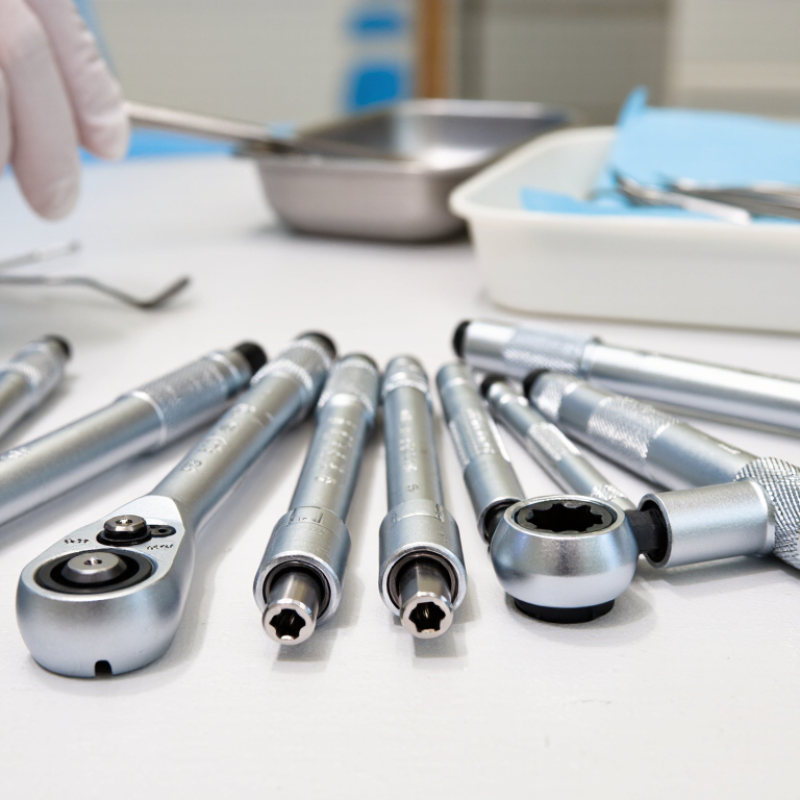
Top 10 Dental Implant Torque Wrenches for 2026

What Dental Implant Torque Wrenches Do and How They Work

A dental implant torque wrench applies a controlled turning force to implant components. Clinicians use it to tighten compatible screws or place certain implants, depending on the instrument’s design. The target torque is usually stated in newton-centimeters and must follow the implant system’s instructions. Too little force may leave a connection loose; too much can damage a screw or component. Small differences matter.

Many wrenches use a click mechanism. When the selected torque is reached, the handle gives a tactile or audible signal. Stop applying force at that point. Continuing to turn can overshoot the setting. Other designs use a scale or beam that shows the applied force directly. A torque wrench does not assess bone integration or prove that an implant is stable. That distinction matters.

Before use, clinicians check the instrument’s condition, settings, and cleaning requirements. Calibration can drift with wear, so follow the manufacturer’s maintenance schedule and verify accuracy when required. In a busy treatment room, the click can feel reassuring. Still, it is easy to trust it too much: correct technique, compatible components, and clear visibility remain important.

Top 10 Dental Implant Torque Wrenches for 2026 — What They Do and How They Work

Torque wrenches help clinicians apply a specified rotational force when tightening implant components. The chart shows ten reference torque values and their exact equivalents in newton-metres; it is not a product ranking or a clinical recommendation.

A calibrated wrench reaches its preset torque and signals the operator, helping reduce the risk of under-tightening or over-tightening. The required setting depends on the specific implant component and its instructions for use; always follow those instructions.

Key Features and Standards for Comparing Implant Torque Wrenches

Top 10 Dental Implant Torque Wrenches for 2026
Key Features and Standards for Comparing Implant Torque Wrenches

Comparing implant torque wrenches starts with the torque range required by the implant system. Check that the wrench covers those values without forcing use near its limits. Clear scale markings, a secure setting mechanism, and a readable click or other feedback help reduce handling errors. Accuracy matters, but repeatability matters too: ask for test data and calibration documentation. A tool that gives inconsistent readings is difficult to trust.

Tips: Confirm the connector fits your drivers. Review the manufacturer’s cleaning and sterilization instructions, then check whether repeated cycles affect performance. Look for calibration guidance and service support. Standards such as ISO 6789 address hand torque tools, but do not assume a dental wrench is covered; verify the stated scope and supporting documents.

Also compare grip comfort, weight, and ease of disassembly. A textured handle can be useful with gloved hands, while a crowded scale may be hard to read under operatory lighting. Product rankings cannot replace compatibility checks or clinical instructions. And specifications may look excellent on paper; without transparent test methods, that should give you pause.

Top 10 Dental Implant Torque Wrenches for 2026 — Key Features and Standards for Comparing Implant Torque Wrenches A brand-neutral comparison of common wrench designs and selection criteria; entries are design profiles, not ranked product models.
No. Wrench design Torque indication or control Potential strengths Points to check before use Relevant standards and guidance
1 Beam-type manual wrench A pointer moves across a calibrated scale as the handle is loaded. Direct visual indication; simple mechanical design. Check scale readability, viewing angle, calibration status, and the manufacturer’s permitted torque range. ISO 6789-1 and ISO 6789-2 may be relevant to manually operated torque tools; confirm applicability for the specific dental instrument.
2 Click-type preset wrench Signals mechanically when the selected torque setting is reached. Provides a clear tactile or audible endpoint without requiring continuous scale reading. Confirm how to set and lock the value, whether continued loading can increase torque, and the required reset or storage position. Where applicable, compare the tool’s declared accuracy and calibration process with ISO 6789-1/-2 requirements.
3 Slip-type torque-limiting wrench Slips or disengages at its designed torque limit. Can reduce the risk of continued tightening after the limit is reached. Determine whether the limit is fixed or adjustable and whether the mechanism requires inspection or servicing. Check the manufacturer’s instructions and risk controls; ISO 14971 describes medical-device risk-management principles.
4 Adjustable ratcheting wrench Allows a torque setting to be selected; a ratchet supports rotation in the intended direction. One instrument may support multiple manufacturer-specified torque settings and access conditions. Verify the adjustment increments, locking method, ratchet direction, compatible connection, and calibration interval. ISO 6789-1/-2 may provide a comparison framework for applicable manual torque tools; verify the declared scope.
5 Non-ratcheting manual wrench Torque is applied directly through the handle, with indication or limitation determined by the design. Fewer moving parts than a ratcheting design; may be straightforward to inspect. Check access, handle ergonomics, direction of use, and whether torque is indicated, preset, or dependent on operator technique. Review the device instructions and applicable manual torque-tool requirements; do not assume all designs fall within the same standard scope.
6 Digital torque wrench Electronic sensor displays torque and may provide an audible, visual, or vibration alert. Can make the applied value easier to read and may provide recorded measurements, depending on the device. Check calibration, battery status, display units, cleaning restrictions, software or data functions, and sterilization compatibility. ISO 14971 may be relevant to risk management. Any electrical or software-related requirements depend on the device’s design and intended use.
7 Low-torque-range driver Designed for lower manufacturer-specified torque settings, often used for prosthetic components. A suitable scale or control range can make small settings easier to select and apply. Compare the required component torque with the instrument’s stated range, resolution, accuracy, and connection type. Use the implant or component instructions for the prescribed torque; no single universal torque value applies to all systems.
8 Higher-torque surgical wrench Designed for the torque settings and procedures specified for the instrument and compatible system. May offer a robust handle and interfaces intended for surgical access and loading. Confirm the permitted range, direction, compatible driver, and procedure-specific instructions. Do not infer suitability from handle size alone. Follow the relevant implant-system instructions and the instrument’s validated use and reprocessing instructions.
9 Interchangeable-head wrench Uses replaceable or detachable heads with a common torque-control handle. May support different compatible connections while retaining one torque-control unit. Check head compatibility, secure attachment, cleaning access, and whether calibration applies to each approved head-and-handle combination. ISO 17665 concerns development, validation, and routine control of moist-heat sterilization processes; it is not a torque-accuracy standard.
10 Dual-purpose surgical and prosthetic wrench May provide more than one setting or configuration for distinct manufacturer-approved tasks. Can reduce the number of separate instruments required when the approved functions match the clinical workflow. Confirm each mode’s range, selection method, connection, and cleaning or sterilization instructions; avoid using one setting as a substitute for another. ISO 13485 addresses quality-management systems for medical devices; certification of a manufacturer does not by itself establish an individual wrench’s accuracy.

Comparison note: Torque ranges, accuracy, calibration intervals, compatible connections, and sterilization limits are instrument-specific and are not standardized across all dental implant systems. Confirm these details in the current instructions for use and the applicable implant or component instructions. ISO 10993 and ISO 15223-1 may also be relevant to device materials or labeling where applicable; neither specifies a universal implant-wrench torque range.

How to Choose a Torque Wrench for a Dental Implant Practice

Top 10 Dental Implant Torque Wrenches for 2026
How to Choose a Torque Wrench for a Dental Implant Practice

Choosing a torque wrench starts with the procedures your practice performs. Check that its measurement range covers the torque values specified for your implant components, with clear Ncm markings that are easy to read under operatory lighting. A ratcheting head can help in tight spaces, while a comfortable grip matters during repeated use. Small details matter. Confirm the instrument’s cleaning and sterilization instructions before adding it to your workflow.

Accuracy deserves more than a quick glance. ISO 6789-1:2017 sets requirements and test methods for hand torque tools, offering a useful reference when reviewing calibration documentation. Ask how calibration is verified, how often it is due, and whether the wrench can be checked or serviced. A sticker is only a snapshot, not proof of perfect performance between checks.

The clinical reason for care is clear, though a wrench alone cannot prevent complications. A systematic review by Pjetursson and colleagues reported an estimated 8.8% five-year rate of technical complications for implant-supported fixed dental prostheses (Clinical Oral Implants Research, 2012; 23, Supplement 6). That figure covers several complications, not just screw loosening. Compare candidate wrenches for repeatability, compatible drivers, readable settings, and practical maintenance support; then follow the component-specific instructions for each case. I would still review the workflow periodically, because busy teams can miss small calibration or handling steps.

Top 10 Dental Implant Torque Wrenches to Consider in 2026

Choosing among the top 10 dental implant torque wrenches to consider in 2026 means looking beyond the display. A useful wrench should feel balanced, show its setting clearly, and match the connection system in your clinic. Small details count. These options cover different needs:

1) calibrated click-style 2) beam-style 3) preset torque 4) adjustable torque 5) digital display 6) compact handle 7) extended handle 8) autoclavable construction 9) interchangeable heads 10) dual measurement scales.

Each design has trade-offs. A click can be easy to feel through gloves, while a beam scale offers a visible reading but needs careful viewing. Digital displays may be clear, yet batteries add another item to check. Preset tools can simplify routine workflows, but only when the setting fits the procedure and manufacturer instructions. Confirm compatibility, cleaning requirements, and calibration guidance before choosing. No wrench is perfect; even a readable scale can feel awkward in a crowded tray.

Tips: Check the calibration record and inspect the head for wear. Compare the indicated setting with the applicable product instructions, not memory. Try the grip with gloved hands. A few minutes of evaluation can reveal more than a polished product photo.

Calibration, Cleaning, and Safe Use of Implant Torque Wrenches

Calibration is not a formality. An implant torque wrench must deliver the value shown on its scale, not an approximate click. Follow the instrument’s instructions for calibration intervals and use a qualified service provider when calibration is due or accuracy is in doubt. Keep a record of service dates and results. Do not guess.

Before use, check the scale, connection, and moving parts under good light. Look for cracks, corrosion, looseness, or a mechanism that feels uneven. Set the required torque as directed, and apply force steadily along the handle. Stop when the wrench signals the target; extra pressure can affect the result. Small parts matter. A rushed check is easy to miss.

After use, remove visible debris promptly, then clean and sterilize the wrench according to its instructions and your clinic’s validated process. Do not immerse it unless the device is designed for that method. Dry it fully before storage, and keep it protected from knocks and moisture. If markings are unreadable or operation feels abnormal, remove it from service and seek assessment. Even careful routines can slip. A brief inspection helps catch that.

Botanical Extracts Manufacturing | Manfacture botanical extracts for supplements.