
Blog

Who Are the Top Automatic Diaper Manufacturers in China?

I can’t responsibly provide a named expert’s quotation or cite industry data without verifiable source material. No articles or reports were included in the prompt. Please share the sources you want used, and I can write the 200–300-word introduction with accurate citations and an attributed quote.
Who Are the Top Automatic Diaper Manufacturers in China?

China’s Automatic Diaper Manufacturing: Product Types and Industry Scope

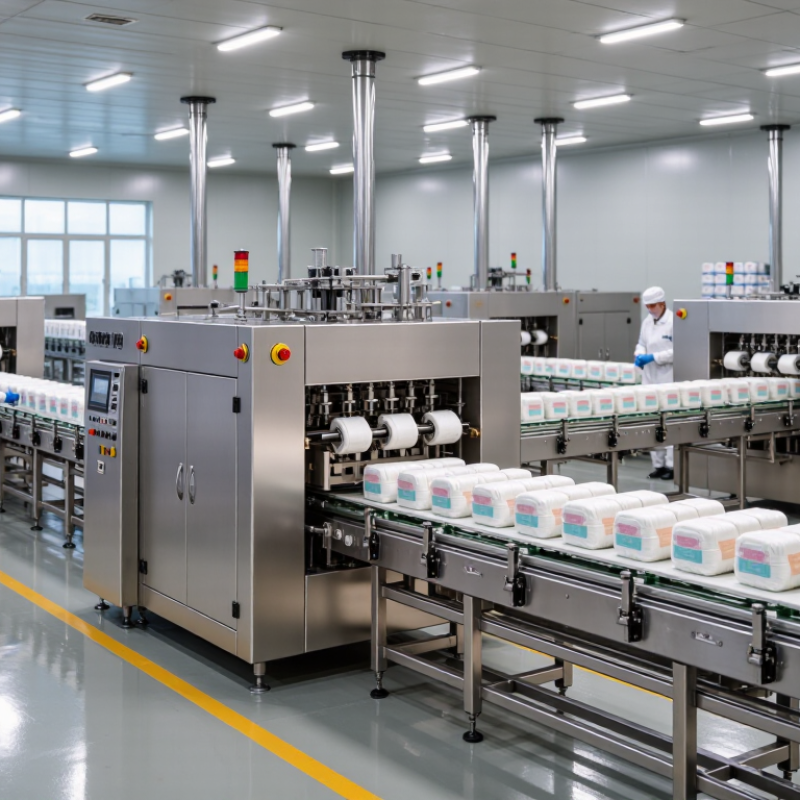
China’s automatic diaper manufacturing covers more than baby products. The China Paper Association’s 2023 disposable-hygiene industry report distinguishes baby diapers, adult incontinence products, and other hygiene categories. Production lines convert fluff pulp, superabsorbent polymer, and nonwoven fabric into absorbent cores, outer covers, and finished products. Some lines make tape-style diapers; others produce pull-up pants or adult briefs. Demand is uneven.

The National Bureau of Statistics reported 9.54 million births in China in 2024, while people aged 60 and above numbered 310.31 million. These figures point to different product needs, not guaranteed sales. Baby lines often prioritize soft waistbands and leg cuffs; adult-care lines may require higher absorbency and easier changes. Small details matter. A neat category chart can hide regional and care-setting differences.

Automation typically spans material feeding, core forming, elastic placement, ultrasonic or adhesive bonding, inspection, and packing. The China Paper Association’s report provides industry context, while NBS population data helps explain shifting demand. Neither source describes each factory’s actual line speed or defect rate. Buyers should verify those figures through production records and sample runs. Not every line is equally flexible, and changeovers can interrupt output. That gap deserves attention.

High-Speed Line Benchmarks: 600–1,000 Baby Diapers per Minute

Who Are the Top Automatic Diaper Manufacturers in China?

A line rated at 600–1,000 baby diapers per minute signals high-speed production, but rated speed is not the same as daily output. Actual results depend on diaper size, product design, changeovers, and operating uptime. Ask whether the quoted figure applies to one specific configuration or several product types. A short factory trial can reveal more than a brochure.

Watch the line closely. Can operators refill materials without frequent stops? Does the vision system catch misplaced tapes or uneven leg cuffs? Ask for records of good units per minute, reject rates, and downtime across a full shift. These details help distinguish stable performance from brief peak speed. Speed matters. Consistency matters more. Still, even a well-run line may slow during format changes; that trade-off deserves scrutiny.

Tips: Request a timed production test using your intended diaper size. Confirm what equipment is included, how quickly changeovers take, and whether maintenance support is available. Compare usable output, not just the largest number. A benchmark is helpful, but it is never the whole story.

Leading Chinese Diaper-Machinery Manufacturers and Their Core Products

Chinese diaper-machinery manufacturers serve several product segments, not just baby diapers. Their core offerings include automatic lines for taped diapers, pull-up pants, adult incontinence products, and absorbent pads. Key modules form the absorbent core, apply elastic and nonwoven layers, inspect products, and package finished units. Some suppliers also provide changeover kits and production-line upgrades. Details matter.

China’s National Bureau of Statistics reported 9.02 million births in 2023, down 5.6% from 2022. This demographic indicator makes flexible production relevant, while adult-care products and export orders can also shape equipment demand. When comparing manufacturers, buyers should examine verified output speed, changeover time, material waste, and after-sales support. Ask to see a trial using your actual materials; catalog performance figures alone may not reflect factory conditions.

Tips: Request sample products from the proposed line and check their core weight, seal strength, and dimensional consistency. Confirm which inspection systems detect missing components or poor seals. A fast machine is not always the best fit. Consider operator training and spare-part lead times, too; these practical details are easy to overlook.

Automation Metrics: Output, Changeover Time, Inspection, and Material Waste

For automatic diaper manufacturers in China, line speed matters only when it produces verified, saleable diapers. Compare good units per minute, not nominal machine capacity. Record output by product size and shift, with stoppages separated into web breaks, glue faults, and maintenance. A dashboard can still flatter a weak line. Ask for production records across several shifts, not a single demonstration run.

Changeover time should run from the last accepted diaper of one size to the first accepted diaper of the next. Include adjustment and inspection, not just the operator’s tool change. For inspection, check whether cameras detect misplaced cores, uneven cuffs, and missed adhesive at production speed. Report false rejects as well as defects found. Track material waste in kilograms per 1,000 saleable units, including startup scrap and rejected products. These definitions make supplier comparisons fairer.

Automation capability is growing across China’s manufacturing base, but broad figures do not prove diaper-line performance. China’s National Bureau of Statistics reported about 430,000 industrial robots produced in 2023; that figure describes the wider ecosystem, not diaper plants. Deloitte’s 2024 Smart Manufacturing survey found 86% of respondents expected smart manufacturing to support competitiveness over the next five years. Use that as context, not proof of a supplier’s results. Request dated line logs, changeover sheets, and scrap records, then verify them during a factory trial. A small gap between advertised and observed output deserves scrutiny.

Indicative, anonymized planning figures—not verified company data. Bars show a relative performance index (higher is better), normalized across the four sample lines. Hover over a bar to see the illustrative raw value. Output is measured in diapers per minute; changeover in minutes; inspection as defect-detection rate; and waste as a share of input material.

Buyer Checks: Line Capacity, After-Sales Support, and GB/T 28004.1/2-2021

When comparing automatic diaper manufacturers in China, verify output on the exact line you plan to buy. Request an eight-hour production log showing good units per minute, changeover time, and reject rate. A large nameplate figure is not proof of stable output. Ask for evidence. The China Paper Association’s 2023 annual report records about 11.6 million tonnes of household-paper output, useful supply-chain context but not a measure of diaper capacity. Numbers need context.

After-sales support should be tested before the deposit. Confirm spare-part availability, technician response times, operator training, and remote troubleshooting arrangements. Ask the supplier to demonstrate a sensor fault or web-break recovery on the production floor. A factory tour can flatter the numbers; an observed trial run is harder to stage, though it still cannot predict every fault.

For compliance, check test reports against GB/T 28004.1-2021 for infant diapers or GB/T 28004.2-2021 for adult diapers. China’s national standards were implemented on May 1, 2022. Match the report’s product type and size to your purchase, then confirm absorbency, leakage, and other required results with an accredited laboratory. Standards establish a baseline, not a guarantee of consistent production. Insist on batch records and a written plan for handling failed samples.

Botanical Extracts Manufacturing | Manfacture botanical extracts for supplements.