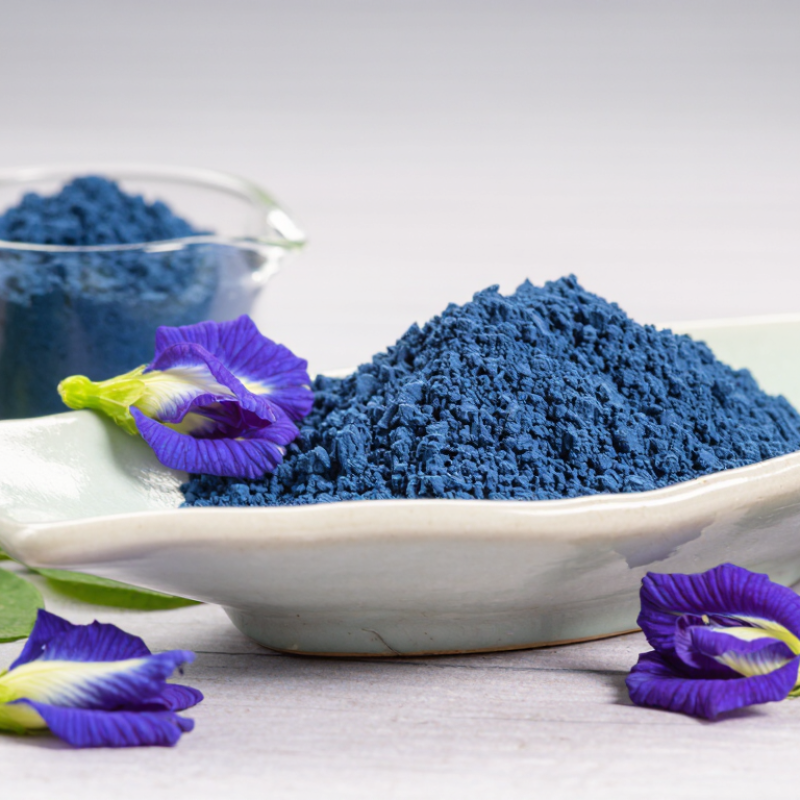
Choosing reliable Butterfly Pea Powder suppliers requires more than comparing prices on a spreadsheet. Global buyers need clear evidence of quality, stable sourcing, and practical export experience. The powder should show a vivid blue tone, fine texture, and clean botanical aroma. These details often reveal handling and storage conditions.
Dr. Anil Kumar, a botanical food-science consultant, states, “Consistency is the bridge between a beautiful color and a dependable ingredient.” His point matters when buyers evaluate suppliers across different harvests. A strong supplier should provide certificates of analysis, microbial test results, pesticide information, and batch traceability. Moisture levels also deserve attention. Excess moisture can create clumping, dull color, and shorter shelf life.
Small details matter.
This guide introduces leading Butterfly Pea Powder suppliers for international purchasing teams. It considers origin, processing methods, packaging, documentation, production capacity, and communication speed. Some suppliers specialize in food and beverage applications, while others serve cosmetics or wellness brands. Their strengths are not identical.
A lower price may look attractive, but it can hide inconsistent color or weak documentation. Even established suppliers may have occasional variations between batches. Buyers should request samples, compare laboratory reports, and confirm shipping conditions before making a larger commitment. That step may feel slow. It can prevent expensive surprises.
The best supplier is not always the largest one. Reliability depends on transparent records, responsive service, and the ability to maintain agreed specifications. This overview offers a practical starting point, while encouraging buyers to verify every claim independently.
Butterfly pea powder is a finely milled ingredient made from dried butterfly pea flowers. Its natural color ranges from deep blue to violet. The powder usually has a mild, earthy, and slightly grassy taste. It contains anthocyanins, plant pigments that respond to acidity. A few drops of lemon juice can shift a blue drink toward purple or pink.
This ingredient is used in teas, lattes, smoothies, desserts, and natural food coloring. It can tint rice, icing, yogurt, and cocktail-free beverages without adding strong flavor. Warm liquids release the color quickly.
However, prolonged heat and direct sunlight may weaken its appearance. The powder also absorbs moisture easily, so clumps can form after opening. Keep it sealed and dry.
Global buyers should examine more than color. Reliable suppliers can provide botanical identity, origin details, processing information, and batch testing records.
Useful checks include moisture, microbial safety, pesticide residues, and heavy metals. Opaque packaging helps protect sensitive pigments during shipping.
A small trial batch is wise because samples may behave differently in real recipes. Some powders look vivid but taste dusty. That detail is easy to miss. Testing with lemon, milk, and heat can reveal practical performance before larger purchasing decisions.
Choosing top butterfly pea powder suppliers requires more than bright color or low pricing. Experienced buyers verify the botanical identity as Clitoria ternatea and confirm the plant part used. A clear certificate of analysis should show batch number, moisture, microbiological results, heavy metals, pesticide screening, and color or anthocyanin data. Ask for evidence. Results should match the delivered lot, not a generic template. Traceability matters.
Reliable suppliers explain farming regions, harvest timing, drying temperatures, milling controls, and storage conditions. Excess heat may weaken natural pigments, while moisture can encourage clumping and microbial growth. Inspect the powder for an even texture, clean aroma, and consistent blue-violet appearance. A retained sample and independent laboratory test can challenge reassuring paperwork. This extra check costs time. It can prevent costly recalls or rejected shipments. Suppliers should also use food-safe packaging, tamper-evident seals, and lot-level records.
For global purchasing, review the supplier’s food safety system, export documentation, allergen statement, and ability to meet destination-country requirements. Third-party certifications can support confidence, but buyers should verify their scope and validity. Communication is another standard. Can the team answer technical questions quickly and explain deviations honestly? No supplier is flawless. A minor color shift may reflect harvest conditions, yet unexplained variation deserves investigation. Evaluate samples across multiple lots before signing a long-term agreement. Consistency is earned, not promised.
Southeast Asia remains a major sourcing region for butterfly pea powder. Thailand and Vietnam often supply beverage-grade powder with a vivid blue tone. These materials suit teas, drink mixes, desserts, and natural color applications. Suppliers typically emphasize careful drying because excess heat can weaken the powder’s color. Ask for the harvest location, drying temperature, mesh size, and batch-specific certificate of analysis.
India and Sri Lanka offer different strengths. Their suppliers may focus on herbal ingredients, dried flowers, and powdered botanical materials. These products can work well in wellness blends, culinary formulas, and infusions. However, appearance can vary between batches. A darker blue does not always indicate better quality. Buyers should check moisture, microbial limits, pesticide results, and anthocyanin content before approving a shipment.
China also has established processing capacity, including fine milling and export packaging. Some facilities can provide customized particle sizes or bulk formats for manufacturers. Packaging matters more than it seems. Poor moisture protection can create clumps during sea transport. I have seen sourcing plans focus heavily on price and overlook storage conditions. That is a costly weakness. Regional expertise helps, but reliable documentation and independent testing still deserve equal attention. Fresh samples should be compared against retained production samples before large orders proceed.
Top Butterfly Pea Powder Suppliers for Global Buyers
When comparing butterfly pea powder suppliers, start with identity and batch consistency. The botanical name should be clearly listed as Clitoria ternatea. Ask for a recent certificate of analysis, not a generic document. It should cover moisture, microbial counts, heavy metals, pesticide residues, and color strength. A small sample can reveal clumping, dull color, or a grassy odor before a large purchase. Those details matter in beverages, bakery mixes, and natural coloring applications.
Certifications need careful checking. Food safety systems such as HACCP, GMP, or ISO 22000 can show controlled production, but certificates must be current and traceable. If organic status is important, verify the certificate’s scope and issuing body. Also request allergen statements, country of origin, processing details, and lot numbers. One report is not enough. A supplier may provide strong paperwork while delivering uneven powder later. That risk deserves direct questions about retention samples and complaint handling.
Pricing should be compared by landed cost, not only by the quoted kilogram price. Include packaging, testing, freight, duties, and payment terms. Minimum orders can range from sample quantities to pallet-level commitments. Smaller buyers may accept a higher unit price to reduce inventory exposure. Larger buyers should negotiate tiered pricing and consistent specifications. Be cautious with unusually cheap offers. They may reflect weaker testing, older stock, or hidden logistics charges. I would also compare three written quotations using the same specification. It takes longer, but it exposes assumptions that a quick spreadsheet can miss.
Indicative bulk-market benchmarks for comparing pricing, minimum order quantities, quality controls, and certification readiness.
The chart uses typical commercial ranges for butterfly pea powder: smaller trial orders generally carry higher prices, while larger contract volumes reduce the estimated price per kilogram. Buyers should verify moisture specifications, mesh size, anthocyanin or polyphenol testing, microbiological results, pesticide-residue testing, heavy-metal compliance, organic documentation, HACCP or ISO systems, and final MOQ directly with each supplier.
Indicative benchmark only: prices vary by origin, harvest, processing method, packaging, certification status, shipping terms, and order volume. No company or brand data is included.
Importing butterfly pea powder requires more than comparing supplier prices. Global buyers should request a current certificate of analysis, botanical identification, moisture data, and microbiological results. Testing for pesticides, heavy metals, and foreign matter may also suit the destination market. Requirements differ by country. A customs broker can verify the correct tariff code and import documents.
Packaging protects quality during long transit. Food-grade inner bags, sealed foil pouches, and strong export cartons help reduce exposure to oxygen, humidity, and light. Smaller packs may suit retail sales, while 10–20 kilogram liners can reduce handling costs for manufacturers. Each package should show the lot number, net weight, production date, and recommended storage conditions. Keep it cool and dry.
Logistics planning should include samples, production lead time, port schedules, and damage controls. Air freight is faster, but sea freight often works better for larger volumes. Buyers should clarify Incoterms, pallet dimensions, insurance, and temperature risks before payment. A pre-shipment inspection can reveal weak seals or inconsistent color. I have seen buyers focus on freight rates and overlook carton strength. That mistake becomes expensive after arrival. Suppliers should also explain how they manage batch variation, because natural powder rarely looks perfectly identical every time.
| Evaluation Dimension | Buyer-Ready Requirement or Indicative Data | Why It Matters for Global Buyers | Documents or Verification to Request |
|---|---|---|---|
| Botanical identity | Butterfly pea powder should be derived from Clitoria ternatea flowers. Confirm whether the product is made from blue flowers, white flowers, or a blended material. | Color intensity, anthocyanin profile, flavor, and end-use suitability can vary according to flower type and processing method. | Botanical specification, product specification sheet, photograph of raw material, and representative sample. |
| Product form and particle size | Common commercial formats include whole dried flowers, coarse cut material, and powder. Powder specifications may be stated by sieve size, such as 60–100 mesh, depending on the application. | Fine powders disperse more easily in beverages and extracts, while coarser materials may be preferred for tea infusions. | Particle-size or sieve analysis, appearance specification, and application sample. |
| Moisture control | A practical purchasing specification is often set at no more than 8–10% moisture, subject to the supplier’s validated process and the buyer’s regulatory requirements. | Lower, controlled moisture helps reduce caking, microbial growth, and quality loss during storage and transport. | Certificate of analysis, moisture test method, production batch number, and retention-sample policy. |
| Color and anthocyanin consistency | Require a defined color description and, when relevant, a quantitative anthocyanin or color-value range. Color may shift with pH, light, heat, oxygen, and storage time. | A stable color profile is important for beverage, bakery, confectionery, and natural-color applications. | Color-value test, anthocyanin test where applicable, reference sample, and storage-stability information. |
| Microbiological safety | Set acceptance limits for total plate count, yeast and mold, coliforms, Escherichia coli, and Salmonella according to the destination market and intended use. | Dried botanical powders can be exposed to environmental contamination during harvesting, drying, milling, and packing. | Recent microbiological certificate of analysis from an accredited or qualified laboratory. |
| Pesticide and contaminant controls | Request pesticide-residue testing against the limits applicable in the importing country. Heavy metals, aflatoxins, foreign matter, and adulterants should also be assessed when required. | Import authorities and food manufacturers may apply different maximum limits and testing expectations. | Multi-residue pesticide report, heavy-metal report, aflatoxin report where relevant, and risk-assessment statement. |
| Processing claims | Clarify whether the powder is conventional, organically produced, irradiated, steam-treated, freeze-dried, or spray-dried. Do not treat “natural” as a regulated certification claim. | Processing and certification status can affect labeling, customs clearance, buyer approval, and product positioning. | Valid certificate where a claim is made, process flow chart, allergen statement, and non-GMO statement if required. |
| Primary packaging | Typical bulk formats include food-grade inner liners inside kraft paper bags, woven sacks, or fiber drums. Common commercial pack sizes range from approximately 5 kg to 25 kg. | Moisture, oxygen, light, puncture resistance, and pallet stability influence shelf life and transport loss. | Packaging specification, food-contact declaration, net-weight tolerance, sealing method, and packaging photographs. |
| Shelf life and storage | Shelf life is commonly declared around 18–24 months when unopened and stored in a cool, dry, dark environment; the exact period must be supported by the supplier’s stability data. | Heat, humidity, light, and oxygen can accelerate color fading, oxidation, and caking. | Shelf-life statement, storage conditions, production date, expiry or best-before date, and stability information. |
| Minimum order quantity | Small trial orders may be available from approximately 5–25 kg, while standard export orders are often quoted by pallet, metric ton, or container quantity. | Order volume directly affects unit price, packaging format, production scheduling, and freight efficiency. | Written quotation showing minimum order, price basis, payment terms, sample policy, and validity period. |
| Production lead time | For stocked material, dispatch may be possible within several business days. Custom milling, testing, private labeling, or new production commonly requires approximately 2–6 weeks, subject to capacity. | Lead time affects inventory planning, promotional launches, and the risk of air-freight substitution. | Production schedule, cutoff dates, batch-release procedure, and confirmed ready-to-ship date. |
| Trade terms and landed cost | Compare EXW, FCA, FOB, CIF, or DDP quotations only after confirming what freight, insurance, customs clearance, duties, taxes, and destination delivery include. | The lowest product price may not produce the lowest landed cost after import charges and local handling. | Incoterms® 2020 term, commercial invoice, packing list, freight quotation, and duty classification confirmation. |
| Customs classification | Botanical powders may be classified differently depending on composition, processing, intended use, and national tariff rules. Confirm the applicable HS code with the importer or customs broker before shipment. | Incorrect classification can cause delays, reassessment of duty, or additional documentary requirements. | Product description, ingredient statement, customs ruling where available, commercial invoice, and packing list. |
| Export documentation | A standard shipment file may include commercial invoice, packing list, bill of lading or air waybill, certificate of origin, certificate of analysis, and any required health or phytosanitary document. | Document requirements vary by destination, product classification, packaging, and whether the powder is imported as food, an ingredient, or a botanical product. | Destination-country import checklist approved by the buyer’s customs broker or regulatory team. |
| Freight mode | Ocean freight is generally more economical for palletized or containerized bulk orders. Air freight is faster and may suit samples, urgent replenishment, or small shipments. | The selected mode changes freight cost, transit risk, carbon footprint, and inventory requirements. | Shipment dimensions, gross weight, pallet count, cargo readiness date, and freight quotation with validity. |
| Palletization and container utilization | Confirm bags or drums per pallet, pallet dimensions, gross weight, stackability, and whether pallets are treated or compliant with destination requirements. | Accurate loading data prevents unexpected dimensional charges, cargo damage, and inefficient use of container space. | Pallet map, packing list, gross and net weights, dimensions, and applicable wood-packaging compliance statement. |
| Supplier quality system | Prioritize traceable batch coding, documented sanitation procedures, calibrated testing equipment, complaint handling, and a defined product-recall process. | A documented quality system improves consistency and makes it easier to investigate nonconforming shipments. | Audit questionnaire, food-safety certification where applicable, traceability test, recall procedure, and recent corrective-action records. |
| Pre-shipment approval | Approve a representative sample and written specification before placing a bulk order. For repeat shipments, compare the new batch against the approved reference. | Pre-shipment approval reduces disputes over color, odor, particle size, moisture, and packaging condition. | Signed specification, approved sample, batch-specific certificate of analysis, and inspection or release checklist. |
Note: Indicative ranges are for procurement planning only. Importers should confirm current regulatory, tariff, labeling, testing, and documentation requirements with the competent authority and customs broker in the destination market.
2025 Bio-Botanica, a division of Bio Answer Holdings Inc. All Rights Reserved.