
Blog

Top 5 Tips for Improving Fertilizer Retention in Soil

Improving Fertilizer Retention in soil is not just an agricultural task; it's essential for sustainable farming. Dr. Emily Larson, a leader in soil science, emphasizes, "Effective fertilizer retention can change the fate of crops." Understanding how fertilizers interact with soil can lead to better crop yields and healthier ecosystems.

Many farmers struggle with nutrient loss due to leaching. Inaccurate application rates can harm both plants and the environment. Soil type, moisture levels, and organic matter all influence fertilizer retention. Think about your soil's texture and its ability to hold nutrients. Not every type of soil retains fertilizers equally well.

We must reflect on common practices. Are we using the right fertilizers? How often do we assess soil health? Adapting to new techniques can significantly enhance fertilizer retention. Employing these strategies could make a difference in productivity. It’s time to explore effective methods to keep nutrients where they belong: in the soil.
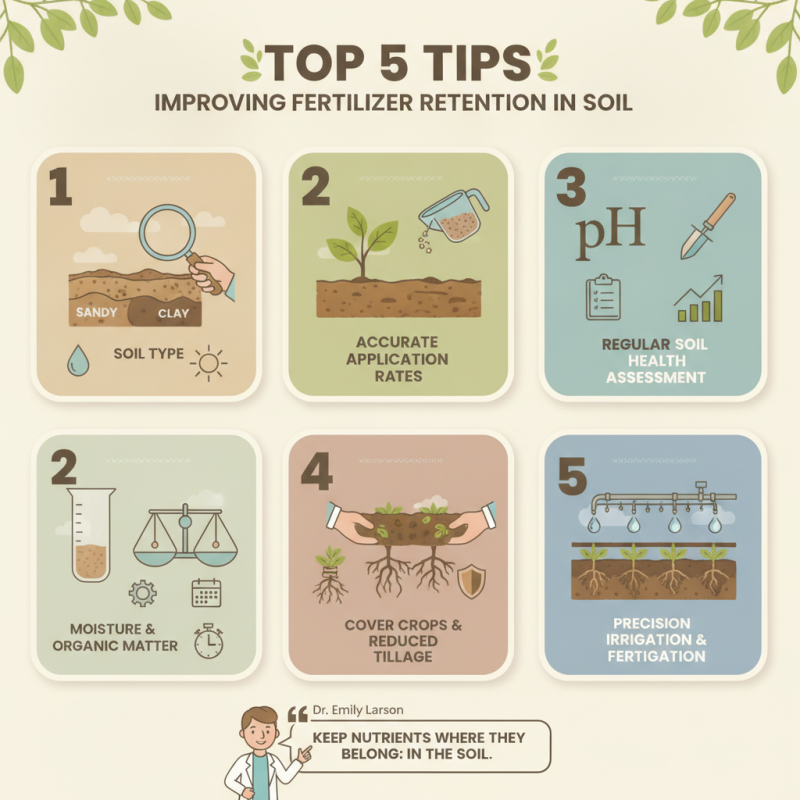
Top 5 Tips for Improving Fertilizer Retention in Soil

Understanding Soil Composition and Its Role in Fertilizer Retention

Soil composition plays a crucial role in how well fertilizers are retained. The balance of sand, silt, and clay determines the soil's ability to hold nutrients. Sand has large particles and drains quickly, often losing fertilizers. In contrast, clay holds moisture well but may become compacted, restricting root growth. Loamy soil, a mix of these three, tends to be ideal for retention.

Organic matter is another important factor. It enhances soil structure and increases nutrient-holding capacity. Incorporating compost or mulch can improve this aspect over time. However, not all organic materials are equal. Some may decompose too quickly or may not provide lasting benefits. Regular soil testing can help identify what your soil really needs, guiding the right amendments.

Water Retention is also influenced by soil texture. Sandy soils may require more frequent fertilization, while clay soils often lead to runoff. This can waste nutrients and create potential environmental issues. Understanding these aspects can lead to better fertilizer practices. Reflect on your soil's unique needs rather than following a one-size-fits-all approach.

Top 5 Tips for Improving Fertilizer Retention in Soil

Tip Description Effect on Fertilizer Retention
1. Improve Organic Matter Incorporate compost or well-rotted manure to enhance soil structure. Increases nutrient holding capacity.
2. Maintain Proper pH Levels Regularly test and adjust soil pH for optimal nutrient availability. Improves nutrient availability and retention.
3. Use Mulching Techniques Apply a layer of organic material to reduce evaporation. Helps retain moisture and nutrients in the soil.
4. Implement Crop Rotation Rotate crops annually to enhance soil health and nutrient diversity. Prevents nutrient depletion and promotes retention.
5. Practice Reduced Tillage Minimize soil disturbance to preserve soil structure. Enhances water and nutrient retention in the soil.

The Importance of Soil pH in Nutrient Availability and Retention

Soil pH significantly influences nutrient availability and retention. A study from the Soil Science Society indicates that optimal pH levels, typically between 6.0 and 7.5, enhance the absorption of vital nutrients. When pH levels drop below this range, essential elements like nitrogen and phosphorus become less available. This underlines the need for regular soil testing to monitor pH levels.

Low pH can lead to toxic elements like aluminum and manganese leaching into the soil. This phenomenon can hinder plant growth. Many farmers find themselves struggling with poor crop yields, partly due to inadequate pH management. It is estimated that nearly 40% of agricultural lands in the U.S. suffer from suboptimal pH levels.

Amending soil with lime can boost pH, but this process requires careful planning. Over-application may result in other nutrient imbalances. Incorporating organic matter can also improve pH stability. Monitoring and adjusting pH not only fosters nutrient retention but ultimately enhances soil health. Understanding these dynamics is crucial for sustainable farming practices.

Organic Amendments: Enhancing Soil Structure for Better Fertilizer Use

Organic amendments play a crucial role in enhancing soil structure, which in turn improves fertilizer retention. Studies indicate that incorporating organic matter, such as compost or green manure, can increase soil's water-holding capacity by 20-50%. This improvement allows nutrients to remain in the soil longer, reducing the need for frequent fertilization. Better structure leads to improved aeration and root penetration, creating a more conducive environment for plants.

Research published by the Soil Science Society suggests that organic amendments can enhance microbial activity. A thriving microbial community is key for nutrient cycling. Data shows that soils rich in organic matter can retain up to 80% of applied fertilizers. However, managing organic amendments can be challenging. Variability in nutrient composition can lead to inconsistent results if not properly matched to soil needs.

Farmers might also face difficulties in sourcing high-quality organic materials. This can hinder their efforts to improve soil structure effectively. Maintaining soil health requires ongoing education and adjustment. Implementing organic amendments is beneficial, yet it demands careful planning and periodic evaluation for optimal results. Consistent soil testing can help track improvements and guide future amendments.

Effective Water Management Practices to Improve Nutrient Retention

Effective water management practices are crucial for enhancing nutrient retention in soil. One key strategy is optimizing irrigation techniques. Using drip irrigation can minimize evaporation and runoff. This method directs water straight to the roots. It not only conserves water but also ensures that nutrients stay in the soil longer.

Another important practice is managing soil moisture levels. Regularly monitoring moisture prevents over-saturation. Too much water can leach nutrients away. Implementing soil moisture sensors can help here. They provide real-time data on soil conditions. Farmers can adjust their watering schedules based on this information.

Mulching is also an effective technique to improve retention. Organic mulches, like straw or wood chips, reduce evaporation. They cover the soil and protect it from harsh conditions. However, not all mulches break down at the same rate. It's essential to choose the right material for your specific soil type and climate. Thoughtful reflection on these practices can lead to more sustainable and productive farming.

Top 5 Tips for Improving Fertilizer Retention in Soil

Utilizing Cover Crops to Maximize Fertilizer Efficiency in Soils

Cover crops play an essential role in enhancing fertilizer efficiency in soils. These crops, grown between main planting seasons, help reduce nutrient loss. By covering the soil, they protect it from erosion and leaching. Certain cover crops, like legumes, can fix nitrogen into the soil. This natural process boosts soil fertility without relying solely on synthetic fertilizers.

In addition to nitrogen fixation, cover crops improve soil structure. Their roots create channels in the soil, allowing water and nutrients to penetrate more deeply. This can enhance water retention, making nutrients more accessible to subsequent crops. However, choosing the right cover crop is not always straightforward. Factors like local climate and soil type greatly influence their effectiveness.

Sometimes, growers may overlook the benefits of managing cover crop biomass. Timing is critical; if left uncontrolled, overgrown cover crops can compete for nutrients. Adjustments may be necessary to maintain balance between their positive effects and potential downsides. Constant evaluation of their impact on soil health is vital for achieving long-term success.

Botanical Extracts Manufacturing | Manfacture botanical extracts for supplements.