Top Vitamin Bottle Packaging Types for Global Buyers
Vitamin Bottle Packaging shapes how a supplement is protected, handled, and recognized on shelves. For global buyers, the right format depends on the product, shipping route, and customer expectations. No single bottle works for every formula.
PET bottles are lightweight and offer clear display options. HDPE containers feel sturdy and can suit products needing a more opaque pack. Glass may provide a premium appearance, though added weight can affect freight and handling. Amber colors can help limit light exposure, but buyers should confirm that the selected bottle and closure match the formula.
Small details matter. A cap should close consistently, while an induction seal or liner may add a useful barrier when appropriate. Desiccant space, neck finish, label area, and bottle capacity all deserve review before an order is placed. A sample filled with the actual product can reveal fit, odor, leakage, or labeling issues that a product sheet may miss. Worth checking.
For cross-border sourcing, compare supplier specifications, quality records, available testing, and production consistency. Ask how packaging performs during ordinary transport, including vibration and temperature changes. Requirements and consumer preferences differ by destination, so confirm local packaging expectations with qualified advisers before finalizing artwork or materials. This guide compares common bottle types through practical buying factors, not appearance alone. The best choice is usually a balance of protection, cost, usability, and supply reliability. Even careful planning has limits; real products and routes can behave differently than expected.
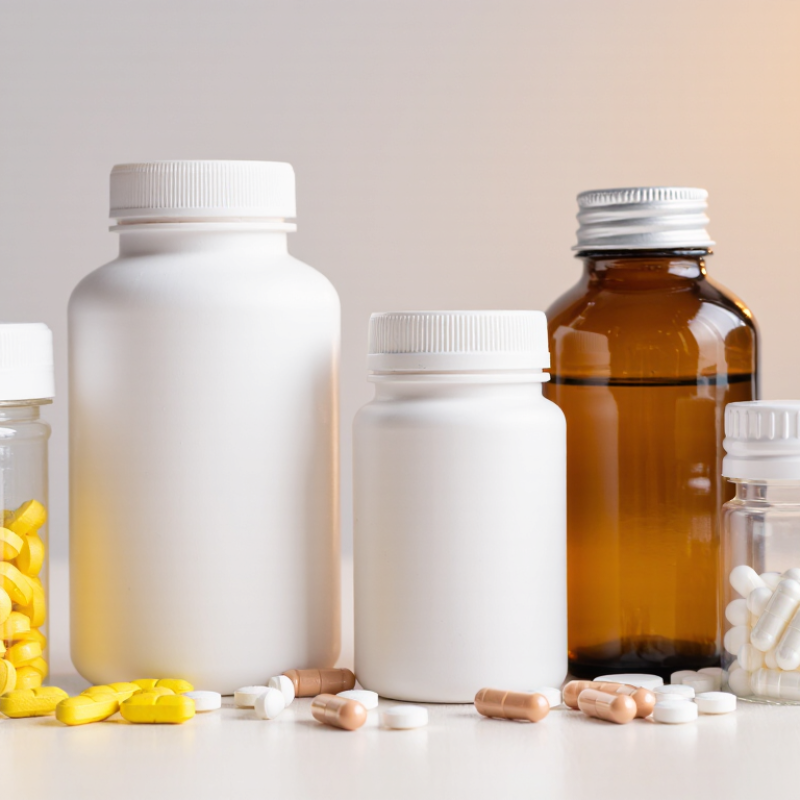
Vitamin Bottle Types: HDPE, PET, Glass, and Aluminum
Top Vitamin Bottle Packaging Types for Global Buyers
Vitamin Bottle Types: HDPE, PET, Glass, and Aluminum
HDPE bottles are lightweight and resist impact during routine handling. Their opaque walls also help limit light exposure, though the exact protection depends on the bottle design and closure. PET bottles are clear, light, and easy to shape, making them useful when shoppers need to see tablets or capsules. However, clarity alone does not guarantee product protection. Buyers should check compatibility with the formulation and closure.
Glass offers a solid barrier and a premium feel, but it weighs more and can break in transit. Aluminum containers are light and block light, yet their liners and closures must suit the contents. There is no universal winner. A low unit price can look attractive until freight, breakage, or packing needs are counted. Small details matter: a loose cap or poorly fitting liner can undermine otherwise suitable packaging.
Tips: Request samples and test them with the actual product, closure, and shipping conditions. Check bottle weight, opening comfort, label fit, and seal performance. Ask suppliers for relevant material specifications, then review them with a qualified packaging professional. I would not choose from appearance alone; that shortcut is tempting, but not always wise.
Material Selection: Compare Moisture and Oxygen Barrier Performance
For vitamin bottles, the wall material and closure both matter. Glass provides an excellent barrier to oxygen and moisture, but a poorly seated cap can still allow exchange. High-density polyethylene (HDPE) generally resists water-vapor transfer better than standard PET, while PET typically offers stronger oxygen protection than HDPE. These are useful comparisons, not guarantees; resin grade, wall thickness, colorants, and bottle geometry change performance.
Use measured data, not resin labels alone. USP General Chapter <671> describes moisture-vapor transmission testing, including testing at 40°C and 75% relative humidity. ASTM F1249 measures water-vapor transmission, while ASTM D3985 measures oxygen transmission. Compare suppliers’ results only when test conditions, units, and specimen thickness match. Small details matter.
A practical weakness is that flat-film data may not represent a finished bottle. Shoulder shape, cap liners, and seal consistency can shift the result. For humid routes, request whole-package moisture data; for oxidation-sensitive formulas, request oxygen-transmission data too. Include the intended storage temperature and humidity in the request. A crisp number without those conditions can mislead.
Container Testing: Apply USP <671> to Solid-Dose Bottle Protection
For solid-dose vitamins, a bottle must limit moisture and light exposure during storage and shipping. USP <671> provides performance tests for container systems, including moisture-vapor transmission and light transmission. The relevant test depends on the product and its packaging needs. A result should be interpreted against the applicable chapter requirements, not treated as a universal pass for every bottle.
Test the finished package in its intended configuration. That means the selected bottle material, cap, liner, and any induction seal should match the planned production setup. A closure that is slightly loose can change moisture protection. Small details matter. For a fair comparison, use consistent sample preparation and controlled test conditions, then document the method, results, and acceptance criteria. Confirm the current chapter edition and requirements with qualified packaging or quality staff.
USP <671> can help buyers compare protection claims with measured performance, but it cannot recreate every warehouse or shipping route. Temperature shifts, repeated opening, and rough handling add variables. Real distribution is messier. If the package includes a desiccant, evaluate the complete configuration rather than assuming the sachet solves every risk. This chapter can be a useful technical benchmark for vitamin packaging decisions; it does not replace product-specific stability studies or automatically establish compliance for every supplement market.
Closures and Safety: ISO 8317 Child-Resistance and Tamper Evidence
For vitamin bottles, closure choice is a safety decision, not just a line-item cost. ISO 8317:2015 evaluates reclosable child-resistant packaging through user testing, including a panel of 200 children aged 42–51 months. That test matters because a cap that looks secure may still be easy to twist with small, determined hands. Push-and-turn and squeeze-and-turn closures can add resistance, but their arrows, grip ribs, and opening steps must remain clear to adults. Small details count.
Tamper evidence serves a different purpose. A neck band that breaks on first opening, or an inner seal that visibly lifts, can show whether the bottle has been opened. It does not make the closure child-resistant. Buyers should assess both features on the filled bottle, then repeat checks after shipping simulation: a loose cap or cracked band changes the result.
ISO 8317 provides a useful benchmark for child resistance; it does not certify every tamper-evident feature. A practical weakness remains: older users or people with limited hand strength may struggle with a compliant cap. Test with real users, inspect seals under bright light, and record opening force and failure points. The data may be imperfect, but it is better than assuming a familiar cap is safe.
Global Compliance: FDA 21 CFR Part 111 and EU Regulation 1935/2004
For vitamin bottles, compliance begins before filling. In the United States, 21 CFR Part 111 requires dietary supplement makers to establish specifications for packaging and labeling materials. They must also check that received materials meet those specifications. A cap that fits today may still fail after repeated opening, so test closure torque and liner compatibility under realistic storage conditions.
In the European Union, Regulation (EC) No 1935/2004 requires food-contact materials to avoid transferring substances at levels that could endanger health or unacceptably alter food. This matters for bottles, liners, seals, and printing that may contact contents. Keep supplier declarations, material specifications, and risk-based migration test results together. The regulation is not a universal “food-safe” stamp. Details matter.
Bottle choice changes the risk profile. Opaque HDPE can help limit light exposure; PET offers a clear, lightweight option; amber glass provides a stronger light barrier but needs careful breakage control. Grand View Research estimated the global pharmaceutical packaging market at about US$124.2 billion in 2023, an adjacent-market indicator of packaging’s scale, not a vitamin-specific figure. A clean-looking bottle proves little. Teams should check the complete pack, including the seal, during stability testing. We sometimes focus too much on the bottle itself. The closure deserves equal scrutiny.
Top Vitamin Bottle Packaging Types for Global Buyers
Representative material density by packaging type (g/cm³)
How to read this chart: Material density is a physical property, not a measure of package quality, cost, or regulatory compliance. Actual values vary by material grade and formulation.
Compliance note: FDA 21 CFR Part 111 covers dietary supplement current good manufacturing practices, including packaging and labeling operations. EU Regulation 1935/2004 sets requirements for materials intended to come into contact with food. Check applicable requirements for the specific material, product, and market.