
Blog

What Is the Best China Sprinkler Irrigation Controller?

Choosing the best Sprinkler Irrigation Controller is not simply a matter of selecting the most expensive model. It requires evidence, field experience, and careful attention to local conditions. FAO AQUASTAT reports that agriculture accounts for roughly 70% of global freshwater withdrawals. That figure makes efficient scheduling more than a technical preference. It becomes a practical responsibility.

The U.S. Environmental Protection Agency’s WaterSense program states that weather-based irrigation controllers can reduce landscape water use by about 15%. For an average household, that may save nearly 8,800 gallons annually. The result depends on correct installation, functioning rain sensors, and realistic soil settings. A sophisticated controller cannot repair poor nozzle placement. That point is often missed.

Dr. Charles M. Burt, an irrigation engineer and founder of the Irrigation Training and Research Center, described effective irrigation with a clear principle: “Apply water according to the crop’s needs, not according to habit.” His observation remains highly relevant to residential landscapes, farms, and commercial sites. A reliable Sprinkler Irrigation Controller should therefore respond to rainfall, temperature, soil moisture, and plant requirements. It should also offer readable data and simple manual adjustments.

No controller fits every property. Clay soil may need slower cycles, while sandy soil drains quickly. A shaded garden behaves differently from a sunny lawn. This guide compares controller intelligence, sensor compatibility, installation demands, durability, and verified water-saving performance. Some product claims remain difficult to confirm. That deserves honest scrutiny.
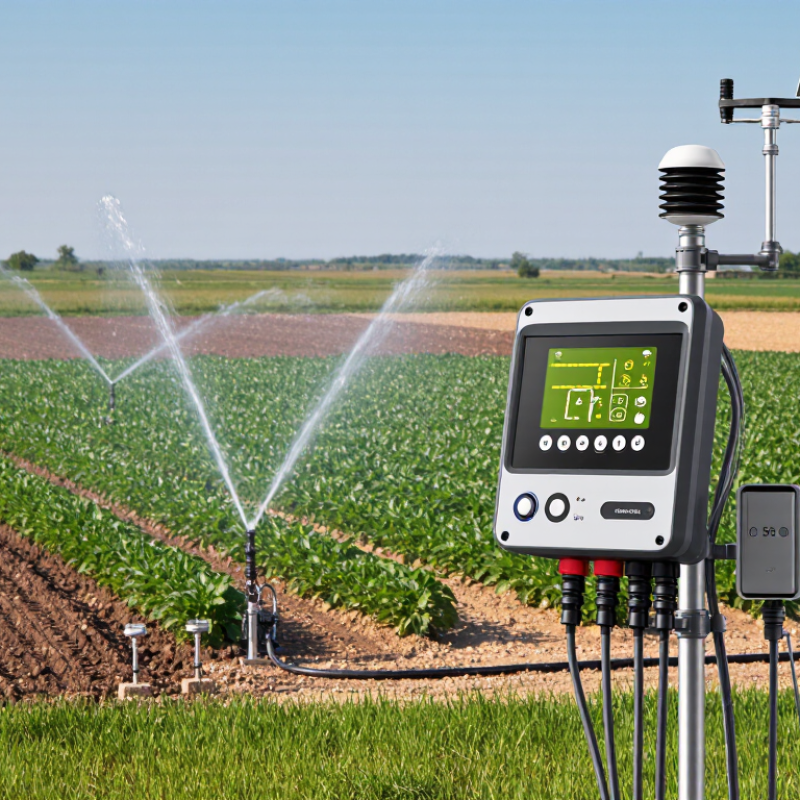
What Is the Best China Sprinkler Irrigation Controller?

What Is a Sprinkler Irrigation Controller?

A sprinkler irrigation controller is the system’s timing and decision center. It tells valves when to open, how long to run, and when to stop. Some controllers use fixed schedules, while advanced units respond to soil moisture, rainfall, temperature, or water pressure. In practical installations, this small device protects plants from irregular watering. It also helps reduce runoff around paths and planting beds.

A reliable China sprinkler irrigation controller should offer clear programming, stable valve control, and protection from dust and moisture. Check its input voltage before installation. Outdoor units need suitable enclosures and secure cable connections.

I often test each zone with a bucket and a pressure gauge. This simple check reveals blocked nozzles, weak flow, or uneven coverage. The controller cannot repair poor hydraulic design.

Weather-based scheduling can improve efficiency, but it is not always accurate. A shaded garden may remain wet after a hot day. A sensor may also respond slowly after sudden rain. I once trusted an automatic schedule too much and overlooked compacted soil. That mistake taught me to inspect plants, soil, and spray patterns regularly. The best controller is not merely feature-rich; it must match the site, water source, maintenance skills, and local climate. Simple controls are sometimes safer.

How China-Made Controllers Operate Irrigation Systems

China-made sprinkler controllers operate by translating a watering schedule into electrical signals.
The controller sends low-voltage power to solenoid valves, opening each irrigation zone at a programmed time. A separate relay can start the pump when pressure is needed.
Timing matters. Water moves slowly.

Many models use weekly schedules, seasonal adjustment, rain sensors, and manual controls. For example, a lawn zone may run for twelve minutes before the vegetable beds receive water. Moisture or rain sensors can interrupt watering after a storm. This prevents puddles around valve boxes and reduces unnecessary runoff.
In practical installations, technicians should check cable resistance, valve response, and pump startup current before regular operation.

Reliable operation depends on more than a digital screen. The enclosure should resist dust and moisture, while internal terminals need clear labeling. Battery backup helps preserve schedules during short power failures. Some controllers also record faults, such as disconnected valves or sensor interruptions.
Local electrical rules and irrigation requirements still apply. Certification documents should be verified rather than assumed.

Not every controller performs equally in harsh conditions. I have seen schedules work well on dry mornings but fail after loose wiring developed corrosion. That weakness was easy to miss. Regular inspection remains necessary.
Operators should compare programmed minutes with actual soil moisture and water pressure. A controller can automate decisions, but it cannot correct poor nozzle layout, blocked filters, or incorrect pressure settings.

Which Features Matter When Choosing a Controller?

What Is the Best China Sprinkler Irrigation Controller?

When choosing a China sprinkler irrigation controller, start with water control, not screen size. FAO AQUASTAT data show that agriculture uses about 70% of global freshwater withdrawals. A reliable controller should support weather-based scheduling, soil-moisture input, and multiple irrigation zones. These features help prevent watering after rainfall or during strong evaporation.

Look for accurate flow monitoring. A sudden flow increase may indicate a broken pipe or open sprinkler. Pressure protection also matters, especially on uneven farmland. The controller should accept local voltage standards and offer clear Chinese or multilingual settings. Remote access is useful, but poor network coverage can make it unreliable. Manual control is still necessary.

Weather-based systems can reduce outdoor water use by about 15%, according to U.S. EPA WaterSense research. That figure is useful, but not universal. Soil type, crop spacing, and operator habits change the result. Choose a unit with adjustable seasonal limits, data logging, and a local backup schedule. An IP65-rated enclosure is sensible for dusty, wet installations, though the rating alone cannot prevent every failure. Test sensors for several weeks. A technically advanced controller may still waste water when its settings are wrong.

How to Compare Chinese Sprinkler Controller Types

Choosing the best China sprinkler irrigation controller starts with comparing its control method, not its appearance. A basic timer opens valves at fixed hours and works well for small gardens. It is simple, affordable, and easy to repair. Look for clear programming, strong terminals, and a sealed enclosure. Battery models suit remote plots. Solar models reduce routine battery changes.

Weather-based controllers use temperature, rainfall, or forecast data to adjust watering. They can save water, but their accuracy depends on local weather information. Soil-moisture controllers measure conditions near plant roots. They may perform better in uneven soil, although sensor placement is critical. A sensor under wet mulch can produce misleading readings. It happens.

For larger gardens, compare the number of zones, valve output, wiring distance, and manual override functions. In field testing, I would run each zone separately and check pressure at the farthest sprinkler. I once overlooked cable resistance, and the distant valve opened slowly. That small mistake changed the watering pattern. Ask for test records, operating temperature data, and clear installation instructions. Check whether replacement sensors and waterproof connectors are easy to obtain. A reliable controller should recover after a power failure and retain its schedule. The best type depends on water pressure, garden size, soil conditions, and how often someone can inspect the system.

How to Select the Best Controller for Your Needs

Choosing the best China sprinkler irrigation controller starts with your field, not the controller’s appearance. Measure the irrigated area, water pressure, flow rate, and number of watering zones. A small garden needs different control capacity from a greenhouse or large farm. Write down these figures before comparing specifications.

Look for flexible scheduling, rain-delay settings, manual control, and reliable sensor connections. A controller should adjust watering for soil moisture, weather changes, and plant growth stages. Check whether it supports your power supply and valve voltage. Outdoor units also need strong protection against dust, humidity, and temperature changes. Simple controls matter. Workers should understand them quickly.

I have seen systems waste water because the controller was selected before the pump was tested. The screen looked impressive, but the water pressure was too low for several zones at once. That mistake changed my selection process. I now test one valve, measure actual flow, and compare it with the controller’s capacity. Keep installation records and inspect wiring after heavy rain. Remote access can help, but it should not replace local operation. Some advanced features may remain unused. Reliability often matters more than a crowded menu.

What Is the Best China Sprinkler Irrigation Controller? - How to Select the Best Controller for Your Needs

Comparison of common sprinkler irrigation controller configurations. Specifications are typical selection ranges and should be verified against the actual product datasheet.
Selection Dimension Basic Timer Multi-Station Controller Weather-Based Smart Controller Recommended Choice
Suitable Application Small gardens, balconies, and simple lawn zones Residential landscapes, small farms, and several irrigation zones Commercial landscapes, greenhouse areas, parks, and water-sensitive sites Match the controller to the number of independently managed zones
Typical Number of Stations 1–4 stations 4–24 stations 4–48 or more stations, depending on the expansion design Choose at least one spare station for future expansion
Scheduling Method Fixed start times and run durations Multiple programs, start times, and seasonal adjustment Automatic adjustment using weather, evapotranspiration, or sensor data Use weather-based scheduling where rainfall and water usage vary considerably
Rain Sensor Support Usually optional or unavailable Commonly supported through a dedicated sensor input Usually supports rain, soil-moisture, flow, or weather-station inputs Select sensor compatibility before purchasing
Flow Monitoring Not normally available Available on selected configurations Recommended for leak detection, blocked lines, and abnormal flow alerts Prioritize flow monitoring for high-value or large irrigation systems
Remote Access Local buttons or dial only Local control; remote access may require an additional module Mobile application or web access through Wi-Fi, cellular, or another network connection Choose the communication method available at the installation site
Power Options AC adapter or batteries Typically low-voltage AC; some versions support battery or solar power AC, low-voltage DC, battery, or solar options depending on the model Confirm voltage, transformer output, and backup-power requirements
Valve Compatibility Usually designed for standard low-voltage solenoid valves Generally compatible with common 24 V AC irrigation valves May support standard valves, latching solenoids, master valves, and pump-start relays Verify valve voltage, solenoid type, and maximum output current
Weather Resistance Indoor or sheltered installation is often preferred Outdoor versions commonly use a weather-resistant enclosure Outdoor models should provide a documented IP rating and sealed cable entries Check the certified IP rating; IP54 or higher is commonly preferred outdoors
Water-Saving Potential Limited; depends mainly on manual programming Moderate; seasonal adjustment and rain shutoff can reduce overwatering Highest potential when correctly configured with reliable weather or soil data Select automatic adjustment if water conservation is a primary goal
Setup Difficulty Low Moderate Moderate to high because sensors, network settings, and irrigation data may be required Allow time for hydraulic testing and controller calibration
Best Fit by Priority Lowest initial cost and simple operation Balanced cost, capacity, and programming flexibility Water efficiency, monitoring, automation, and remote management For most scalable systems, a multi-station smart controller offers the best long-term flexibility
Key buying checks: Confirm station capacity, valve voltage, maximum electrical load, sensor inputs, communication coverage, enclosure rating, local power supply, operating temperature, warranty terms, and availability of replacement parts before making a final selection.
Botanical Extracts Manufacturing | Manfacture botanical extracts for supplements.