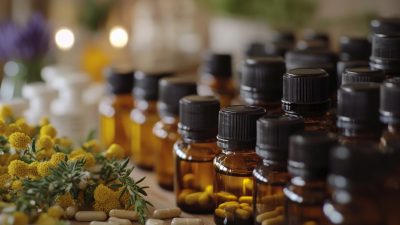
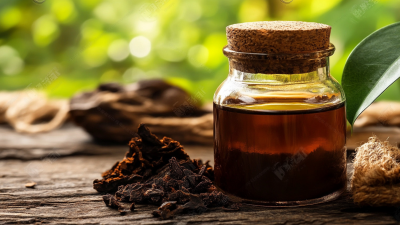
The 2026 market for Turkey Tail Mushroom Supplement products looks broader, but broader does not always mean better. Buyers may encounter capsules, powders, liquid extracts, gummies, blended formulas, and dual-extraction products. Each format offers a different balance of convenience, concentration, taste, and transparency.
Mycologist Paul Stamets has described turkey tail as “one of the most researched medicinal mushrooms in the world.” That reputation deserves careful interpretation. Research often examines standardized compounds, including beta-glucans, polysaccharide-krestin (PSK), and polysaccharide peptide (PSP). It does not automatically validate every commercial product. A strong supplement should identify its mushroom source, extraction method, active-compound testing, and manufacturing controls.
Look closely.
Fruiting-body extracts may appeal to buyers who want a clearly labeled mushroom structure. Mycelium-based products can still have value, but their grain content and testing details require attention. Dual extracts may offer wider compound coverage, although the label should explain the process. Powders provide flexibility, yet they may contain less concentrated compounds than extracts. Gummies are convenient, but added sugars and lower serving amounts can reduce their practical appeal.
This guide compares the leading Turkey Tail Mushroom Supplement types for 2026. It considers formulation, evidence, testing, dosage clarity, and everyday usability. Personal experience can reveal texture, digestion, and routine fit, but it cannot replace clinical evidence. Even experts must acknowledge uncertainty. Product quality varies, and some labels remain frustratingly vague. Buyers should ask better questions, compare certificates, and consult qualified healthcare professionals when medical conditions or medications are involved.
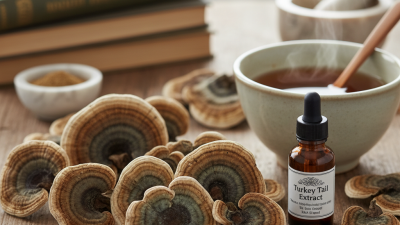
Turkey tail mushroom, scientifically known as Trametes versicolor, grows in thin, fan-shaped bands on fallen hardwood. Its brown, cream, and blue-gray rings resemble a turkey’s tail. Supplement makers commonly use dried powder or concentrated extracts. These products contain beta-glucans and other polysaccharides, including compounds studied as PSP and PSK.
Researchers have examined turkey tail mainly for immune-related activity. However, evidence varies by extract, dose, and study design. Results from standardized clinical preparations should not be transferred automatically to every capsule or powder. The National Cancer Institute describes turkey tail research as supportive-care research, not proof of a standalone treatment. Grand View Research valued the global dietary supplements market at approximately US$177 billion in 2023. That figure reflects strong consumer demand, not confirmed effectiveness. A reassuring label is not a clinical verdict.
Tips: Check the species name, extraction method, beta-glucan content, serving size, and independent testing details. Avoid products listing only “mushroom blend.” Ask a qualified healthcare professional before use, especially with immune-modulating medicines, pregnancy, or planned surgery. Storage matters too; damp powder can clump and lose quality. Some claims sound too confident. That deserves reflection.
Turkey tail supplements come in several forms in 2026, and each suits a different routine.
Capsules offer measured servings and easy storage.
Powders mix into coffee, soup, or smoothies, but their earthy flavor can surprise new users.
Liquid extracts use concentrated preparations and often come in small dropper bottles.
Gummies are convenient, although added sugars and lower mushroom content deserve attention.
Natural does not automatically mean better.
Buyers should check the label for the mushroom species, extracted part, serving size, and testing information.
A product listing should clearly identify Turkey tail, commonly associated with Trametes versicolor, rather than using vague mushroom blends.
Look for independent testing for contaminants and accurate ingredient amounts.
Research on Turkey tail is still developing, and supplement quality can vary between products.
I would not treat a supplement label as proof of a health outcome.
People taking medicines, managing allergies, or preparing for surgery should ask a qualified healthcare professional before use. That caution feels excessive sometimes, but it is sensible.
Tips:
When buyers compare turkey tail supplements in 2026, the format can affect value, texture, and label clarity. Turkey tail extracts are usually made by concentrating compounds from the mushroom. Many use hot-water extraction, while some products use dual extraction methods. The process may help release compounds that plain ground mushroom does not provide as efficiently. However, “extract” does not automatically mean stronger or better.
Powders contain dried, milled mushroom and usually offer a simpler ingredient profile. They can be mixed into coffee, soup, or smoothies, but their earthy taste is noticeable. Powders may also require a larger serving size. Blends combine turkey tail with other mushrooms, herbs, or nutrients. This can suit buyers seeking broader formulas, yet it makes comparison harder. One blend may contain only a small amount of turkey tail.
Read the Supplement Facts panel carefully. Check the mushroom’s scientific name, serving weight, extraction ratio, and stated beta-glucan content. A reliable product should identify testing for heavy metals, microbes, and unwanted contaminants. Look for clear manufacturing information, not vague phrases such as “proprietary mushroom complex.” Capsules may improve convenience, but they can hide differences in actual mushroom content. I still find extraction ratios confusing when brands explain them poorly. Buyers should compare measurable details, not attractive claims. Consult a qualified healthcare professional if you take medicines or manage a health condition.
What Should Buyers Check on Turkey Tail Supplement Labels?
A careful buyer should look for the scientific name, Trametes versicolor, on the label. Common names can hide species differences. Check whether the product uses fruiting bodies, mycelium, or both. These materials are not automatically equivalent. The label should also state the extract ratio and beta-glucan content. “Polysaccharides” alone is too vague. Small wording matters.
Look for a clear serving size, extraction method, lot number, expiry date, and storage instructions. Hot-water extraction may be relevant for certain mushroom compounds, but labels rarely explain enough. I would prefer a certificate of analysis from an independent laboratory. It should address identity, microbial contamination, heavy metals, pesticides, and undeclared additives. A clean-looking bottle proves little.
Be cautious with dramatic immune, cancer, or disease-treatment claims. Turkey tail supplements should not replace medical care or prescribed treatment. Buyers using immunosuppressive medicines, blood thinners, or chemotherapy should ask a qualified clinician before use. Allergies and digestive discomfort are possible, even with natural products. I once assumed a higher milligram number meant better value; that was a weak shortcut. The extract’s standardization and testing may matter more than capsule weight. Some labels still leave key details unclear. That uncertainty deserves attention before purchase.
A buyer-oriented comparison of common Turkey Tail supplement formats and the label information that helps assess identity, potency, quality, safety, and intended use.
| Supplement Type | Typical Material or Process | Potential Buyer Advantages | Key Label Details to Check | Quality and Safety Checks | Best Fit for Buyers |
|---|---|---|---|---|---|
| Fruiting Body Powder | Dried and milled fruiting bodies of Trametes versicolor, also known as Turkey Tail. | Usually provides the broad, naturally occurring mushroom material with minimal processing. | Confirm the scientific name; identify whether the product is 100% fruiting body; check serving size, net weight, and whether the powder is intended for direct use or brewing. | Look for testing of heavy metals, pesticides, microbial contamination, and accurate species identification. A clear lot number and expiry date should be present. | Buyers who prefer a simple, minimally processed ingredient and are comfortable measuring powder. |
| Hot-Water Extract | Mushroom material extracted with hot water to concentrate water-soluble compounds, including many polysaccharides. | Convenient for capsules or powders and generally easier to use than raw mushroom material. | Check the extraction method, extract ratio, amount of extract per serving, and whether the stated polysaccharide or beta-glucan content is measured by a defined method. | Do not assume a high extract ratio automatically means higher potency. Prefer products that disclose testing methods and results rather than only using terms such as “high strength.” | Buyers seeking a practical daily supplement with a documented water-extraction process. |
| Dual Extract | Uses both water and alcohol extraction. Water is commonly used for polysaccharides, while alcohol can extract some less water-soluble constituents. | Offers a broader extraction approach than a water-only product. | Verify the water-to-alcohol process, final alcohol content if relevant, extract ratio, serving amount, and whether the label distinguishes total polysaccharides from beta-glucans. | Check for solvent-residue testing, microbial testing, heavy-metal testing, and clear allergen information. Liquid products should include storage instructions. | Buyers who want a broader extraction profile and are willing to compare more detailed labels. |
| Standardized Polysaccharide Extract | An extract labeled with a target amount or percentage of polysaccharides. The exact compounds included depend on the analytical method. | Provides a declared potency marker that can make products easier to compare. | Check whether the value refers to total polysaccharides or beta-glucans. Look for the amount per serving, analytical method, and whether the result is supported by a certificate of analysis. | “Polysaccharides” is a broad category and is not automatically equivalent to beta-glucans or to a specific clinically studied preparation. Avoid labels that provide only a vague percentage with no testing details. | Buyers who prioritize measurable specifications and transparent analytical documentation. |
| PSP- or PSK-Referenced Product | A product that discusses protein-bound polysaccharides associated with Turkey Tail research. PSK and PSP are distinct preparations and should not be treated as interchangeable terms. | May offer more specific information than a label listing only “mushroom blend.” | Confirm whether the product actually contains a named, quantified preparation or merely mentions PSK or PSP in general marketing language. Check the amount per serving and source material. | Do not infer that a general Turkey Tail powder has the same composition as a researched PSK or PSP preparation. Review regulatory claims and avoid products making disease-treatment promises. | Buyers comparing research terminology who want to distinguish specific preparations from general mushroom products. |
| Capsules or Tablets | A dosage form containing powder, extract, or a combination of both, together with capsule or tablet excipients. | Portable, convenient, and easier to dose consistently than loose powder. | Check the exact amount of Turkey Tail per serving, number of capsules per serving, extract type, excipients, capsule material, and whether the amount is for raw powder or concentrated extract. | Look for allergen statements, identity testing, disintegration or quality testing where applicable, lot traceability, and third-party verification. “Proprietary blend” labels may limit transparency. | Buyers who value convenience, portability, and consistent serving sizes. |
| Liquid Extract or Tincture | A liquid preparation made with water, alcohol, glycerin, or a combination of solvents. | Flexible serving sizes and useful for buyers who have difficulty swallowing capsules. | Check the solvent, alcohol percentage if applicable, extract amount per serving, serving volume, botanical identity, storage instructions, and use-by date after opening. | Verify preservative information, microbial testing, container suitability, and whether the product requires refrigeration. Alcohol-containing products may not suit every buyer. | Buyers seeking adjustable servings or a non-capsule format. |
| Turkey Tail Blend Formula | Turkey Tail combined with other mushrooms, herbs, vitamins, minerals, or functional ingredients. | May provide multiple ingredients in one product, but individual amounts can be difficult to compare. | Check the exact amount of each ingredient, whether Turkey Tail is listed as powder or extract, and whether the blend uses a proprietary formula that withholds individual quantities. | Review total allergen information, possible ingredient interactions, duplicate nutrients, stimulant content, and the number of active ingredients per serving. | Buyers who specifically want a multi-ingredient formula rather than a single-mushroom product. |
| Organic-Certified Turkey Tail Product | Turkey Tail or its agricultural ingredients produced under a recognized organic certification system, where applicable. | May provide additional production and handling requirements for eligible ingredients. | Look for the certifier, certification scope, certified ingredient percentage where required, country of certification, and whether the certification applies to the whole product or only selected ingredients. | Organic status does not by itself confirm potency, species authenticity, absence of heavy metals, or freedom from microbial contamination. Separate quality testing remains important. | Buyers who prioritize certified production practices alongside identity and laboratory testing. |
| Vegan-Capsule Extract | A Turkey Tail powder or extract supplied in a capsule made from plant-derived material, commonly cellulose-based. | Suitable for buyers avoiding gelatin and often convenient for vegetarian or vegan purchasing requirements. | Check capsule material, complete ingredient list, extract type, Turkey Tail amount per serving, and any processing aids. | Vegan capsule status does not verify mushroom species or extract quality. Check independent identity, potency, contaminant, and allergen testing. | Buyers with dietary preferences who still want a clearly quantified capsule format. |
For buyers in 2026, Turkey tail supplements usually come as powders, capsules, liquid extracts, or blended formulas. The format affects convenience, but not automatically quality. Check the scientific name, Trametes versicolor, on the label. A clear “fruiting body” or “mycelium” statement matters, because these materials are not identical. Look for beta-glucan content measured by a named laboratory method. “Polysaccharides” alone can be vague. Small details matter.
Safety starts with traceability. Choose products showing batch numbers, expiration dates, storage guidance, and independent testing for microbes, heavy metals, pesticides, and undeclared ingredients. A certificate of analysis should match the exact batch, not a generic website document. Check extraction details, too. Hot-water extraction may suit certain compounds, while raw powder offers a different profile. Neither deserves automatic praise. People taking medicines, managing chronic conditions, pregnant, or breastfeeding should ask a qualified clinician before use. Stop if unusual symptoms appear.
Compare value by active content per serving, not capsule count or attractive packaging. Calculate the cost of stated beta-glucans across one month. A cheaper powder may lose its advantage if testing is absent or serving guidance is unclear. I would also inspect odor, seal quality, and moisture after opening. Yet this is imperfect evidence. Appearance cannot prove potency. I once trusted a long ingredient list too quickly; transparent testing would have been more useful. Buyers can record the product, dose, and response, then reassess with a clinician when needed.
2025 Bio-Botanica, a division of Bio Answer Holdings Inc. All Rights Reserved.